The Essential Christmas Cookie Guide: Foolproof Baking, Decorating, and Gifting
The 3 Golden Rules of the Perfect Christmas Cookie
A great Christmas cookie holds sharp edges, stays tender in the middle, and stores well in a gift box. Most baking failures come down to warm butter and rushed chilling.
- Chill twice: Chill the rolled dough sheet for two hours, then freeze your cut shapes for 10 minutes right before baking.
- Weigh your flour: Scooping flour with a measuring cup packs up to 25% extra flour, turning tender cookies dense and dry.
- Bake on light aluminum: Dark baking pans absorb excess radiant heat and burn cookie bottoms before centers bake through.
Holiday baking should be fun, not frustrating. Nothing ruins the festive mood faster than a tray of cut-out stars that melt into a giant buttery blob.
Whether you want to bake showstopping decorated cookies or curate gift boxes for friends, success comes down to a few basic rules. This guide strips away the fluff to give you practical, tested techniques that work every time.

The Big 4 Holiday Cookie Styles
You do not need to bake ten different doughs to impress your friends. Master these four classic varieties to cover every flavor, texture, and visual need.
1. Rolled Cut-Out Sugar Cookies
The standard choice for decorating with royal icing. Look for recipes that use powdered sugar alongside granulated sugar to ensure a smooth, flat surface without air bubbles.
2. Spiced Gingerbread & Speculoos
Molasses and brown sugar give gingerbread its deep color and chewy snap. Molasses naturally attracts moisture, helping these cookies stay fresh for weeks in a tin.
3. Melt-in-Mouth Butter Shortbread
True shortbread relies on pure butter flavor with no eggs or baking powder. Use high-fat European-style butter (82% butterfat) for the richest taste and cleanest snap.
4. Jam-Filled Linzer Cookies
Linzer cookies use ground almonds or hazelnuts in the dough to create a soft, nutty crumb. Sandwich them with tart raspberry jam to balance out sweeter cookies in your box.
Why Cookies Spread (And How to Stop It)
Cookie spread happens when the fat in your dough melts before the flour starches set in the heat of the oven.
Keep Your Butter Cool
Softened butter does not mean melted butter. Butter should register between 62°F and 65°F (16°C to 18°C), bending slightly when pressed without feeling greasy.
If your butter gets too warm during mixing, the dough loses its structure. The cookies will slide flat the moment they hit the oven.
Skip the Baking Powder for Detailed Shapes
Leaveners like baking soda and baking powder create steam pockets that puff your dough upward and outward. For intricate snowflakes or sharp stars, choose recipes with little to no chemical leavening.
Never Grease Your Baking Sheets
Cooking spray and butter create an oily slide that encourages raw dough to spread outwards. Always line ungreased, cool baking sheets with parchment paper or silicone mats instead.
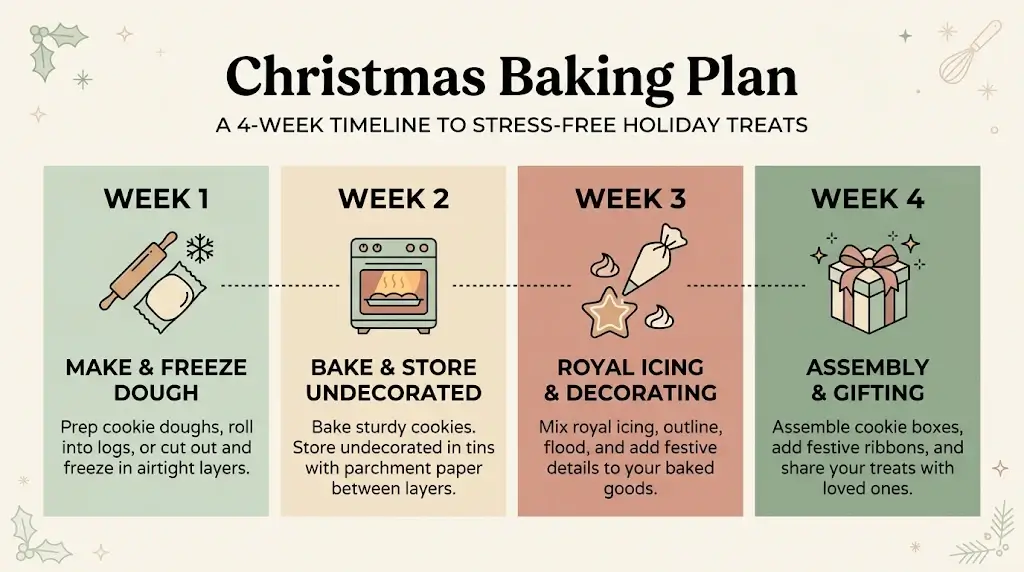
The 5-Step Master Baking Blueprint
Follow this exact workflow to make rolled holiday cookies with straight edges and consistent thickness.
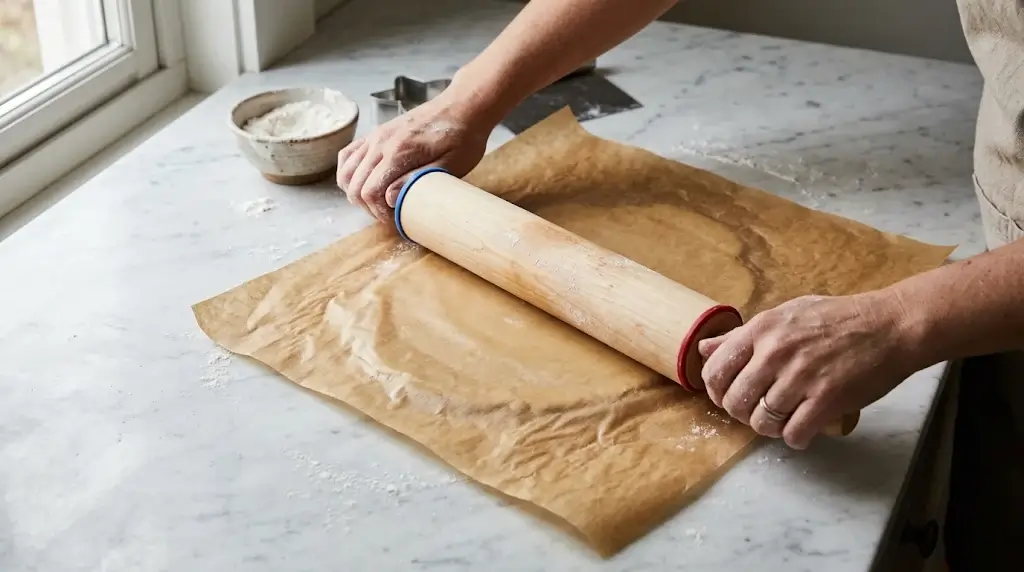
Step 1: Roll the Dough Immediately Between Parchment
Do not chill dough in a thick disk. Roll fresh, pliable dough directly between two sheets of baking parchment to 1/4-inch thickness right after mixing.
This avoids cracked edges and eliminates the need for extra bench flour, which toughens the dough. Stack the flat rolled sheets on a tray and refrigerate for two hours.
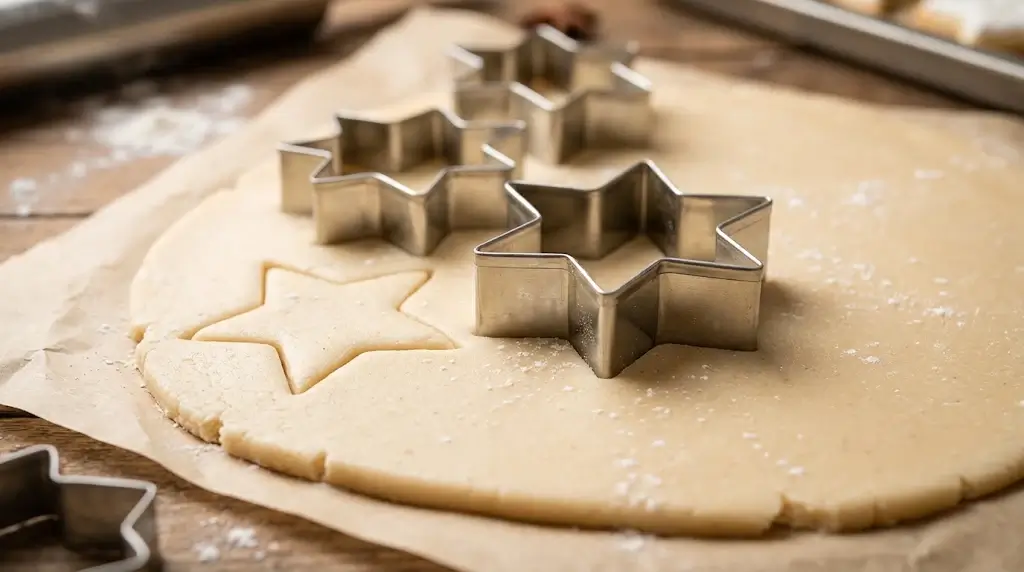
Step 2: Cut While Cold and Stiff
Peel off the top parchment sheet and press sharp metal cutters straight down into the cold dough. Do not twist the cutter, as twisting seals edges unevenly and makes cookies rise crooked.
Step 3: Freeze Before the Oven
Transfer your cut dough shapes to a parchment-lined baking sheet and place the pan in the freezer for 10 minutes. This quick thermal shock locks the edges in place so they hold their shape during baking.
Step 4: Rotate Pans Mid-Bake
Most home ovens have hot spots along the back walls. Bake one sheet at a time on the middle rack, rotating the pan 180 degrees halfway through baking for uniform color.
Step 5: Cool on the Sheet for 5 Minutes
Hot cookies are fragile right out of the oven. Let them rest on the warm baking pan for five minutes to set, then transfer them with a thin spatula to a wire cooling rack.
Royal Icing Simplified: 3 Consistencies
Royal icing does not need to be complicated. Use meringue powder instead of raw egg whites for stable, food-safe icing that dries smooth and firm.
The 3 Consistencies You Need:
- Stiff (Toothpaste texture): Holds sharp peaks. Best for piping pine needles, structural gingerbread houses, and dimensional borders.
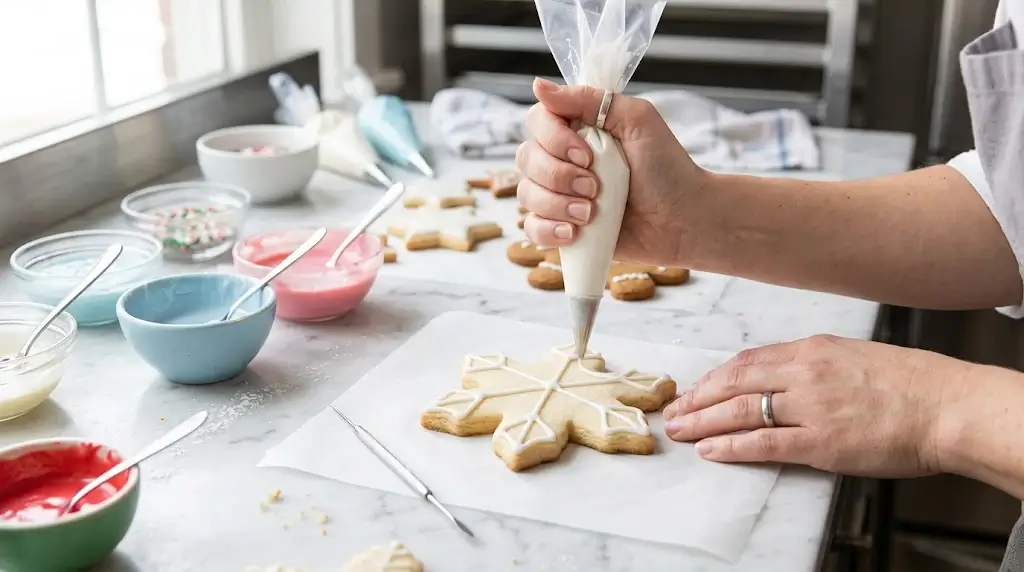
- Piping (Soft-serve texture): Settles smooth in 20 seconds. Perfect for outlining borders, writing names, and detailed linework.
- Flood (Warm honey texture): Smooths out flat within 12 to 15 seconds. Used to fill the empty centers inside piped outlines.
Pro Tips for Crisp Decorating:
- Pop air bubbles quickly: Use a scribe tool or toothpick to pop bubbles in wet flood icing before the top crusts over.
- Use a desk fan: Place freshly flooded cookies in front of a gentle tabletop fan to help them dry shiny and prevent sunken craters.
- Wait before boxing: Royal icing feels dry after an hour, but takes 12 to 24 hours to cure completely firm for stacking.

Freezing and Shipping Secrets
Baking ahead saves hours of stress during the holidays. Most cookies hold up well in the freezer when packed properly.
What Freezes Best:
- Raw Dough: Roll drop cookies into balls and freeze in ziplock bags for up to three months. Bake straight from frozen, adding two extra minutes.
- Baked Plain Cookies: Freeze undecorated baked cookies between parchment sheets in airtight containers for up to two months.
- Iced Cookies: Fully cured royal icing cookies freeze well. Defrost the container sealed on the counter for three hours to prevent water spots on the icing.
Shipping Cookies Without Breakage:
Pair cookies back-to-back and wrap each pair tightly in plastic wrap. Pack them vertically into a sturdy metal tin, filling all empty space with crumbled parchment paper.
Give the tin a gentle shake. If you hear anything moving, add more paper. Place the tin inside a shipping box surrounded by two inches of bubble wrap on all sides.
Cookie Variety Cheat Sheet
Compare shelf life, storage, and shipping durability across classic holiday cookies.
| Style | Texture | Room Temp Life | Freezer Life | Shipping Durability |
|---|---|---|---|---|
| Cut-Out Sugar | Tender, flat bite | 7 to 10 Days | 3 Months | High (when icing is cured) |
| Shortbread | Rich, crumbly snap | 3 to 4 Weeks | 4 Months | High |
| Gingerbread | Firm snap or chewy | 3 to 4 Weeks | 6 Months | Exceptional |
| Linzers | Nutty, soft, jammy | 4 to 5 Days | 1 Month (plain) | Low (jam shifts) |
| Chocolate Crinkles | Fudge brownie center | 5 to 7 Days | 2 Months | Moderate |
Troubleshooting Common Disasters
Quick answers to common problems that ruin holiday baking batches.
1. My Cookies Spread and Lost Their Shape
The Fix: Chill the cut shapes in the freezer for 10 minutes before baking. Make sure your butter is cool when creaming, and never place dough on a warm baking sheet.
2. My Cookies Are Hard and Tough
The Fix: Stop over-mixing after adding the flour. Mix only until dry streaks vanish, and roll dough between parchment sheets to avoid using extra bench flour.
3. The Royal Icing Dried Dull or Sunken
The Fix: Whip your icing on low speed to keep air bubbles out. Set iced cookies in front of a running fan so the surface crusts before the center sinks.

Essential Baking Equipment
- Natural Aluminum Half-Sheet Pans: Distribute heat evenly and prevent scorched bottoms.
- Rolling Pin with Guide Rings: Keeps dough rolled to an exact, level 1/4-inch thickness.
- Digital Kitchen Gram Scale: Guarantees perfect flour and sugar ratios every time.
- Metal Cookie Cutters: Cut through cold dough cleanly without dragging edges.
- Scribe Tool or Toothpicks: Pops air bubbles and levels wet royal icing smoothly.
Key Takeaways
- Keep your butter cool (62°F to 65°F) during creaming to stop cookies from spreading.
- Roll dough between parchment sheets before chilling to avoid using extra bench flour.
- Freeze cut shapes for 10 minutes right before baking to lock in sharp outlines.
- Dry royal icing under a gentle fan to keep surfaces smooth, flat, and glossy.
- Wrap soft cookies separately so they do not make crisp cookies soggy inside gift boxes.
Frequently Asked Questions
Why did my Christmas cookies spread out and lose their shape?
Cookies spread when the butter melts before the flour sets in the oven. This happens if butter is too warm during mixing, or if cut dough goes into the oven warm. Keep butter around 64°F (18°C) and freeze cut shapes for 10 minutes before baking.
How far in advance can I bake Christmas cookies for gifting?
You can bake and freeze plain cookies up to two months in advance. Room-temperature cookies stay fresh in airtight containers for 7 to 10 days. Dry varieties like shortbread and gingerbread hold their flavor and crispness for three to four weeks.
Why is meringue powder better than egg whites for royal icing?
Meringue powder provides consistent whipping volume and eliminates food safety risks from raw eggs. It dries to a firm finish and lets decorated cookies store safely at room temperature for weeks without spoiling.
How do I prevent royal icing from drying dull or sinking in the middle?
Mix your royal icing on low speed to avoid whipping excess air into the bowl. Make your flood icing slightly thicker, and dry freshly piped cookies in front of a gentle tabletop fan to set the top quickly.
Can I freeze decorated cookies with royal icing?
Yes, fully dried royal icing cookies freeze well for up to two months. Pack them flat between parchment sheets inside airtight containers. Thaw the container sealed on the counter for three hours to prevent water spots on the icing.
How do I keep soft cookies from ruining crisp cookies in a gift box?
Moisture naturally moves from soft cookies to crisp ones in closed spaces. Prevent soggy shortbread by wrapping soft cookies like gingerbread or crinkles in clear cellophane bags before placing them into the gift box.