This chewy kitchen sink cookies recipe is the ultimate sweet and salty treat to bake at home. Finding the absolute best kitchen sink cookies requires balancing crunchy pretzels, buttery caramel, sweet chocolate, and salty potato chips into one unforgettable bite.
In this ultimate long-form baking guide, you will learn how to master these incredible kitchen sink cookies at home from scratch. We will cover exact ingredient ratios, science-backed baking techniques, freezer storage guides, and troubleshooting tips to ensure your batch turns out thick, soft, and delicious every single time.
Note: This post may contain affiliate links to favorite baking tools. Buying through these affiliate links helps support our blog at no extra cost to you.
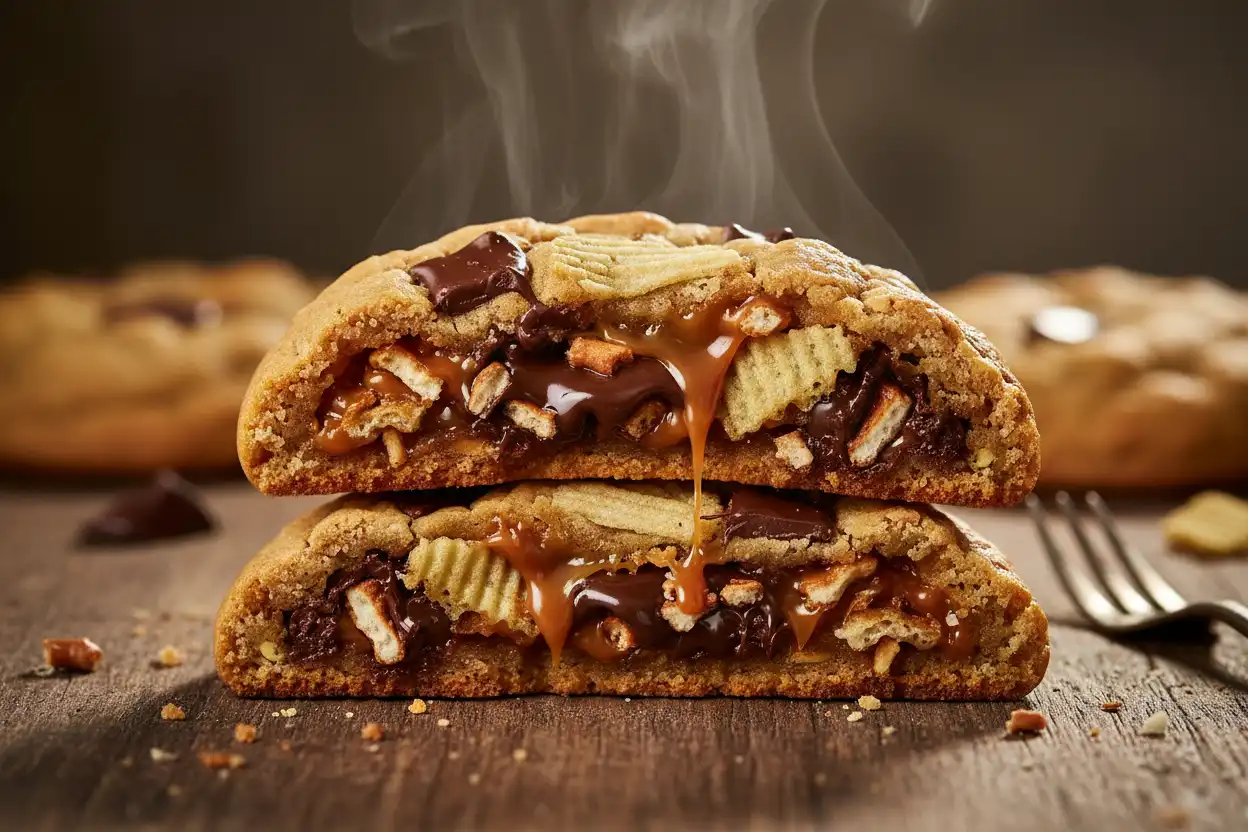
What Are Kitchen Sink Cookies?
The name comes from the famous American saying “everything but the kitchen sink.” These traditional loaded kitchen sink cookies upgrade a standard dessert by starting with a rich, buttery chocolate chip dough base and adding an incredible variety of sweet and salty mix-ins.
Instead of choosing between traditional chocolate chips and a salty bag of pretzels, these loaded desserts give you the best of both worlds in every single bite. The combination of creamed butter, dark chocolate chunks, crispy wavy potato chips, and chewy oats creates a multi-textured treat that satisfies every late-night craving.
When you bake these kitchen sink cookies at home, you are not limited to strict rules. You can mix and match sweet candy bits, salty nuts, and crunchy snacks depending on what you have stored in your kitchen cupboards.
Why You Will Love Baking Kitchen Sink Cookies at Home
Baking these loaded kitchen sink cookies at home is fun, easy, and completely customizable for any family gathering, holiday party, or casual weekend treat:
- Clear Out Your Pantry: Use up leftover broken pretzels, sticky toffee bits, peanut butter chips, or butterscotch morsels before they expire.
- Irresistible Bakery Aroma: The soothing smell of browning butter, pure vanilla, and melting chocolate will fill your entire home with cozy warmth.
- Perfect Sweet and Salty Balance: The natural saltiness of potato chips and pretzels balances the dark brown sugar, preventing the dough from tasting overly sweet.
- Crowd-Pleasing Texture: Crisp golden edges combined with soft, chewy centers guarantee that these treats disappear off the cooling rack within minutes.
Exact Ingredients for Kitchen Sink Cookies
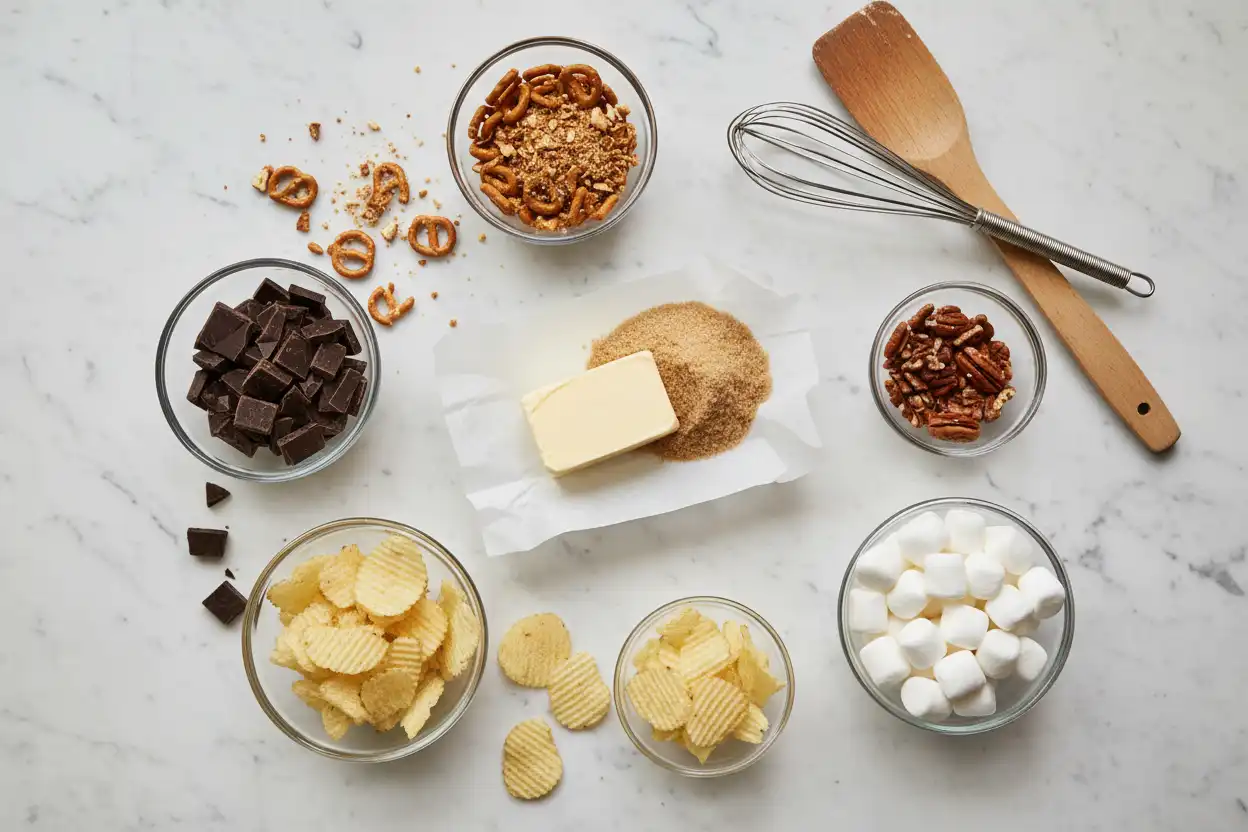
Great baking relies on exact precision and quality ingredients. Here is the ultimate balanced recipe for your chocolate chip dough base and mix-ins:
The Dough Base
- Unsalted Butter: 1 cup (2 sticks / 225 g), softened to room temperature.
- Dark Brown Sugar: 1 cup (200 g), tightly packed for deep molasses flavor and extra moisture.
- Granulated White Sugar: 1/2 cup (100 g) for crisp edges.
- Large Eggs: 2 large eggs, brought to room temperature.
- Pure Vanilla Extract: 2 teaspoons (10 ml) for warm aroma.
- All-Purpose Flour: 2 1/4 cups (280 g), measured accurately.
- Baking Soda: 1 teaspoon (5 g) to help the dough rise softly.
- Sea Salt: 1/2 teaspoon (3 g) to enhance overall flavor depth.
The Loaded Mix-Ins
- Dark Chocolate Chunks: 1 cup (170 g) of high-quality dark chocolate or semi-sweet morsels.
- Crushed Pretzels: 3/4 cup (60 g), roughly chopped into bite-sized pieces.
- Wavy Potato Chips: 3/4 cup (40 g), coarsely crushed (avoid thin chips that turn to powder).
- Toffee Bits: 1/2 cup (90 g) for golden pockets of caramel crunch.
Key Baking Elements for Chewy Kitchen Sink Cookies
Before grabbing your mixing bowls and turning on your oven, understanding the basic science behind heavy, loaded doughs will save you from common baking mistakes.
1. Fat and Temperature Control
Butter provides both structure and rich flavor. If your butter is too warm or melted, the dough will spread uncontrollably across your baking pans, resulting in thin, greasy disks. Keeping butter soft yet cool ensures proper creaming with the sugars.
2. Sugar Ratio Dynamics
Combining dark brown sugar with granulated white sugar creates the perfect texture contrast. Brown sugar contains molasses, which retains moisture and creates a chewiness inside. White sugar caramelizes faster, giving the outer edges a subtle crunch.
3. Folding Heavy Add-Ins
Heavy mix-ins like pretzels and potato chips can easily crush into fine dust if overmixed. Always fold your mix-ins by hand using a sturdy rubber spatula during the final step of dough preparation.
Step-by-Step Guide to Baking Kitchen Sink Cookies
Follow these clear, detailed step-by-step instructions to achieve professional bakery-quality results right in your home kitchen:
Step 1: Cream the Butter and Sugars
In a large mixing bowl or the bowl of a stand mixer fitted with a paddle attachment, combine the softened unsalted butter, dark brown sugar, and granulated white sugar. Cream together on medium speed for at least 3 to 4 minutes until the mixture turns pale, light, and fluffy.
Step 2: Incorporate Wet Ingredients
Mix in your room-temperature eggs one by one until the dough looks completely smooth. Stir in the pure vanilla extract until fully incorporated into the wet base.
Step 3: Whisk and Combine Dry Ingredients
In a separate medium bowl, whisk together the all-purpose flour, baking soda, and sea salt. Turn your mixer speed down to low and gradually add the dry mixture to the creamed butter. Mix just until the flour disappears to avoid overworking the gluten, forming your rich dough base.
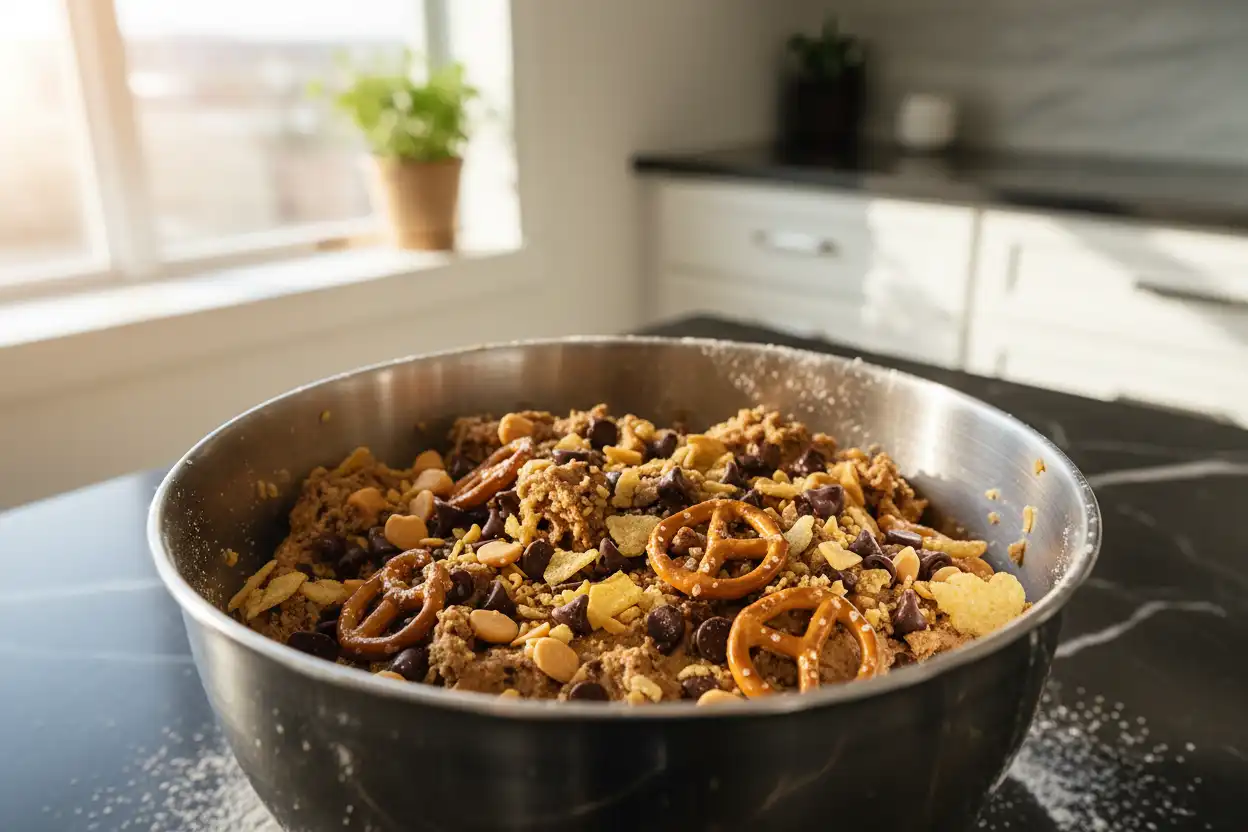
Step 4: Gently Fold in Loaded Mix-Ins
Remove the bowl from your mixer. Pour in the dark chocolate chunks, crushed pretzels, wavy potato chips, and sticky toffee bits. Using a large rubber spatula, fold the ingredients into the dough by hand until evenly distributed throughout the mixture.
Step 5: Chill the Dough
Scoop the heavy dough into large balls (about 3 tablespoons each) and place them onto a parchment-lined tray. Cover loosely with plastic wrap and refrigerate for at least 30 to 60 minutes. Chilling hardens the fat content, ensuring your treats bake thick rather than spreading flat.

Step 6: Bake to Golden Perfection
Preheat your oven to 350°F (175°C). Line your prepared baking sheets with parchment paper or non-stick silicone mats. Arrange the chilled dough balls 2 inches apart on these prepared baking sheets.
Bake for 11 to 13 minutes for soft, chewy centers, or 13 to 15 minutes for a crunchier texture. Remove from the oven when the outer edges are light golden brown while the centers still look soft and slightly underbaked. Let them sit on the warm pans for 10 minutes before transferring them to a wire rack to cool completely.

Top Flavor Variations for Kitchen Sink Cookies
One of the greatest features of this recipe is its versatility. Here are four popular flavor variations you can experiment with:
- The Caramel Peanut Butter Crunch: Swap dark chocolate for milk chocolate and add 1/2 cup of peanut butter chips along with chewy caramel square pieces.
- The Triple Chocolate Salty Delight: Combine white chocolate chips, dark chocolate chunks, and milk chocolate morsels with extra salty pretzels.
- The Nutty Oatmeal Rustic Blend: Add 1/2 cup of rolled oats and 1/2 cup of toasted chopped pecans or walnuts into the dough for a denser, hearty bite.
- The Espresso Sea Salt Gourmet Style: Add 1 teaspoon of instant espresso powder to the flour mixture and sprinkle flaky Maldon sea salt over the warm tops immediately after baking.
Comprehensive Storage Guide for Kitchen Sink Cookies
Proper storage preserves freshness and texture so you can enjoy homemade treats for weeks or months to come.
Storing at Room Temperature
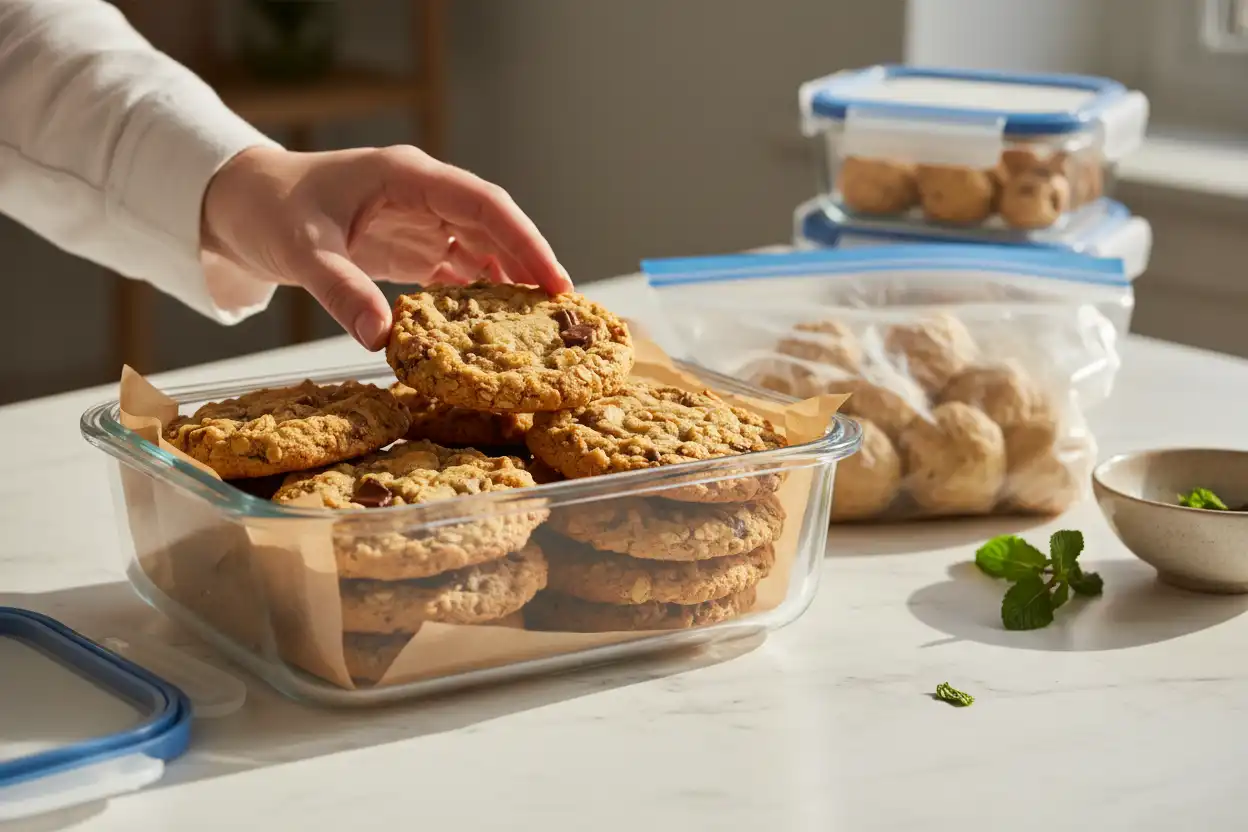
Keep cooled baked kitchen sink cookies inside an airtight container at room temperature for up to 5 days.
Pro Tip: Place a single slice of plain white bread inside the container with your cookies. The dough will absorb moisture from the bread, keeping your baked treats extra soft and chewy for days!
How to Freeze Unbaked Dough Balls
Freezing unbaked dough allows you to enjoy warm, freshly baked treats whenever cravings strike:
- Scoop dough into individual balls and freeze them on a baking sheet for 1 hour until completely firm.
- Transfer frozen balls into an airtight freezer bag, squeezing out excess air before sealing.
- Store in the freezer for up to 3 months.
- When ready to bake, place frozen dough balls directly onto prepared baking sheets and bake at 350°F (175°C) for an additional 1 to 2 minutes past the standard bake time.
How to Freeze Baked Kitchen Sink Cookies
- Allow the baked treats to cool 100% to room temperature.
- Layer the treats between sheets of parchment paper inside a heavy-duty freezer-safe container.
- Freeze for up to 2 months.
- Thaw at room temperature for 20 minutes, or warm individual treats in the microwave for 10 to 15 seconds for a fresh-from-the-oven taste.
Essential Kitchen Accessories for Successful Baking
Equipping your kitchen with durable tools saves preparation time and ensures consistent baking results every single batch:
- Precision Digital Kitchen Scale: Helps measure flour by weight rather than volume, preventing dry, cakey textures.
- Heavy-Duty Baking Pans: Distributes heat evenly so bottoms do not burn before centers cook through.
- Silicone Baking Mats: A reusable alternative to parchment paper that fits neatly on prepared baking sheets.
- Ergonomic Stand Mixer: Easily mixes thick, heavy doughs packed with dense add-ins without straining your arms.
Troubleshooting & FAQ for Kitchen Sink Cookies
Why did my cookies spread too thin across the pan?
Excessive spreading usually happens when the butter was too warm during mixing, or the dough was placed in the oven without chilling first. Always use chilled dough on cool prepared baking sheets.
Why are my baked treats dry and crumbly?
Adding too much flour is the primary cause of dry dough. Always spoon flour into measuring cups and level it off with a knife, or use a digital scale to weigh 280 grams accurately.
Can I make these kitchen sink cookies without eggs?
Yes. You can substitute each egg with 1/4 cup of unsweetened applesauce or a commercial egg replacer, though the final texture may be slightly denser.
How do I stop potato chips from getting soggy?
Use thick, wavy kettle-cooked potato chips rather than thin varieties. Kettle chips hold their crisp structure during the baking process.
Conclusion
Baking your own chewy kitchen sink cookies at home is a rewarding way to elevate your dessert menu. By starting with a balanced dough base and adding crunchy pretzels, wavy potato chips, and sticky toffee bits, you create a loaded bakery-style treat that outshines standard store-bought snacks.
Gather your ingredients, line your prepared baking sheets, and enjoy fresh, warm kitchen sink cookies right out of your oven today!
Note: Check out our recommended affiliate links for the best baking tools used in this guide.