Cookies Cedric: The Ultimate Guide to Cédric Grolet’s Iconic Pastry Creations
Table of Contents
- What Are Cookies Cedric? The Global Pastry Phenomenon
- The Anatomy of a Cédric Grolet Cookie
- Essential Ingredients for Bakery-Quality Results
- Required Pastry Tools and Equipment
- Step-by-Step Guide: Mastering the Hazelnut Praline Cookie
- Master Recipe: Ultimate Cedric-Style Hazelnut Cookie (Cookie Noisette)
- Popular Cedric Cookie Variations
- Comparison: Cedric Cookies vs. Classic American Cookies
- Expert Baking Tips and Professional Techniques
- Common Mistakes and How to Fix Them
- Storage, Freezing, and Reheating Instructions
- Recommended Tools and Resources
- Related Baking Guides
- External Authority References
- Key Takeaways
- Frequently Asked Questions
Featured Snippet: What Makes Cookies Cedric Unique?
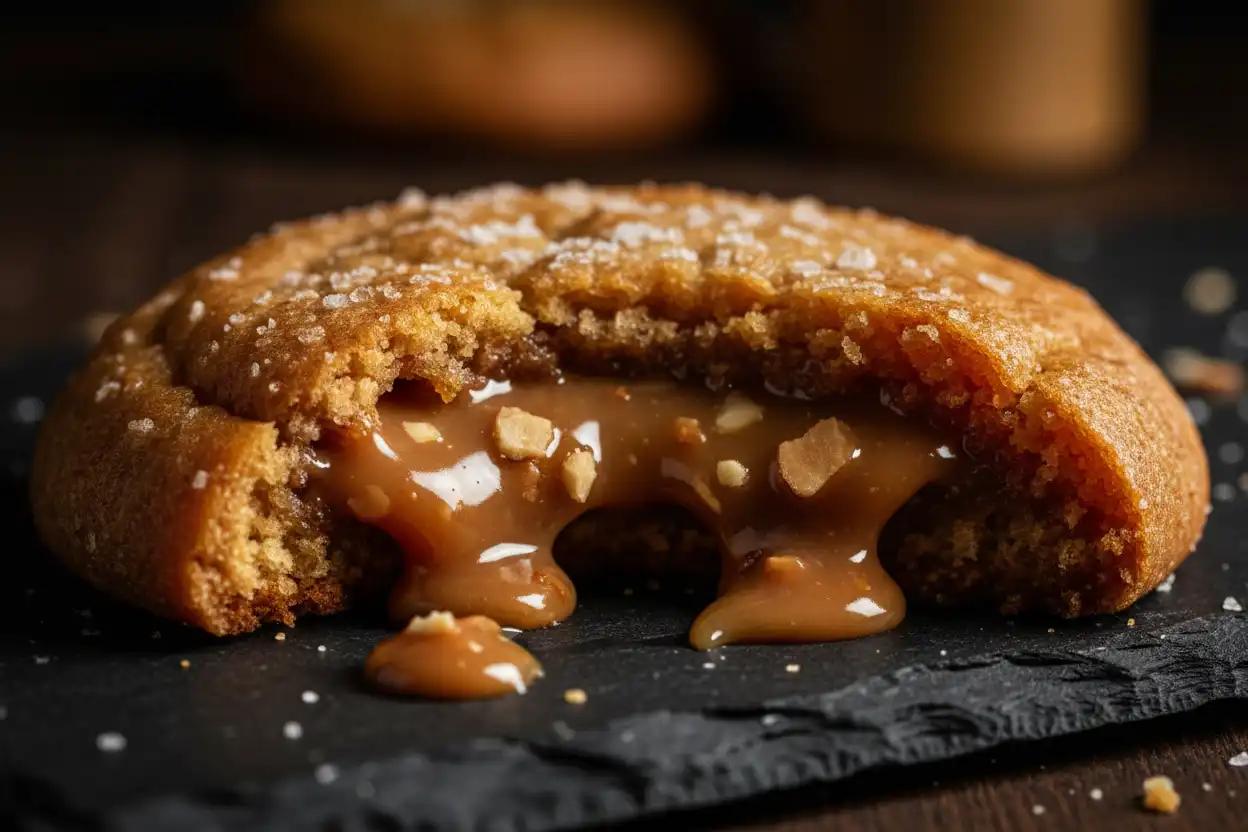
Cookies Cedric refers to the viral, ultra-luxurious cookie creations pioneered by world-renowned French pastry chef Cédric Grolet. Unlike traditional flat American chocolate chip cookies, Cedric-style cookies are oversized gourmet pastries characterized by a thick cookie base, a liquid molten insert (usually nut praline or ganache), and an artistic crown of toasted nuts or chocolate pieces.
Baked at low temperatures to maintain a soft interior while developing a subtle exterior crust, these cookies weigh between 120 grams and 150 grams each. Their defining feature is the contrast of textures: crunchy roasted nut toppings, a tender cookie body, and an oozing, velvety core.
- Signature Mark: Frozen praline disc inserted into dough before baking.
- Butter Ratio: Uses 82%+ butterfat European cultured butter for rich structure.
- Aesthetic: Hand-arranged nut geometric patterns finished with Fleur de Sel.
What Are Cookies Cedric? The Global Pastry Phenomenon
The term cookies Cedric describes the high-end cookie recipes and techniques popularized by Cédric Grolet, executive pastry chef at Le Meurice in Paris and founder of Cédric Grolet Opéra and Cédric Grolet London. Grolet reimagined the traditional American cookie through the lens of classic French haute pâtisserie.
Instead of treating cookies as simple drop-dough baked goods, Grolet approaches them as complex multi-component pastries. Each cookie features precise architectural layers designed to deliver distinct textural contrasts in every bite. This architectural approach turned his Paris and London bakeries into global destinations, generating hours-long lines and millions of social media views.
American bakers attempting to recreate these cookies at home must understand that cookies Cedric rely on pastry science rather than standard cookie assembly. The secret lies in balancing dough hydration, fat crystallization, low-temperature baking, and frozen praline inserts.
The Anatomy of a Cédric Grolet Cookie
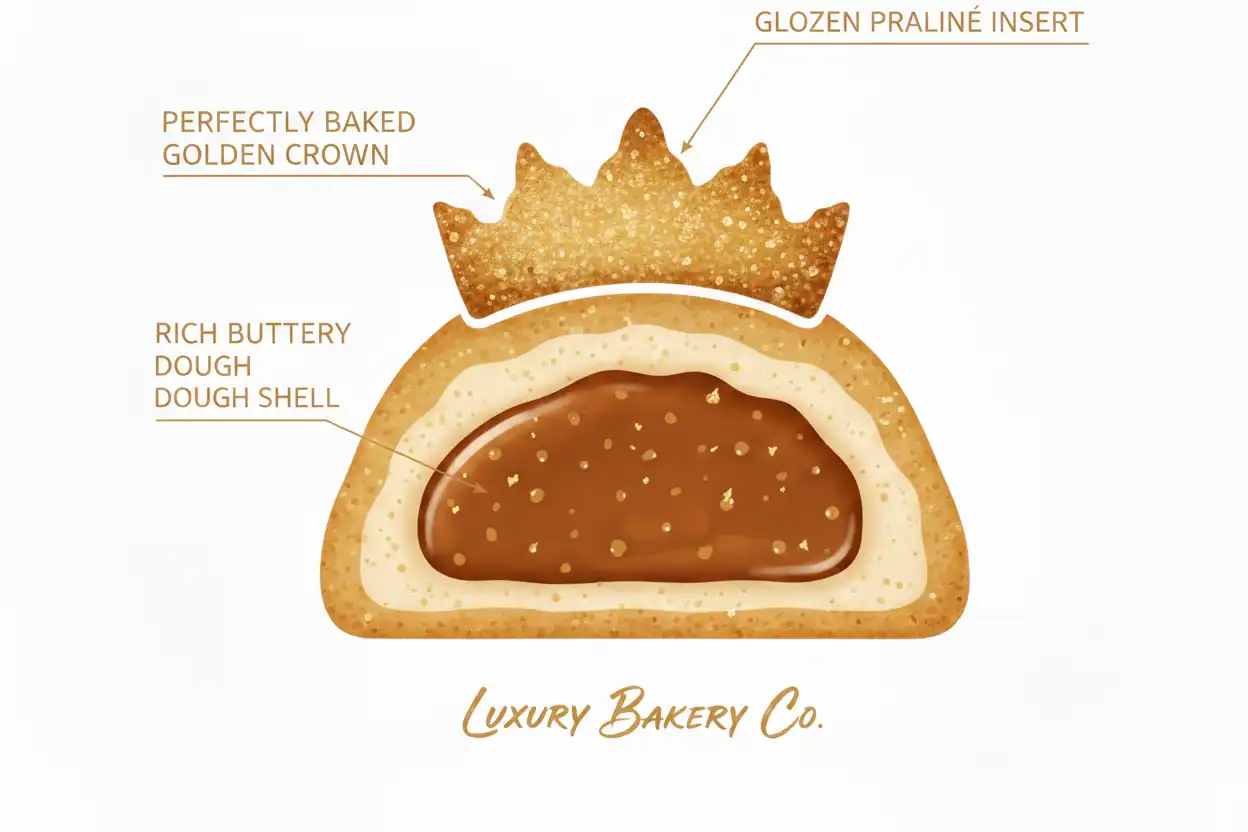
Deconstructing a authentic Cedric-style cookie reveals three distinct structural components that must be prepared separately before assembly.
1. The Molten Core (Praliné or Ganache Insert)
The heart of every cookies Cedric creation is an liquid center. This is achieved by making an artisanal nut praline (caramelized sugar blended with roasted hazelnuts, pistachios, or pecans) or a rich dark chocolate ganache. This filling is cast into disc-shaped silicone molds and frozen solid before being encased in cookie dough.
2. The Hybrid Dough Shell
The surrounding cookie dough uses a blend of European butter, unrefined sugars, egg yolks, and low-protein or balanced flour. The dough ratio limits gluten development while maintaining enough structural integrity to hold the molten core during baking without collapsing flat on the tray.
3. The Decorative Crown
Before entering the oven, each dough ball receives a precise arrangement of toasted nut halves, chopped roasted nuts, or chocolate discs. This crown protects the upper dough from drying out, adds a sharp crunch, and gives the cookie its unmistakable artisanal look.
Essential Ingredients for Bakery-Quality Results
Replicating these cookies in an American home kitchen requires specific ingredients. Standard supermarket staples often lack the fat content or moisture balance required for French pastry standards.
| Ingredient | Recommended Type | Why It Is Essential |
|---|---|---|
| Butter | European-style unsalted (82-84% butterfat) | Lower water content prevents dough spreading and provides rich texture. |
| Sugar | Dark Muscovado & Caster Sugar blend | Muscovado adds deep caramel moisture; caster sugar creates a crisp edge. |
| Flour | Unbleached All-Purpose (10.5% protein) | Provides structure without making the cookie crumb tough or cakey. |
| Nuts | Piemonte Hazelnuts or Bronte Pistachios | High oil content and intense natural flavor needed for authentic praline. |
| Salt | French Fleur de Sel | Flaky texture cuts through the sweetness of the praline core. |
| Chocolate | Valrhona or Guittard (64-70% cacao) | Superior cocoa butter fluidity and balanced bitterness. |
European butter is critical for this recipe. Standard American butter contains roughly 80% butterfat and 16-18% water. European-style butter contains 82-84% butterfat and significantly less water. Excess water creates steam during baking, causing dough to spread thin and dry out.
Unrefined dark Muscovado sugar contains natural molasses, keeping the interior soft for days. Replacing Muscovado with standard light brown sugar will alter both flavor depth and core moisture retention.
Required Pastry Tools and Equipment
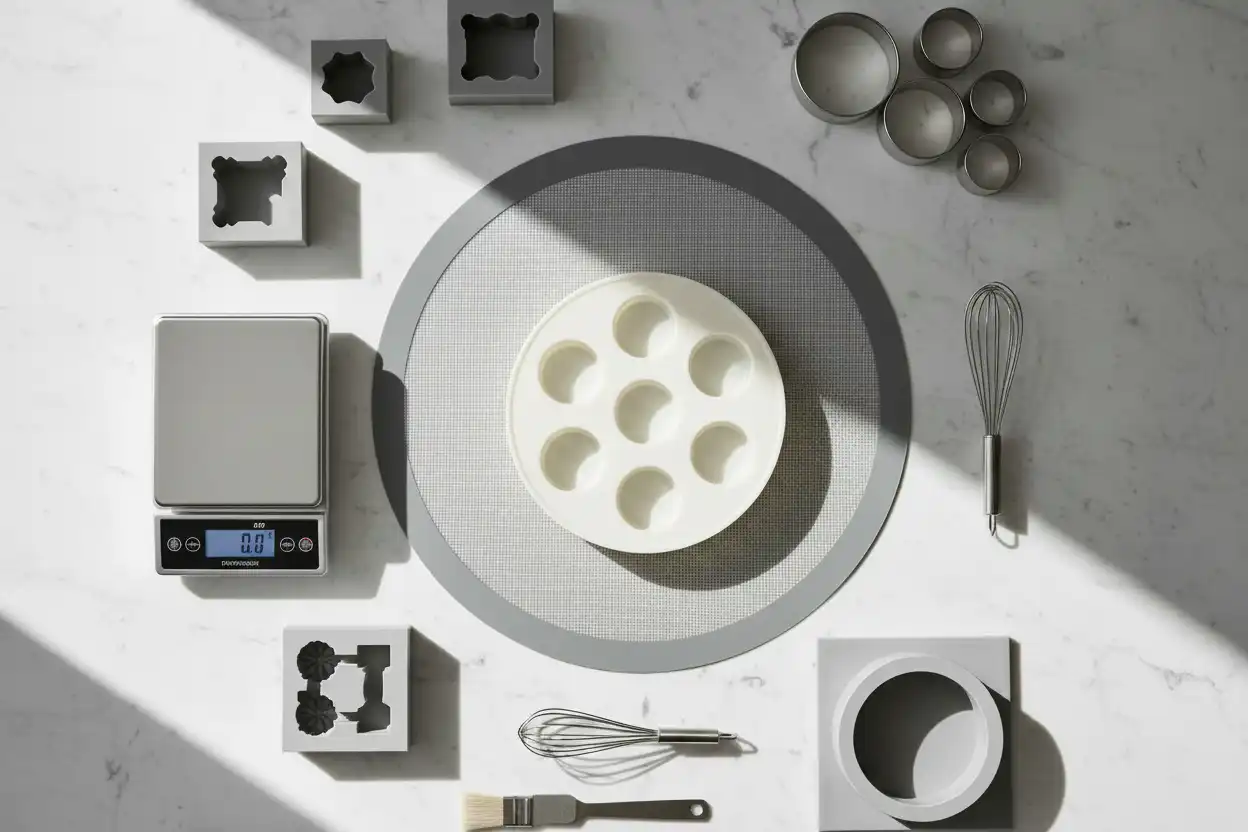
Precise measurement and temperature control separate amateur attempts from professional cookies Cedric results. You will need specific tools before starting.
- Digital Kitchen Scale: Volumetric cups are inaccurate for French pastry. Every ingredient must be weighed in grams.
- Silicone Sphere or Disc Molds: Essential for casting 25-gram praline inserts into uniform shape.
- Perforated Baking Mat (Silpain): Allows heat to circulate evenly underneath the cookie without trapping steam.
- Heavy Aluminum Baking Sheet: Prevents the bottoms of the heavy cookies from burning before the centers melt.
- Stand Mixer with Paddle Attachment: Mixes butter and sugar gently without whipping unnecessary air into the dough.
- Pastry Rings (8cm to 10cm): Optional, but helps maintain perfect roundness during the first 3 minutes of baking.
Step-by-Step Guide: Mastering the Hazelnut Praline Cookie
Follow this master technique workflow to construct authentic cookies Cedric from scratch. Each phase requires attention to timing and temperature.
Phase 1: Make and Freeze the Praline Core
Roast raw hazelnuts at 300°F (150°C) for 15 minutes until skin darkens and cracks. Rub off skins in a clean towel. Caramelize white sugar in a saucepan until deep amber, then pour over half the nuts on parchment paper. Once cool, grind into a rich, semi-smooth paste using a food processor. Pipe 25g portions into disc silicone molds and freeze for at least 4 hours at 0°F (-18°C).
Phase 2: Prepare the Cookie Dough Base
Cream cold European butter and dark Muscovado sugar on low speed until combined but not fluffy. Incorporate whole egg and egg yolk at room temperature. Sift flour, cornstarch, baking soda, and fine sea salt together, then fold into wet ingredients just until dry pockets disappear. Fold in coarse dark chocolate chunks.
Phase 3: Assembly and Stuffed Encasement
Portion dough into 90-gram balls. Flatten each ball into a disc on parchment paper. Remove a frozen praline disc from the freezer and place it directly in the center of the dough disc. Wrap the edges of the dough upward and seal tightly, ensuring no air gaps exist around the praline core. Roll smooth into a sphere.
Phase 4: Cold Maturation Rest
Place assembled dough balls on a tray, cover tightly with plastic wrap, and refrigerate for a minimum of 24 hours (preferably 48 hours). Cold resting allows flour starches to hydrate fully and solidifies fats, preventing the oversized cookie from melting flat into a pancake.
Phase 5: Crown Arrangement and Precision Baking
Press whole toasted hazelnut halves firmly onto the top surface of each cold dough ball. Bake at 340°F (170°C) for 11 to 13 minutes on a perforated mat. The edges should be set while the center remains slightly dome-shaped. Sprinkle with Fleur de Sel immediately upon removal from the oven.
Master Recipe: Ultimate Cedric-Style Hazelnut Cookie (Cookie Noisette)
This recipe yields 8 oversized 130-gram cookies featuring an artisanal hazelnut praline core and a dark chocolate dough base.
Ingredients List
For the Hazelnut Praline Core:
- 200g Raw Hazelnuts
- 120g Granulated White Sugar
- 2g Fine Sea Salt
For the Cookie Dough:
- 150g Unsalted European Butter (Cold, diced)
- 100g Dark Muscovado Sugar
- 60g Caster Sugar (or Superfine White Sugar)
- 50g Whole Egg (1 large egg, room temperature)
- 20g Egg Yolk (1 large egg yolk)
- 240g Unbleached All-Purpose Flour
- 10g Cornstarch
- 3g Baking Soda
- 3g Fine Sea Salt
- 120g Dark Chocolate (64% cacao, coarsely chopped)
For the Topping:
- 80g Whole Hazelnuts (Lightly roasted and halved)
- Fleur de Sel for dusting
Step-by-Step Instructions
- Make Praline: Roast 200g hazelnuts at 300°F (150°C) for 15 minutes. Dry caramelize sugar in a dry stainless steel pan until amber (340°F/170°C). Pour over nuts on parchment. Cool completely. Grind in processor with salt until liquid paste forms. Pipe 25g discs into silicone molds. Freeze for 4 hours.
- Make Dough: Place diced cold butter, Muscovado sugar, and caster sugar in stand mixer bowl fitted with paddle. Mix on speed 2 for 2 minutes until combined. Add egg and yolk; mix until absorbed.
- Combine Dry Ingredients: Whisk flour, cornstarch, baking soda, and fine salt together. Add to mixer all at once. Mix on lowest speed for 30 seconds until soft dough forms. Fold in chopped dark chocolate.
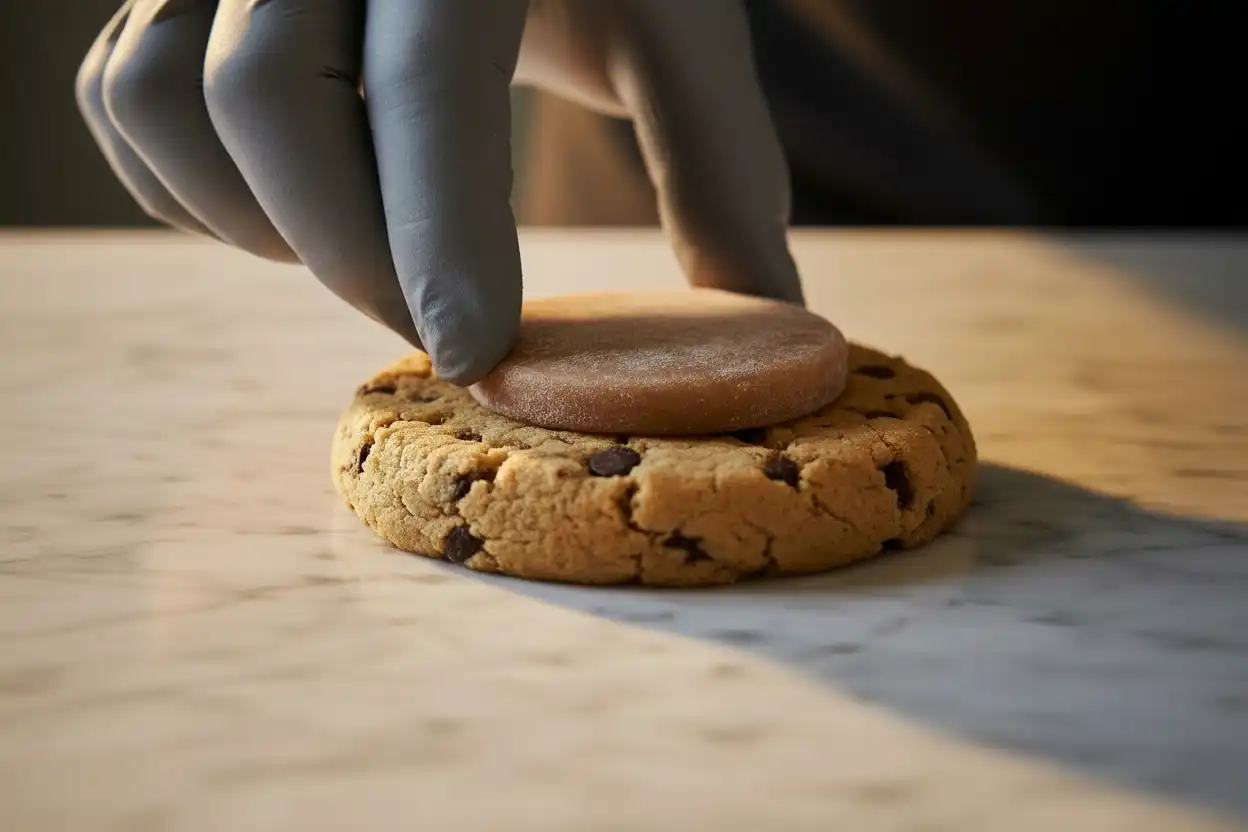
- Stuff Cookies: Divide dough into eight 90g portions. Flatten each portion, place one frozen 25g praline disc in center, wrap dough around disc, and pinch seams closed.
- Chill: Cover dough balls with plastic wrap and chill in refrigerator at 38°F (3°C) for 24 to 48 hours.
- Bake: Preheat oven to 340°F (170°C) conventional (or 320°F/160°C convection). Place 4 cookies per sheet on perforated baking mats. Press halved hazelnuts onto tops. Bake for 12 minutes.
- Cool: Remove from oven. Dust with Fleur de Sel. Allow cookies to set on the baking tray for 15 minutes before transferring to a cooling rack.
Popular Cedric Cookie Variations
While hazelnut is the original viral classic, Cédric Grolet’s bakeries offer seasonal flavor profiles based on the same architectural technique.
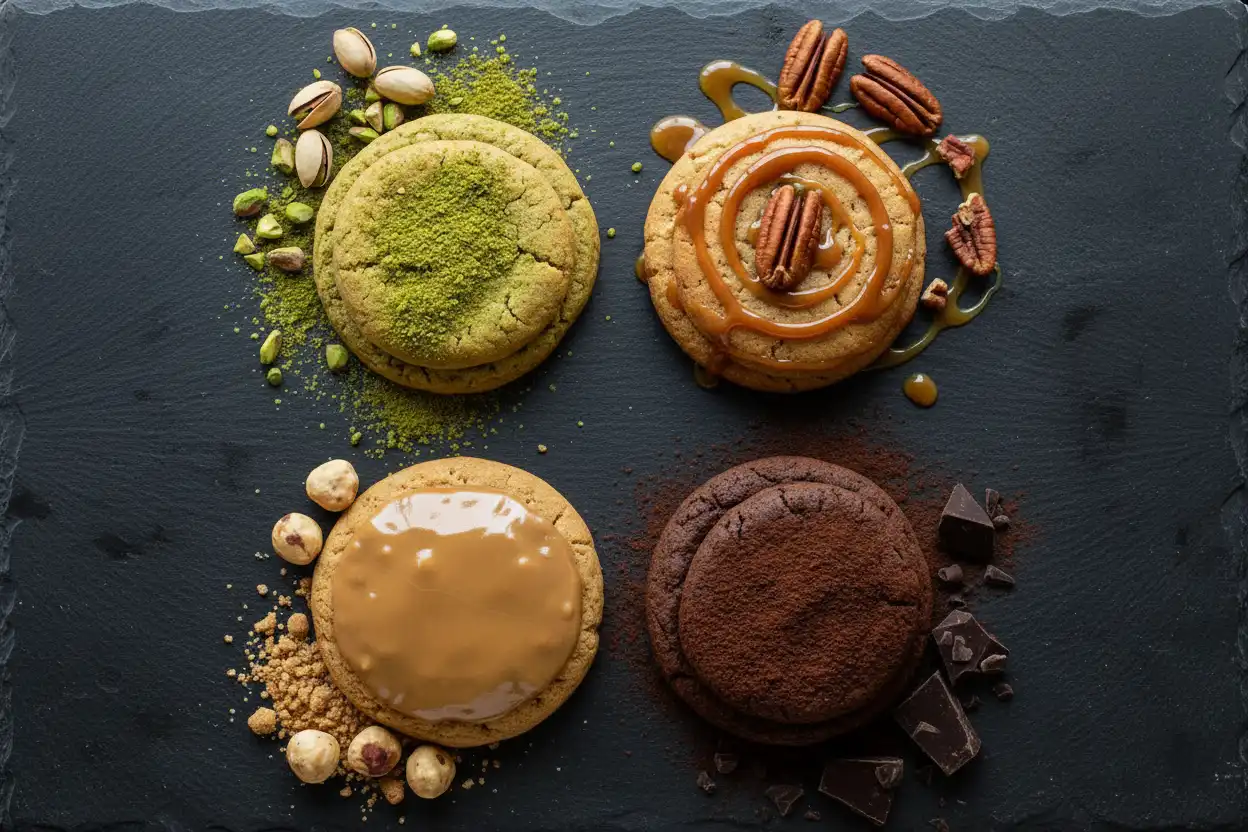
Pistachio Praline & White Chocolate
Replace hazelnut praline with pure Sicilian pistachio praline paste. Use a light dough base with toasted chopped pistachios on top and high-grade white chocolate chunks (31% cocoa butter) inside the dough.
Pecan Caramel Fleur de Sel
Combine pecan praline with a soft salted butter caramel core. Crown the cookie with halved toasted pecans. This variation offers a warmer, butterscotch flavor profile popular in American bakeries.
Double Dark Chocolate Peanut
Incorporate 20g dutch-processed cocoa powder into the flour base. Fill center with an unsweetened dark peanut praline and finish with crushed roasted peanuts and dark chocolate discs.
Comparison: Cedric Cookies vs. Classic American Cookies
Understanding structural differences helps home bakers adjust expectations regarding baking times, spread, and rich mouthfeel.
| Feature | Cookies Cedric Style | Classic American Cookie |
|---|---|---|
| Average Weight | 120g – 150g (Oversized) | 45g – 60g (Standard) |
| Core Structure | Liquid Praline or Ganache Insert | Uniform baked dough center |
| Dough Resting Time | 24 to 48 hours mandatory | 0 to 2 hours typical |
| Baking Temperature | 320°F – 340°F (Low and slow) | 350°F – 375°F (Standard) |
| Fat Type | High-fat European Cultured Butter | Standard American Butter or Shortening |
| Texture Profile | Crisp exterior, soft body, liquid center | Chewy throughout or crisp throughout |
Expert Baking Tips and Professional Techniques
These advanced pastry tricks help elevate home production closer to professional French boutique standards.
1. Control Dough Temperature Strictness
Never place warm or room-temperature cookies Cedric into the oven. The dough ball must be below 40°F (4°C) when entering a preheated oven. Cold butter slows thermal expansion, keeping the cookie tall while allowing the frozen core to heat into a liquid without overcooking the surrounding egg proteins.
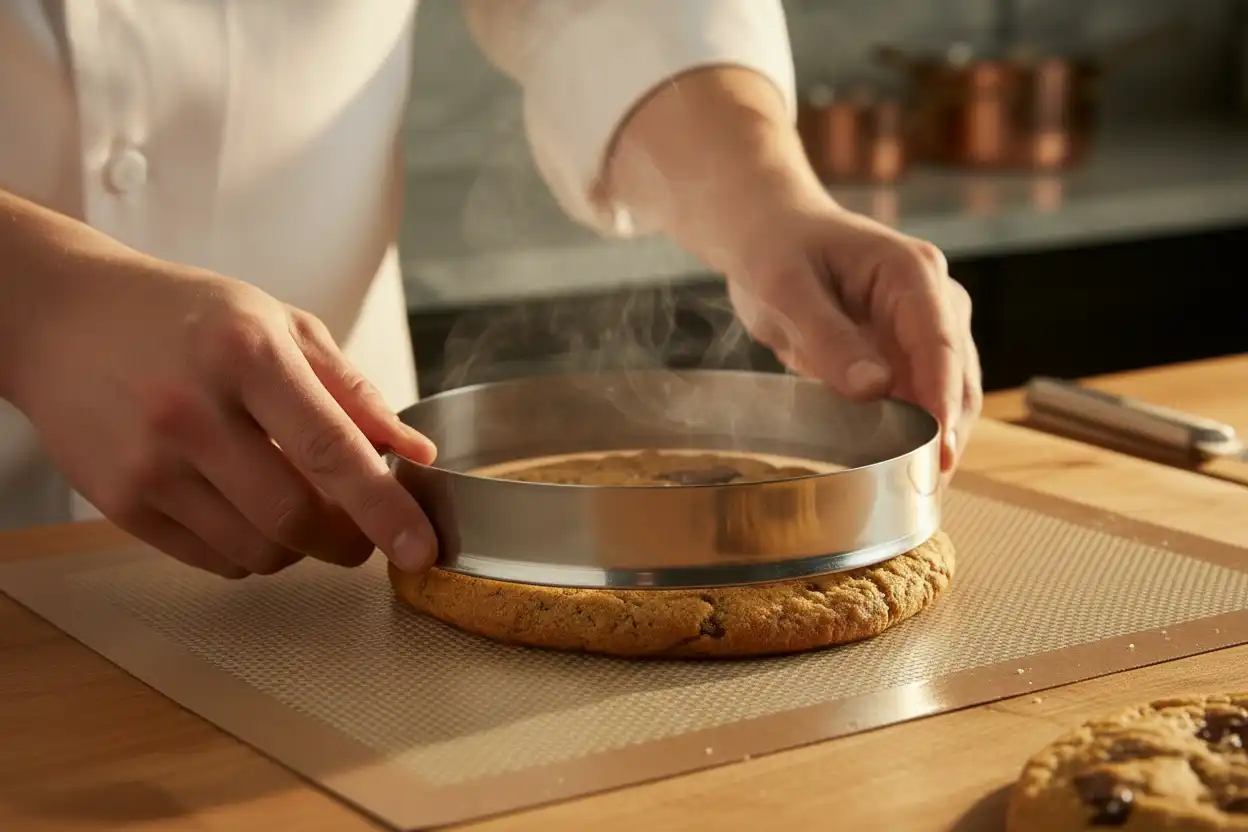
2. The Pastry Ring Trick
If your cookies expand unevenly during baking, place a 10cm stainless steel pastry ring over each cookie immediately after taking the tray out of the oven. Swirl the ring in small circular motions against the baking tray. This pulls stray edges inward and creates a clean round shape.
3. Toast Nuts Thoroughly
Raw nuts ruin the praline core. Nut oils must be fully expressed through dry roasting at 300°F (150°C) until deep fragrant aromatics develop. Under-roasted nuts produce paste with an unpleasant raw astringency.
4. Avoid Over-Creaming Butter
Whipping butter and sugar until pale and airy introduces trapped nitrogen. In giant cookies, excessive trapped air causes dough to expand like a balloon in the oven and then collapse flat, ruining the liquid center structure. Cream only until ingredients form a cohesive paste.
Common Mistakes and How to Fix Them
Troubleshoot these common issues to achieve consistent results when baking cookies Cedric style.
Issue 1: Praline Insert Leaks Out onto the Sheet
Cause: Thin dough walls at the bottom of the cookie, or unsealed dough seams.
Fix: When wrapping dough around frozen praline, ensure equal dough thickness on all sides. Pinch seams together tightly and roll between palms until smooth before chilling.
Issue 2: Cookie Base is Raw or Gummy
Cause: Oven temperature too low, or cookie removed too early.
Fix: Do not confuse a molten praline core with unbaked flour dough. The internal temperature of the dough surrounding the insert must reach 165°F (74°C). Extend bake time by 2 minutes and check with an instant-read probe.
Issue 3: Cookies Spread Flat and Merge Together
Cause: Warm dough, use of standard low-fat butter, or skipping cold rest.
Fix: Use European butter with at least 82% fat. Ensure mandatory 24-hour chilling period. If room temperature is high, freeze shaped balls for 15 minutes right before baking.
Storage, Freezing, and Reheating Instructions
Because cookies Cedric feature high butter and nut oil content, proper storage protects their texture and prevents oil rancidity.
Short-Term Room Temperature Storage
Store baked cookies in an airtight container at room temperature for up to 3 days. Do not refrigerate baked cookies, as refrigeration crystallizes baked starches, making the crumb stale and firm.
Freezing Unbaked Dough Balls
Unbaked assembled dough balls with praline inserts freeze well. Freeze solid on a tray for 2 hours, then transfer to a vacuum-sealed freezer bag for up to 3 months. Bake directly from frozen at 330°F (165°C) for 14 to 16 minutes (no thawing required).
Reheating for Molten Core Experience
To enjoy the signature oozing core after the cookie has cooled, reheat in a preheated oven at 300°F (150°C) for 4 to 5 minutes. Alternatively, microwave on medium power (50%) for 12 to 15 seconds. Avoid high-power microwaving, which rubberizes cookie flour starches.
Recommended Tools and Resources
Reliable equipment and quality ingredients make replicating French pastry recipes easier.
- Praline Molds: Silikomart SF004 Semi-Sphere or Disc Silicone Molds.
- Baking Mats: Silpat Silpain Perforated Non-Stick Baking Mat (11-5/8″ x 16-1/2″).
- Thermometer: Thermapen ONE Instant-Read Digital Food Thermometer.
- Precision Scale: Escali Primo Digital Kitchen Scale (0.1g accuracy).
- Quality Chocolate: Valrhona Caraïbe 66% Dark Chocolate Pistoles.
Related Baking Guides
Expand your home pastry skills with these related baking guides and professional recipes:
- Mastering French Pastry Cream: Ratios and Troubleshooting
- How to Make Authentic Homemade Hazelnut Praline Paste
- European vs. American Butter: Moisture Content Explained
- Giant Bakery Cookie Guide: Levain Style vs. French Style
- The Best Perforated Baking Mats for Even Heat Distribution
External Authority References
For further study on baking science, ingredient functionality, and classic French pastry standards, consult these references:
- King Arthur Baking School: The Science of Baking and Fat Integration
- Valrhona Pâtisserie School: Chocolate Tempering and Ganache Emulsification Guides
- École Lenôtre Paris: Classic French Confectionery and Sugar Caramelization Standards
Key Takeaways
- It’s About Architecture: Cookies Cedric are structured French pastries featuring a cookie shell built around a frozen liquid insert.
- Fat Quality Rules: You must use European butter (82%+ butterfat) to maintain cookie shape and achieve a crisp exterior crumb.
- Cold Rest is Mandatory: A 24 to 48-hour cold rest hydrates flour and prevents dough from melting flat on the baking pan.
- Freeze the Insert: Praline or ganache inserts must be frozen solid (0°F) before being wrapped inside room-temperature dough.
- Gentle Baking: Bake low and slow at 320°F–340°F to set the outer shell while heating the insert into a molten liquid.
Final Thoughts
Recreating cookies Cedric at home requires patience, accurate measurements, and quality ingredients. By mastering the frozen praline core and respecting the mandatory cold resting period, you can replicate Cédric Grolet’s iconic Paris boutique cookies in your home kitchen. Gather your tools, weigh your ingredients carefully in grams, and enjoy crafting these impressive gourmet treats.
Frequently Asked Questions
Why are Cédric Grolet’s cookies so expensive?
Cédric Grolet’s cookies cost around €10 to €15+ each due to high labor input, premium raw ingredients like Piemonte hazelnuts and Valrhona chocolate, hand-assembled components, and the prestige of high-end French gastronomy located in prime London and Paris locations.
Can I make cookies Cedric without silicone molds?
Yes. You can scoop hazelnut praline onto a parchment-lined tray into 25g mounds and freeze solid. Silicone disc molds are preferred because they create uniform round shapes that fit evenly inside dough balls.
Why did my cookie praline core turn hard after cooling?
If your praline core hardens as it cools, the caramel was cooked to too high a temperature or insufficient nut oil was released during blending. Ensure caramel does not exceed 340°F (170°C) and process the praline until completely liquid.
Can I use store-bought nutella instead of handmade praline?
You can use Nutella or store-bought hazelnut spread as a shortcut. Freeze Nutella portions solid before wrapping them in dough. However, Nutella contains palm oil and extra sugar, so it lacks the deep roasted flavor of authentic homemade praline paste.
How long do cookies Cedric last?
Freshly baked cookies Cedric remain soft at room temperature for up to 3 days in an airtight container. Reheat them briefly in the oven at 300°F (150°C) for 4 minutes before serving to re-melt the core center.
What type of flour works best for Cedric style cookies?
Unbleached All-Purpose flour with a protein content between 10% and 10.5% works best. High-protein bread flours make the dough tough, while low-protein cake flours lack the structure needed to hold the heavy frozen core during baking.