“Decorating gingerbread cookies is a fun and satisfying way to celebrate the holidays.“
Gingerbread is one of the most satisfying cookies to decorate because it offers three things every cookie artist loves: a sturdy shape, a warm brown background, and a flavor that pairs beautifully with icing, candy, chocolate, spices, citrus, and nuts. Whether you are preparing a holiday cookie tray, hosting a decorating party, or looking for fresh gingerbread cookie ideas, a few creative techniques can turn simple cutouts into charming, polished treats.
The best part is that decorating gingerbread cookies does not require professional tools. With a small piping bag, a batch of royal icing, a few edible decorations, and a little planning, you can create cookies that look thoughtful, festive, and completely unique.
Start With Cookies That Are Easy to Decorate
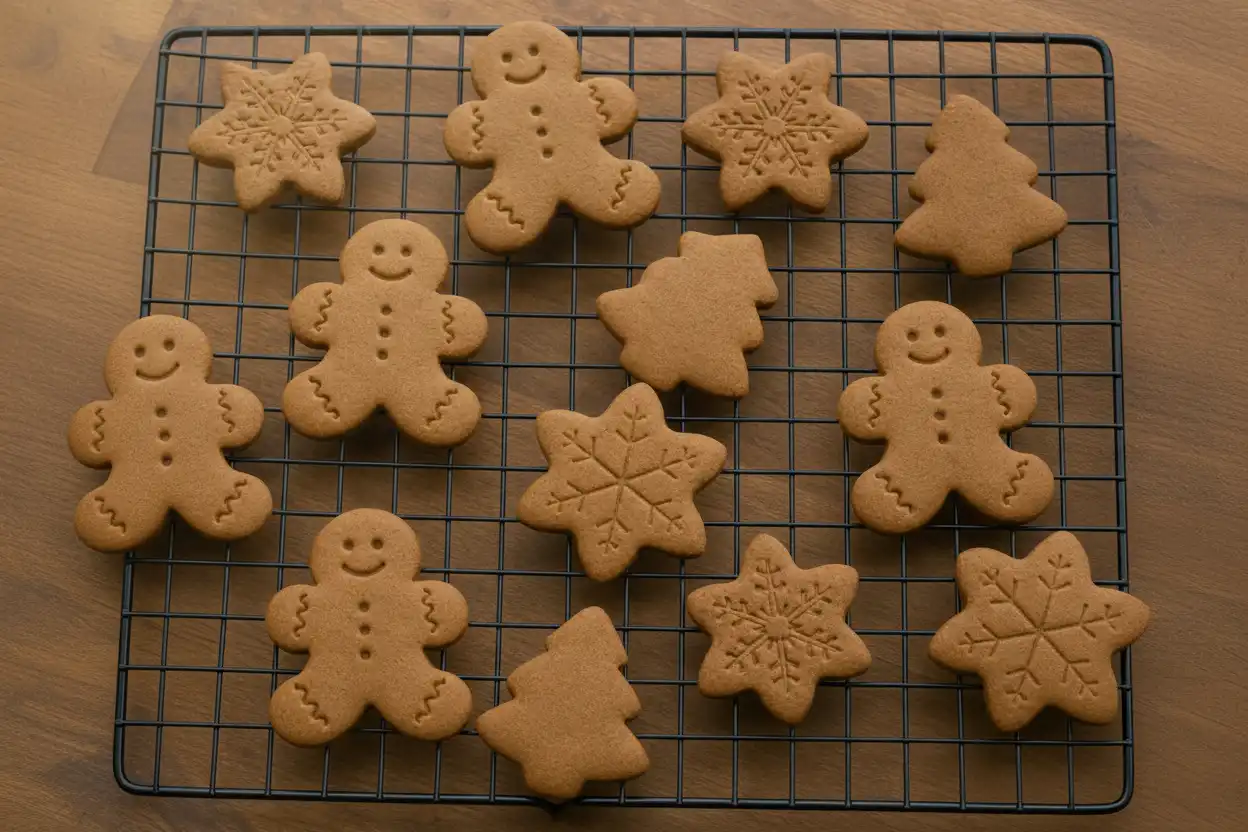
Beautiful decorating begins before the icing comes out. Gingerbread cookies need to be firm enough to hold their shape, but not so dry that they crack when handled. A dough that is rolled evenly and chilled before baking will give you smoother edges and flatter surfaces, which makes decorating easier.
For the best decorating results:
- Roll the dough to an even thickness, usually about 1/4 inch.
- Chill cut shapes before baking so they keep crisp edges.
- Bake similar-sized cookies together so they brown evenly.
- Let cookies cool completely before decorating.
- Brush away loose crumbs before adding icing.
If the cookies are slightly puffed, you can still decorate them beautifully. Use designs that embrace the texture, such as rustic snow, sweater patterns, woodland animals, or simple icing outlines.
Choose an Icing Style That Matches Your Design
Royal icing is the classic choice for gingerbread because it dries firm and holds fine details well. You can adjust the consistency depending on the look you want.
A thicker icing works best for:
- Outlines
- Lettering
- Dots and pearls
- Raised borders
- Fine details like faces, buttons, and snowflakes
A thinner icing works best for:
- Flooding large areas
- Smooth backgrounds
- Marbled effects
- Watercolor-style designs
Buttercream can also be used, especially if you prefer a softer bite, but it will not dry as firmly. Melted chocolate, glaze, and candy melts are other options for quick, flavorful decorating. For gingerbread houses or cookies that need to be stacked, gifted, or packed, firm-drying icing is usually the most practical option.
Classic Piping Techniques With a Creative Twist
Piping is the foundation of many gingerbread cookies decorating ideas. Even a simple outline can make a cookie look finished, especially against the rich brown color of gingerbread.
Try these easy variations:
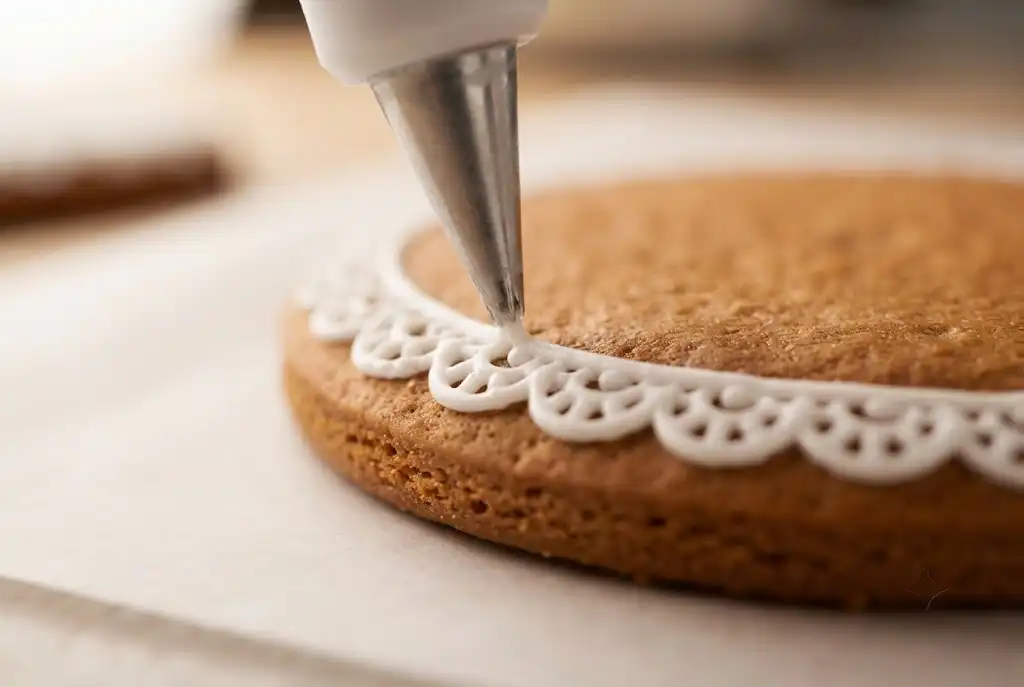
- Scalloped borders: Pipe small connected curves around the cookie edge for a lace-like effect.
- Dot borders: Add tiny icing dots around stars, hearts, trees, or mittens.
- Sweater lines: Pipe horizontal, vertical, and zigzag lines to mimic knitted winter patterns.
- Snowflake details: Start with a six-point star shape, then add small branches along each line.
- Monograms: Add initials to round, heart-shaped, or ornament-style cookies.
If you are new to piping, practice on parchment paper first. Keep your hand steady, apply even pressure, and lift the piping tip slightly above the cookie so the icing can fall into place rather than being dragged.
Flooded Icing for Smooth, Colorful Designs
Flooding is the technique of filling an outlined area with thinner icing to create a smooth surface. It is ideal for ornaments, mittens, stockings, houses, and large gingerbread people.
To flood a cookie:
- Pipe an outline with medium-thick icing.
- Let the outline set for a few minutes.
- Fill the inside with thinner icing.
- Use a toothpick or scribe tool to guide icing into corners.
- Tap the cookie gently to smooth the surface and release air bubbles.
Once the base layer dries, you can add details on top. For example, flood a gingerbread sweater in red icing, let it set, then pipe white snowflakes and green trim. Or flood an ornament shape in pale blue and add silver sprinkles, tiny stars, and delicate white dots.
Wet-on-Wet Designs for Instant Pattern
Wet-on-wet decorating means adding one icing color into another while both are still wet. The colors settle together and create a smooth, professional-looking pattern.
This technique is perfect for:
- Polka dots
- Hearts
- Stripes
- Plaid details
- Marbled ornaments
- Simple floral shapes
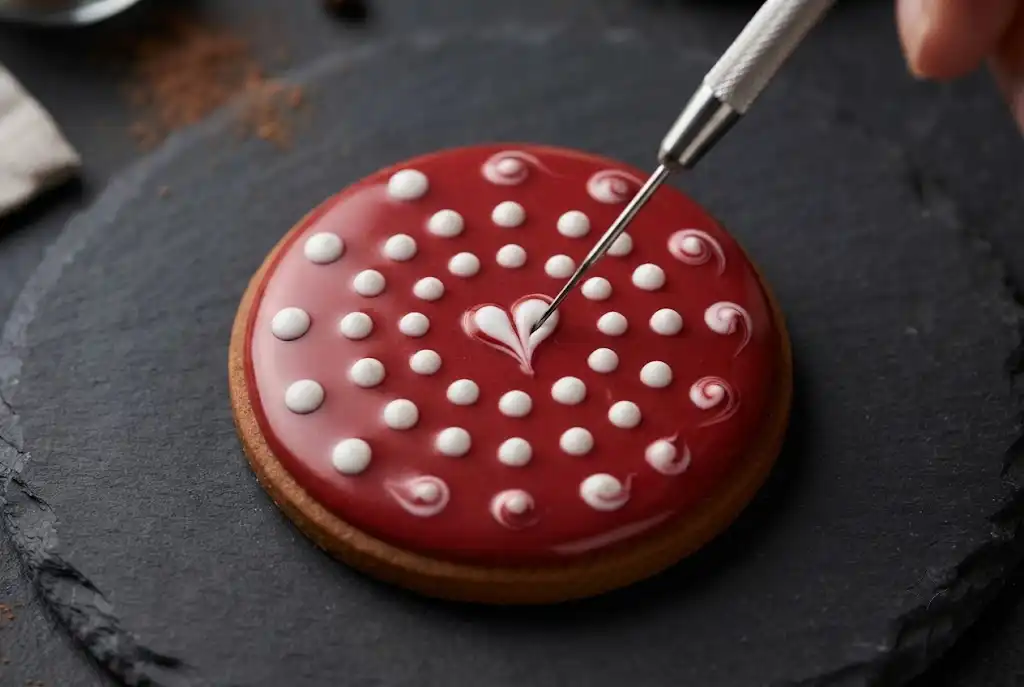
For easy hearts, flood the cookie with one color, then add small dots in another color while the icing is wet. Drag a toothpick through each dot from top to bottom to create heart shapes. For a marble effect, add thin lines of a second color and swirl gently with a toothpick. Avoid overmixing, or the colors can become muddy.
Use Edible Decorations for Texture and Sparkle
Edible decorations add dimension, color, and personality. They are especially helpful when you want cookies to look impressive without spending hours on detailed piping.
Consider using:
- Sanding sugar for sparkle
- Nonpareils for colorful texture
- Dragées or sugar pearls for elegant accents
- Mini chocolate chips for eyes or buttons
- Crushed peppermint for a wintery finish
- Toasted coconut for snowy texture
- Chopped nuts for rustic designs
- Dried fruit for natural color
- Tiny candies for ornaments, buttons, and wreaths
Add decorations while icing is still wet so they stick securely. For more precise placement, use tweezers reserved for food use. If you are decorating with children, set out small bowls of toppings and let them mix textures freely.
Creative Themes for Gingerbread Cookies
A strong theme can make a batch of cookies feel cohesive, even if each one is different. Here are several gingerbread cookie ideas that work for holidays, parties, gifts, and winter baking days.
Cozy Winter Cookies
Use white icing, pale blue accents, and sparkling sugar to create snowflakes, mittens, mugs, hats, and evergreen trees. Add tiny dots of icing to mimic falling snow. A little shimmer from sanding sugar makes the cookies look frosty without requiring complicated designs.
Rustic Woodland Cookies
Decorate bears, foxes, owls, mushrooms, pine trees, and cabins with earthy tones. Use chocolate icing, white accents, chopped nuts, and dried cranberries. Keep the designs slightly imperfect for a handmade, woodland-inspired look.
Vintage Holiday Cookies
Choose soft red, cream, green, and gold tones. Pipe delicate borders, small bows, ornaments, holly leaves, and lace-like details. Use sugar pearls or tiny candies as accents. This style works especially well for cookie gift boxes.
Candy Shop Cookies
Go bold with bright icing, gumdrops, peppermints, licorice pieces, chocolate candies, and colorful sprinkles. This playful approach is ideal for gingerbread people, houses, stockings, and trees.
Minimalist Gingerbread
Not every cookie needs to be heavily decorated. A simple white icing outline, a few dots, and one elegant detail can look beautiful. Try a single snowflake on a round cookie, a white border on a star, or tiny icing buttons on a gingerbread person.

Decorating Gingerbread People With Personality
Gingerbread people are classic because they can be customized endlessly. Instead of making each one identical, give them different outfits, expressions, and accessories.
Ideas include:
- Scarves made from piped icing or strips of fondant
- Candy buttons down the center
- Smiling, surprised, or winking faces
- Sweater patterns with zigzags and dots
- Icing hair, hats, bows, or earmuffs
- Tiny aprons, overalls, or dresses
- Sports jerseys or party outfits
For a polished look, limit each cookie to three or four colors. Too many colors can make the design feel busy, while a smaller palette makes even playful cookies look intentional.
Stencils, Stamps, and Impressions
If you want detailed patterns without piping every line by hand, use stencils or texture tools. Food-safe stencils can be placed over dry icing, then dusted with cocoa powder, powdered sugar, edible shimmer, or airbrushed color. This creates delicate patterns on ornaments, stars, and plaques.
You can also press texture into fondant or modeling chocolate before placing it on a cookie. Knit patterns, lace impressions, and woodgrain textures work especially well with gingerbread’s warm color and spiced flavor.
For a simple stamped look, use clean letter stamps or cookie embossers before baking. Once the cookie cools, highlight the design with a light dusting of powdered sugar or a thin icing glaze.
Layered Decorating for More Dimension
Layering gives cookies a more advanced look. Start with a base layer, let it dry, then add raised details on top. This is useful for wreaths, gingerbread houses, ornaments, animals, and character cookies.
Try these layered effects:
- Flood a tree in green, then add raised garlands and sprinkle ornaments.
- Pipe a white base for a scarf, then add colored stripes once dry.
- Add small dots over dried icing to create a pearl border.
- Build wreath leaves with short icing strokes, then add red candy berries.
- Create snow on rooftops with thick white icing and sanding sugar.
Patience matters. If you add details before the base is dry enough, colors may bleed or sink. For crisp layers, let flooded cookies dry for several hours or overnight before adding final accents.
Natural and Flavorful Decoration Ideas
Decorations can add flavor as well as style. Gingerbread pairs beautifully with citrus, chocolate, nuts, vanilla, caramel, and warm spices.
Try adding:
- Orange or lemon zest to icing for brightness
- Cocoa powder to create chocolate icing details
- Cinnamon sugar for a spiced sparkle
- Crushed freeze-dried raspberries for red color and tart flavor
- Toasted almonds or pecans for crunch
- Candied ginger for extra warmth
- White chocolate drizzle for contrast
These edible decorations are especially useful if you want a more grown-up cookie tray with less candy and more balanced flavor.
Color Palettes That Work Beautifully With Gingerbread
Because gingerbread is naturally dark and warm-toned, some colors stand out more than others. White icing is always striking, but you can expand your palette depending on the mood you want.
Popular combinations include:
- White, gold, and cream for an elegant look
- Red, green, and white for classic holiday cookies
- Pale blue, white, and silver for winter themes
- Pink, red, and white for hearts or gift cookies
- Brown, ivory, and forest green for rustic designs
- Bright candy colors for playful party cookies
Gel food coloring is usually best because it creates strong color without thinning the icing too much. Add color gradually, and remember that icing often deepens as it rests.
Common Decorating Mistakes and How to Avoid Them
Even simple decorating becomes easier when you know the most common problems.
If icing runs over the edge, it may be too thin or the outline may not have set long enough. Thicken the icing slightly and give borders a few minutes to firm up.
If colors bleed, the base icing may be too wet, the color may be overly saturated, or the cookies may be stored in a humid place. Let layers dry fully and avoid excessive food coloring.
If decorations fall off, they were likely added after the icing dried. Apply sprinkles, candies, and sugar while the icing is still tacky.
If piping lines break, the icing may be too stiff or the piping tip may be clogged. Add a few drops of water to loosen the icing and check for dried bits near the opening.
Make-Ahead and Storage Tips
Gingerbread cookies are excellent for making ahead. Plain baked cookies can often be prepared in advance and decorated later, as long as they are stored in an airtight container. Decorated cookies should be fully dry before stacking or packaging.
For best results:
- Let royal icing dry completely before storing.
- Place parchment between layers of cookies.
- Keep cookies away from humidity.
- Avoid refrigerating decorated cookies unless your specific icing requires it.
- Package delicate cookies in a single layer when gifting.
If you are hosting a decorating party, bake the cookies the day before and prepare icing in several colors. Keep icing covered so it does not crust over, and set out toppings in small bowls for easy access.

Simple Ideas for Beginners
If you are just starting out, choose designs that look charming without needing perfect lines. Some of the best beginner-friendly options include:
- Stars with white outlines and sugar sprinkles
- Trees with zigzag icing garlands
- Gingerbread people with candy buttons
- Snowflakes made from simple straight lines
- Round cookies decorated like ornaments
- Hearts with wet-on-wet polka dots
- Stockings with fluffy icing cuffs
The goal is not perfection. Handmade cookies have character, and gingerbread is especially forgiving because its rich color makes simple icing details stand out.
Final Decorating Inspiration
The most memorable gingerbread cookies decorating ideas usually combine a few techniques rather than relying on just one. Pair piped outlines with sprinkles, flooded backgrounds with raised details, or minimalist white icing with a touch of edible shimmer. Mix classic shapes with unexpected colors, or create a whole themed set around winter animals, vintage ornaments, cozy sweaters, or candy-covered houses.
Decorating gingerbread cookies is part craft, part baking project, and part personal expression. Start with a sturdy cookie, choose a manageable color palette, use edible decorations thoughtfully, and build your designs layer by layer. With a little practice, every batch can become more creative, more polished, and more fun to share.