“There is nothing more comforting than the classic combination of Chocolate Chip Cookies and Milk, a timeless ritual that perfectly balances sweetness and rich textures.”
There’s a reason warm cookies and a cold glass of milk feel timeless: the combination balances sweetness, richness, texture, and nostalgia in one simple ritual. The cookie brings buttery edges, soft centers, and pockets of melted chocolate. The milk cools each bite, softens the crumb, and refreshes your palate so the next bite tastes just as good as the first.
This how-to guide walks you through creating the best chocolate chip cookies milk pairing at home, from choosing the right chocolate to baking the right texture and serving everything at the perfect moment. Whether you prefer classic milk chocolate chip cookies, chewy bakery-style cookies, or crisp dunkable cookies, the steps below will help you build a pairing that feels intentional, comforting, and delicious.
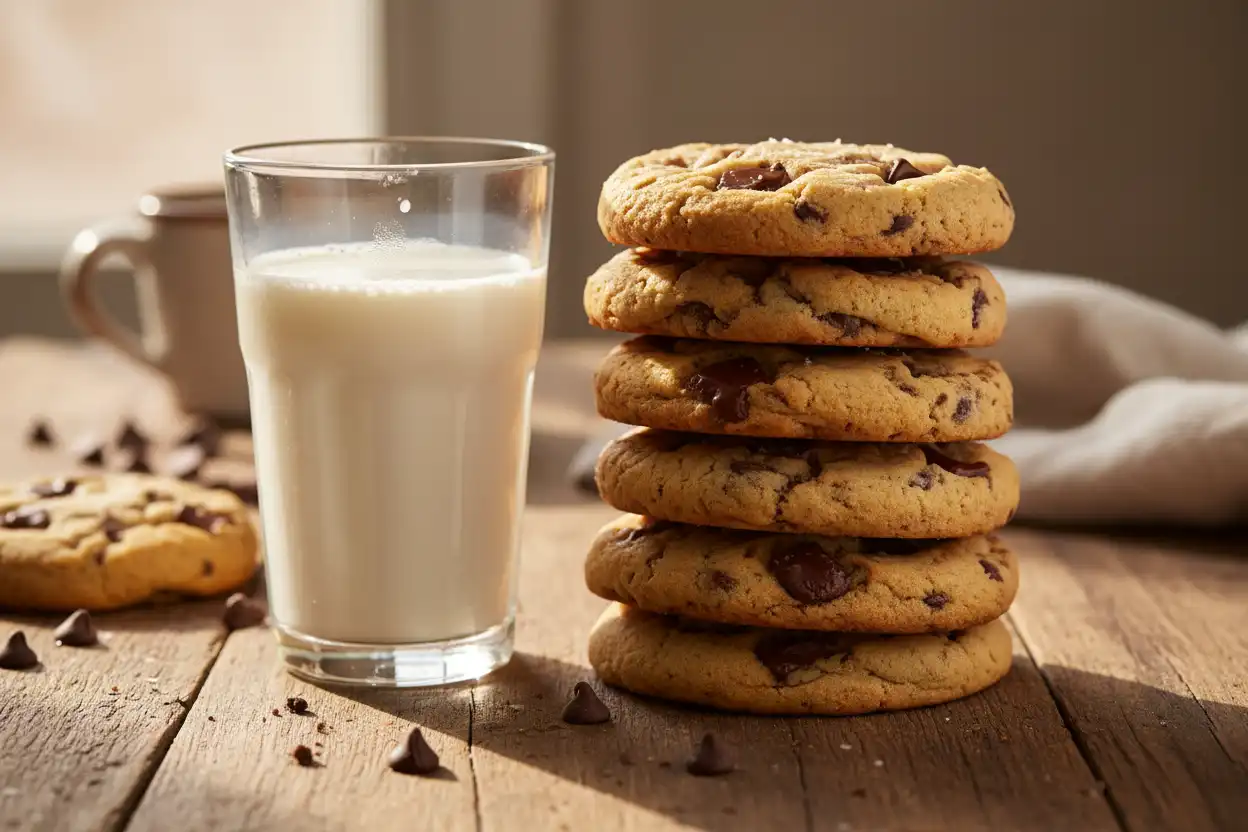
What Makes Cookies and Milk Work So Well?
A great pairing is about contrast. Chocolate chip cookies are sweet, buttery, and often slightly salty. Milk is cool, creamy, and mild. Together, they create balance.
Milk also changes the way a cookie feels. A quick dip softens crisp edges and turns a chewy center even more tender. If you use milk chocolate cookies, the creaminess of the chocolate blends especially well with the dairy, creating a smoother, sweeter bite than darker chocolate varieties.
The goal is not just to bake cookies and pour milk. The goal is to match texture, temperature, chocolate type, and serving style so every bite feels just right.
Step 1: Choose the Best Cookie Style for Your Chocolate Chip Cookies and Milk Pairing
Before you start baking, decide what kind of cookie experience you want. This choice affects everything from the dough to the dunk.
For a soft and chewy cookie, use a dough that has enough brown sugar and moisture. These cookies pair beautifully with very cold milk because the contrast makes each bite feel extra rich.
For a crisp-edged cookie, bake slightly longer and shape smaller portions. These are ideal for dunking because they hold their structure for a moment before softening.
For a thick bakery-style cookie, chill the dough and use larger scoops. This style is best when served warm, with chocolate still slightly melted.
For milk chocolate chip cookies, expect a sweeter, creamier flavor. Milk chocolate melts smoothly and pairs naturally with whole milk, oat milk, or any creamy milk alternative.
If you are making cookies specifically for dipping, avoid going too delicate. A cookie that is too thin or underbaked may break apart in the glass.
Step 2: Pick the Right Chocolate
Chocolate is the star of the cookie, so choose it with the milk pairing in mind.
Milk chocolate is soft, sweet, and creamy. It is ideal if you want a classic, dessert-like flavor. Milk chocolate chip cookies are especially good for family gatherings, after-school treats, and anyone who prefers a sweeter cookie.
Semi-sweet chocolate gives a more balanced result. It keeps the cookie from tasting overly sweet and works with almost any milk.
Dark chocolate adds bitterness and depth. It can be excellent with richer milk or lightly sweetened plant-based milk, but it creates a more grown-up flavor.
You can also combine chocolates. A mix of milk chocolate and semi-sweet chocolate gives you sweetness, depth, and a more interesting bite. If you want to lean into the phrase chocolate chip cookies milk chocolate without making the cookie too sweet, use mostly semi-sweet chips with a smaller amount of chopped milk chocolate.
For the best texture, consider using both chocolate chips and chopped chocolate. Chips hold their shape, while chopped chocolate creates soft ribbons and pockets throughout the cookie.
Step 3: Build a Better Cookie Dough
A good cookie dough should taste balanced before it ever reaches the oven. You want butteriness, sweetness, chocolate, and just enough salt to make the flavors pop.
Start with softened butter, not melted butter, if you want a classic chewy cookie with structure. Cream the butter with sugar until the mixture looks lighter and smoother. This helps create a better texture.
Use a combination of brown sugar and granulated sugar. Brown sugar adds moisture and chewiness, while granulated sugar encourages crisp edges. If you want a cookie that dips well, this combination is usually better than using only one type of sugar.
Add eggs and vanilla for richness and aroma. Then mix in flour, leavening, and salt. Do not skip the salt. It keeps the cookie from tasting flat and helps balance the sweetness of milk chocolate.
When adding chocolate, fold it in gently. Overmixing after the flour is added can make cookies tougher. You want the dough just combined, with chocolate evenly distributed.
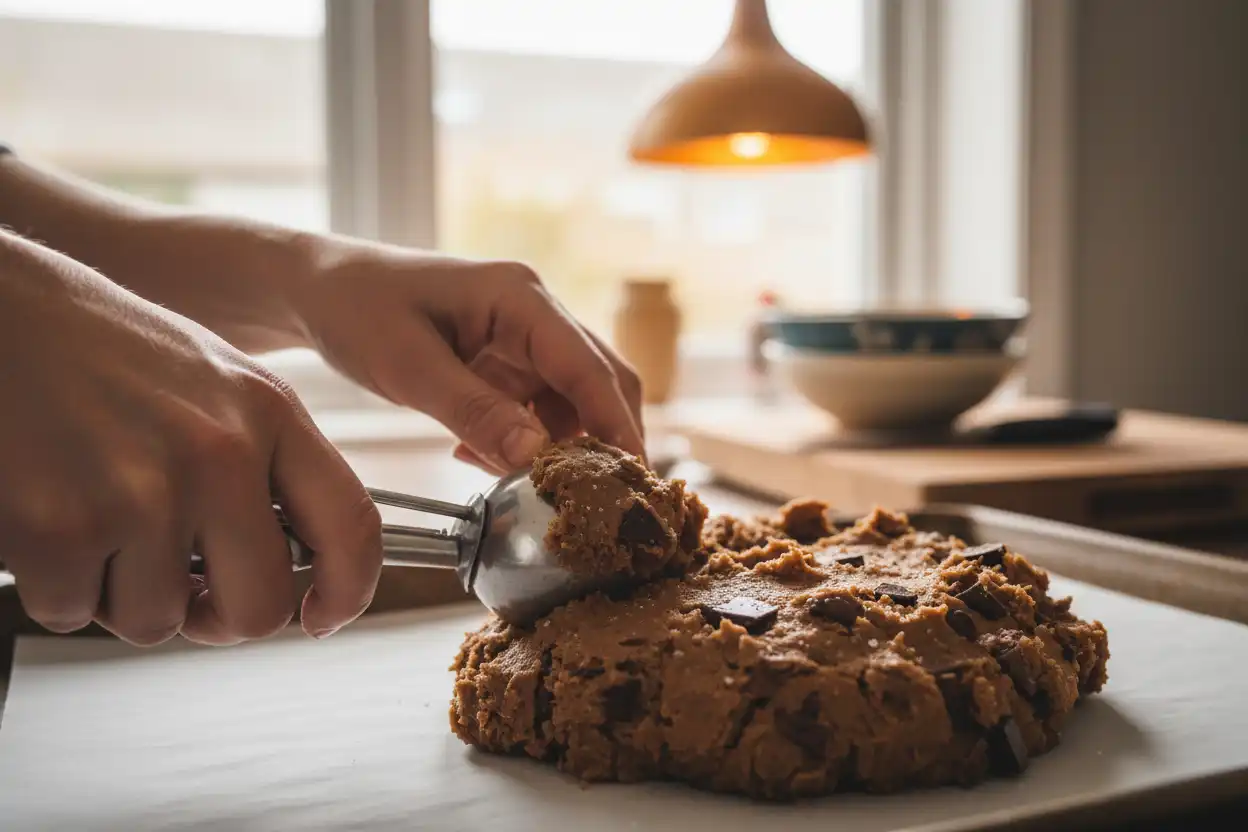
Step 4: Chill the Dough for Better Flavor
Chilling the dough is one of the easiest ways to improve homemade cookies. Even a short rest helps the flour hydrate and the flavors settle. The result is a cookie with better texture, less spreading, and a deeper flavor.
For everyday baking, chill the dough for at least 30 minutes if you can. For a more developed bakery-style cookie, chill it longer. If you are short on time, scoop the dough first, then chill the dough balls so they are ready to bake.
This step is especially helpful for milk chocolate cookies because milk chocolate can make the overall cookie taste sweeter. Chilling helps the dough develop more caramel-like notes, which balances the chocolate.
Step 5: Shape Cookies for the Way You’ll Serve Them
Cookie size matters. If you plan to serve cookies with tall glasses of milk, shape them so they are easy to hold and dunk.
For dipping, medium cookies usually work best. They should be wide enough to feel satisfying but not so large that they fall apart in the glass. Make the dough balls even in size so they bake consistently.
For a warm dessert plate, larger cookies are excellent. Serve one or two with a small glass of milk on the side.
For parties, make smaller cookies and offer milk in mini glasses. This turns chocolate chip cookies milk into a fun, easy-to-serve treat without requiring plates and forks.
Before baking, press a few extra chocolate pieces on top of each dough ball. This gives the cookies a more generous look and ensures every bite has visible chocolate.
Step 6: Bake for Texture, Not Just Time
Baking times are useful, but visual cues are better. Cookies continue to set after they come out of the oven, so remove them when the edges look set and the centers still look slightly soft.
For soft cookies, look for pale centers and lightly golden edges. Let them rest on the baking sheet so they finish setting without overbaking.
For dunkable cookies, bake until the edges are more golden and the centers are set but not dry. These cookies will hold up better when dipped in milk.
For thick cookies, bake until the outside is firm enough to lift but the center remains tender. A short rest on the baking sheet is important because the cookie needs time to stabilize.
If your cookies spread too much, the dough may be too warm or the baking sheet may be hot. Chill the next batch a little longer and always start with a cool baking sheet.
Step 7: Choose the Best Milk
The milk you serve changes the whole experience. There is no single correct choice, but the best option depends on your cookie style.
Whole milk is the classic choice. It is creamy enough to match buttery cookies and mild enough to let the chocolate shine.
Reduced-fat milk is lighter but still works well with rich cookies. It is a good choice if the cookies are very sweet or heavily loaded with chocolate.
Chocolate milk creates a more dessert-forward pairing. Use it with simple cookies or crisp cookies, since it can make very sweet milk chocolate chip cookies feel extra rich.
Oat milk is creamy and slightly sweet, making it one of the best non-dairy options for cookies. Almond milk is lighter and nuttier, while soy milk offers more body. Coconut milk can be delicious, but its flavor is stronger and may compete with the cookie.
If you are serving a group, offer at least two options: a classic dairy milk and one plant-based milk. Keep both chilled until serving.
Step 8: Serve at the Right Temperature
Temperature is the secret to a memorable pairing. Warm cookies and cold milk create the strongest contrast.
Let cookies cool for a few minutes after baking so they are firm enough to pick up but still warm inside. This is the moment when the chocolate is soft, the edges are delicate, and the aroma is strongest.
Milk should be cold, not room temperature. Chill glasses ahead of time if you want a more polished presentation. The colder milk cuts through the richness of the cookie and makes each bite feel fresh.
If you are serving cookies later, warm them briefly before serving. You do not need to make them hot; the goal is simply to soften the chocolate and revive the texture.
Step 9: Master the Dunk
Dunking sounds simple, but there is a technique to getting the perfect bite.
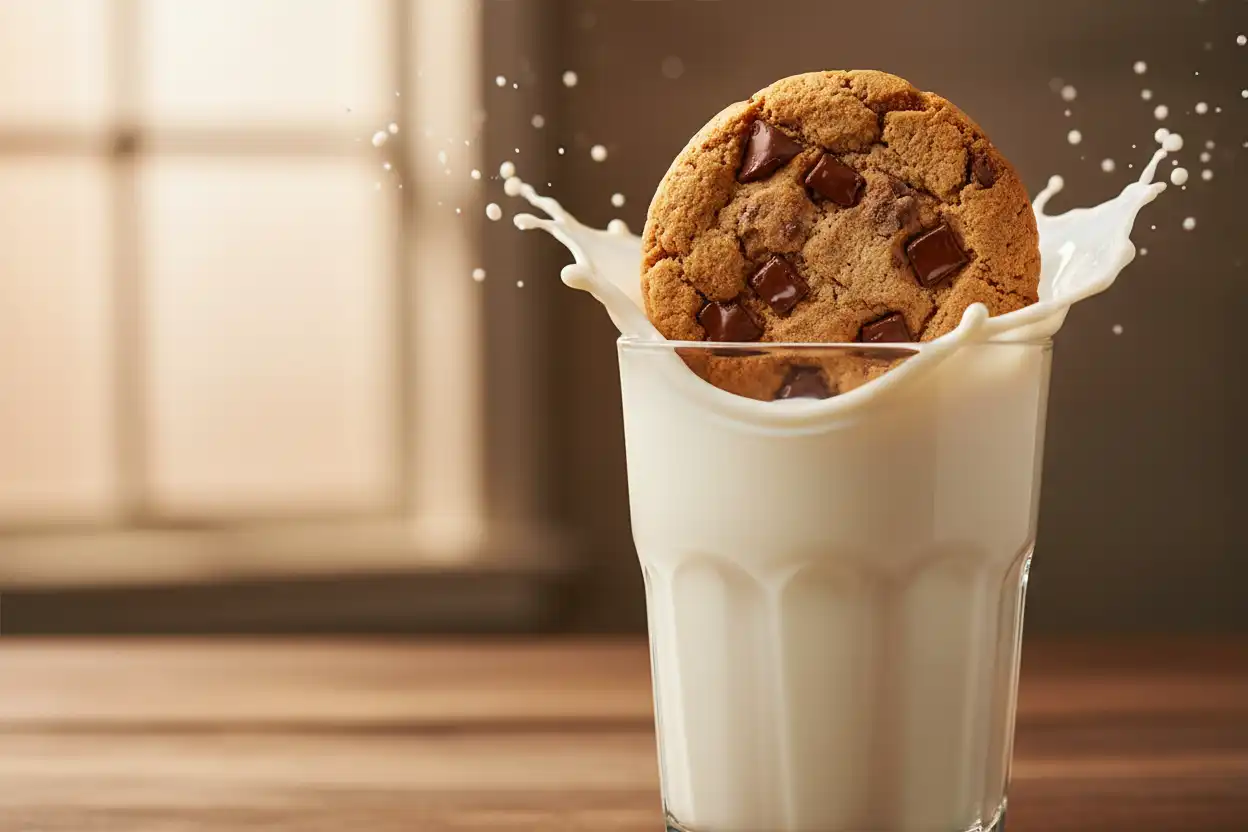
Hold the cookie firmly by one edge and dip only part of it into the milk. A full dunk can make the cookie collapse, especially if it is soft. For crisp cookies, a longer dip works. For chewy cookies, a quick dip is enough.
Try this simple approach:
- Dip one-third to one-half of the cookie into the milk.
- Hold for one or two seconds if the cookie is soft.
- Hold for three to five seconds if the cookie is crisp.
- Lift, pause briefly to avoid drips, then take a bite.
The best dunked bite should be softened but not soggy. If pieces are breaking off into the glass, shorten the dunk time or bake the next batch slightly longer.
Step 10: Create a Simple Cookie-and-Milk Board
For gatherings, turn the pairing into a small dessert board. You do not need anything elaborate. Arrange cookies on a platter and serve milk in small glasses or bottles.
Include a few cookie variations if possible:
- Classic chocolate chip cookies
- Milk chocolate chip cookies
- Crisp mini cookies for dunking
- Soft, thick cookies for warm serving
Then add small extras that complement the pairing:
- Flaky salt for sprinkling
- Mini marshmallows
- Strawberries or raspberries
- Caramel drizzle
- Chocolate shavings
Keep the focus on the cookies and milk. Too many additions can distract from the comfort of the pairing.

Troubleshooting Common Cookie Problems
If your cookies are too flat, the dough may be too warm, the butter may have been too soft, or the baking sheet may have been hot. Chill the dough and try again.
If your cookies are too cakey, there may be too much flour or the dough may be overmixed. Measure carefully and mix only until combined.
If your cookies are too sweet, use a mix of milk chocolate and semi-sweet chocolate next time. You can also add a small sprinkle of flaky salt after baking.
If your cookies are too dry, they may be overbaked. Pull the next batch earlier, when the centers still look slightly soft.
If the cookie falls apart in milk, bake a little longer or make smaller cookies. Dunkable cookies need enough structure to survive the dip.
Easy Flavor Variations
Once you have the basic pairing down, try small changes.
Add espresso powder to the dough for a deeper chocolate flavor. Use cinnamon for warmth. Stir in toasted nuts for crunch. Add a small amount of orange zest if you want a brighter flavor.
For extra-creamy milk chocolate cookies, use chopped milk chocolate instead of only chips. For a more balanced cookie, combine milk chocolate with semi-sweet chocolate. For a nostalgic dessert, serve warm cookies with chocolate milk and a tiny pinch of salt on top.
You can also make cookie sandwiches with a small amount of vanilla frosting or ice cream, then serve with milk on the side. This is richer than a standard pairing, so smaller portions work best.
How to Store Cookies for Later
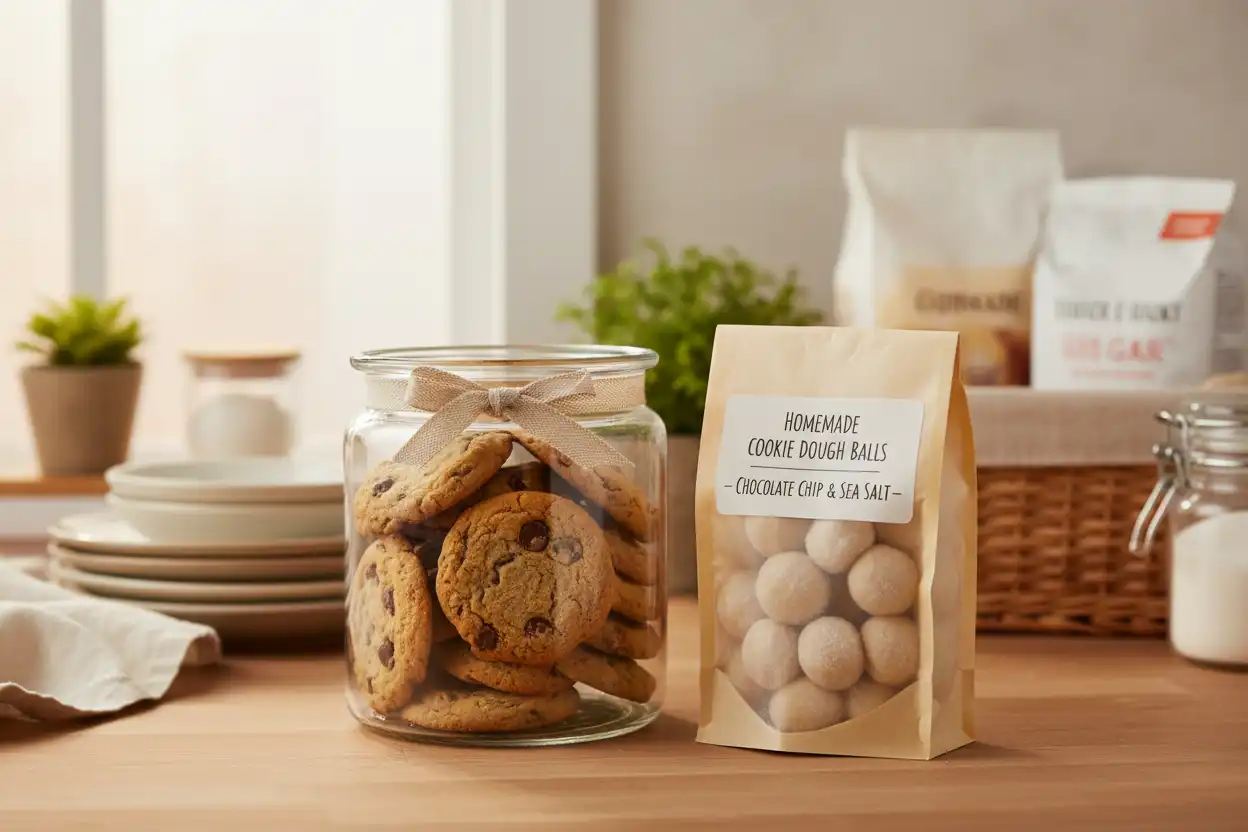
Store cooled cookies in an airtight container at room temperature. If you want to keep them soft, add a small piece of bread to the container and replace it as needed. Keep crisp cookies in a separate container so they do not absorb moisture from softer cookies.
To freeze cookie dough, scoop it into dough balls and freeze until firm. Then store the frozen dough in a sealed freezer-safe bag or container. Bake from frozen by adding a little extra time and watching for set edges.
To refresh baked cookies, warm them gently before serving. Pair with cold milk, and they will taste close to freshly baked.
Final Tips for the Perfect Pairing
The best cookies-and-milk moment comes from small details. Use good chocolate. Chill the dough. Bake for the texture you want. Serve the cookies warm and the milk cold. Match sweet milk chocolate chip cookies with a milk that keeps the bite balanced.
Most importantly, keep the experience simple. A plate of homemade cookies and a glass of milk does not need much decoration. When the cookie is tender, the chocolate is soft, and the milk is cold, the pairing speaks for itself.