The Ultimate Guide to Cookie Flavors: Classic, Gourmet, Global, and Creative Baking Ideas
A comprehensive handbook for home bakers and cookie enthusiasts exploring taste profiles, flavor pairing science, and recipe creation.
Table of Contents
- Classic Cookie Flavors and How to Elevate Them
- Gourmet and Elevated Flavor Combinations
- Global and Cultural Cookie Flavors
- Seasonal and Holiday Flavor Profiles
- Savory, Herbal, and Unexpected Cookie Flavors
- Dietary-Conscious Flavor Profiles
- The Science of Flavor Infusion in Cookie Dough
- Step-by-Step Guide: How to Craft Custom Cookie Flavors
- Cookie Flavor Profile Comparison Table
- Expert Baking Tips for Maximum Flavor Impact
- Common Flavor Building Mistakes and How to Avoid Them
- Flavor Pairing Best Practices
- Essential Tools and Flavor Building Resources
- Internal Linking Suggestions
- External Authority References
- Key Takeaways
- Frequently Asked Questions
Quick Answer: What Makes Great Cookie Flavors?
Cookie flavors range from traditional profiles like chocolate chip and vanilla shortbread to complex gourmet combinations incorporating brown butter, sea salt, botanicals, and global spices. Creating memorable cookie flavors relies on balancing sweet bases with salt, acid, bitter notes, or aromatic compound extracts.
Successful flavor development uses fat-soluble ingredients like butter and oil to carry subtle aromas throughout the dough. Elevating standard cookies requires high-quality vanilla paste, toasted nuts, browned fats, or warm baking spices rather than artificial flavorings.
Core Takeaways:
- Fat acts as the primary carrier for flavor compounds in cookie dough.
- Salt and citrus acidity prevent overly sweet dough profiles.
- Chilling dough intensifies butter caramelization and spice concentration.
Baking exceptional cookies requires more than following a basic dough ratio. Understanding how different ingredients interact allows you to move beyond basic recipes and build distinctive taste profiles.
This guide serves home bakers looking to upgrade classic recipes and dessert lovers seeking unique taste combinations. You will learn the science behind flavor extraction, pairing principles, and practical techniques to create professional-quality cookies at home.
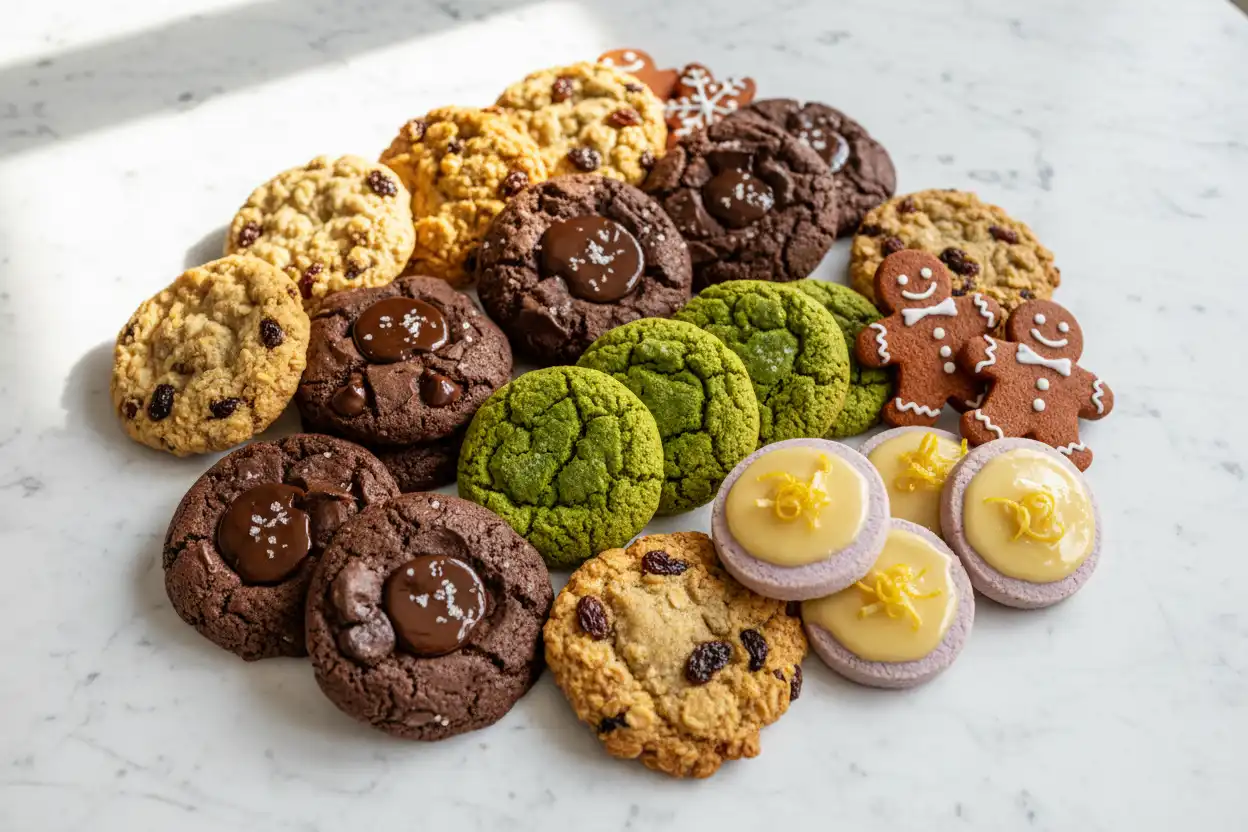
Classic Cookie Flavors and How to Elevate Them
Classic cookie flavors endure because they offer familiar comfort and predictable textures. Enhancing these staple recipes requires simple adjustments in ingredient quality and preparation technique.
Chocolate Chip
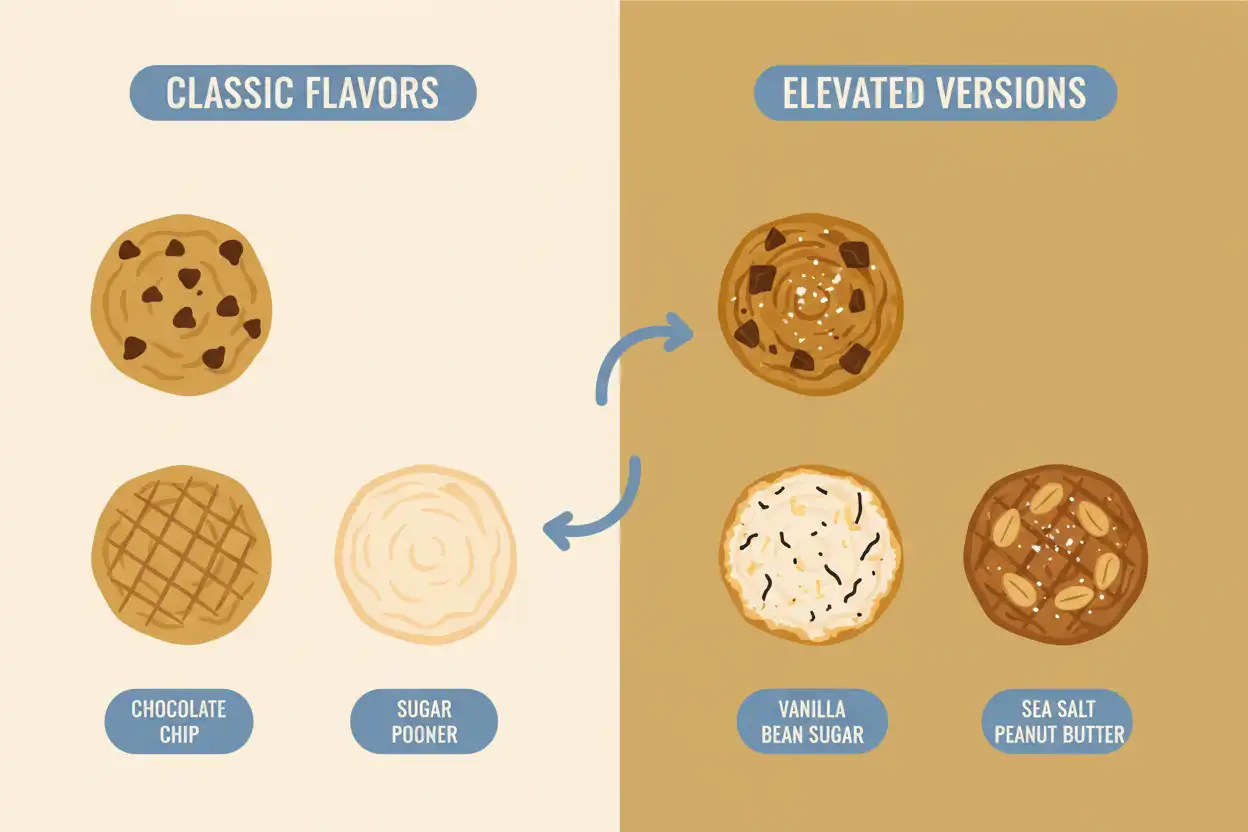
Traditional chocolate chip cookies depend on brown sugar caramel notes and vanilla. Elevate this staple by using a mix of dark chocolate chunks and milk chocolate chips to create multidimensional sweetness.
Adding a pinch of espresso powder accentuates the cacao without introducing a coffee taste. Finishing the baked cookies with flaky Maldon sea salt instantly balances the sugar profile.
Peanut Butter
Peanut butter cookies often suffer from a dense, dry texture and muted peanut presence. Use dark roasted creamy peanut butter alongside chopped roasted peanuts for textural contrast and deeper aroma.
A touch of dark honey or pure maple syrup enhances the roasted nut background. Ensure your recipe contains enough salt to cut through the heavy fats.
Snickerdoodle
Snickerdoodles rely on the distinct tang of cream of tartar paired with a sweet cinnamon sugar coating. Upgrade the cinnamon profile by blending standard Cassia cinnamon with fragrant Ceylon or Saigon varieties.
Adding ground cardamom or nutmeg to the rolling sugar adds subtle warmth. Using pure vanilla bean paste inside the dough creates a richer background note.
Oatmeal Raisin
Oatmeal raisin cookies benefit greatly from plumped dried fruit and warm background spices. Soaking raisins in warm apple cider, rum, or vanilla extract prevents them from drawing moisture out of the dough during baking.
Toasting rolled oats on a baking sheet before mixing introduces a nutty aroma. A pinch of ground mace or allspice adds depth to standard cinnamon dough bases.
Sugar Cookie and Shortbread
Butter-forward cookies need top-tier ingredients to shine. Switch from standard vanilla extract to high-grade vanilla bean paste or whole scraped vanilla pods.
Using European-style cultured butter with higher butterfat content delivers a melt-in-your-mouth texture. A tiny fraction of almond extract rounds out the dairy sweetness.
Molasses and Gingerbread
Gingerbread requires a sturdy spice backbone to balance heavy dark molasses. Combine ground dried ginger with freshly grated ginger root for both sharp heat and bright top notes.
Blackstrap molasses provides deep earthy tones, while a hint of ground clove and black pepper adds spicy complexity. Dark brown sugar keeps the center soft and chewy.
White Chocolate Macadamia Nut
White chocolate can easily overpower a cookie with sweetness. Toasting macadamia nuts brings out natural oils that counteract sugary cocoa butter profiles.
Adding fresh orange zest or dried tart cranberries creates a necessary acid contrast. Look for white chocolate containing real cocoa butter rather than palm oil solids.
Double Chocolate
Double chocolate cookies require intense cocoa concentration to avoid tasting like flat chocolate cake. Bloom Dutch-processed cocoa powder in hot melted butter or warm coffee before mixing with dry ingredients.
This blooming step activates flavor compounds trapped in the cocoa solids. Semisweet chocolate chips provide rich, molten pockets inside the dense crumb.
Gourmet and Elevated Flavor Combinations
Gourmet cookie design focuses on layering contrasting taste notes. Combining fat, sugar, salt, and floral or herbal elements turns standard dough into an artisanal dessert.
Brown Butter and Sea Salt
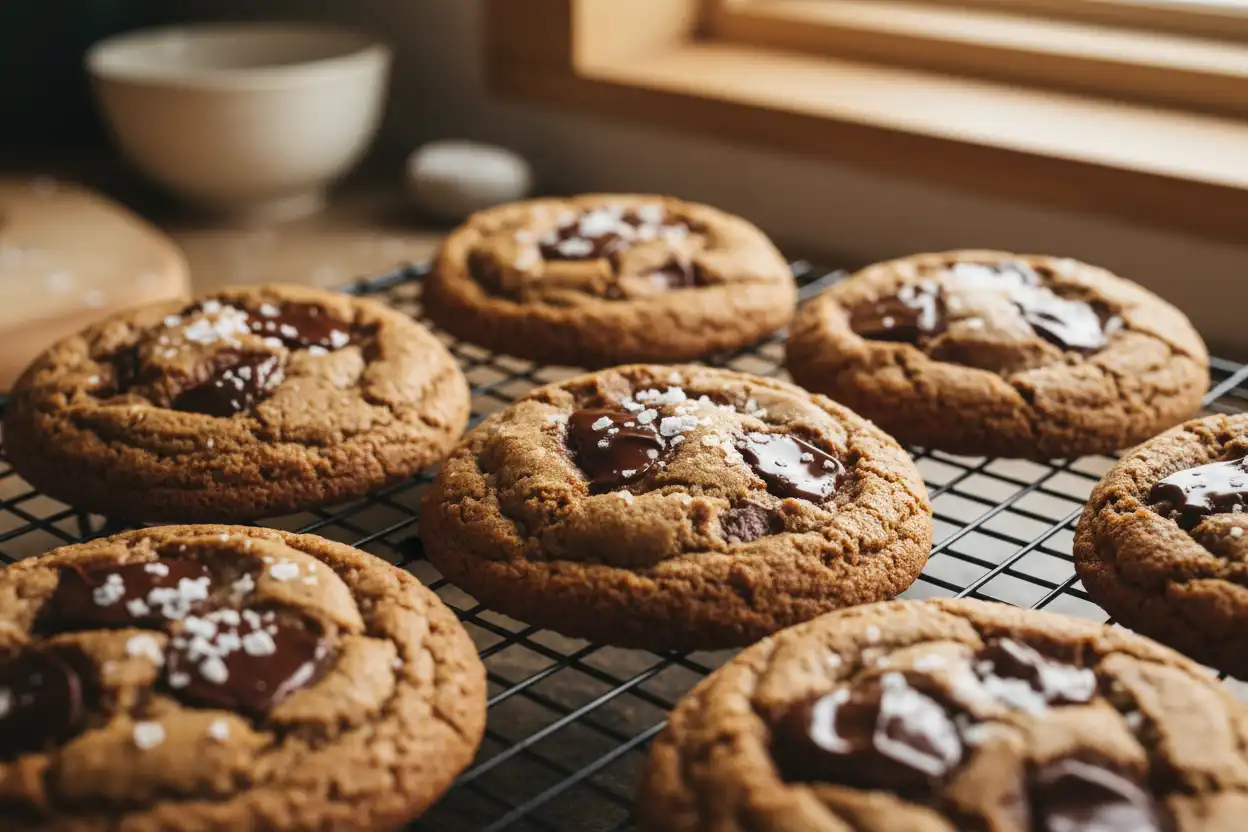
Browning butter transforms milk solids through the Maillard reaction, yielding rich hazelnut and toffee notes. Allow the browned butter to cool slightly before creaming to preserve dough structure.
Pair this rich fat base with dark brown sugar and flaky sea salt. The salt cuts through heavy toasted butter tones, creating an addictive balance.
Espresso Dark Chocolate
Finely ground espresso beans or instant espresso powder intensify cacao flavor compounds. Combine 70% dark chocolate chunks with coarse espresso grounds inside a brown sugar dough.
This combination yields a dark, slightly bitter profile ideal for adult palates. A touch of cinnamon adds a soft Mexican hot chocolate finish.
Matcha White Chocolate
Ceremonial grade matcha powder provides an earthy, grassy bitterness that balances sweet white chocolate. Screen the matcha with your flour to avoid clumping in the dough.
The vibrant green color offers visual appeal alongside complex vegetal notes. Roasted macadamia nuts or black sesame seeds complement this pairing nicely.
Salted Caramel Pecan
Caramel additions can melt out of cookies if not handled properly. Use soft caramel bits or homemade hard caramel pieces that soften without leaking into the pan.
Toasted pecans add woodsy crunch and natural oils that offset sweet sugar syrup notes. A heavy sprinkle of coarse kosher salt finishes the top.
Lemon Lavender
Floral flavors require a light hand to prevent cookies from tasting soapy. Rub fresh culinary lavender buds into granulated sugar alongside fresh lemon zest to release aromatic oils.
This process extracts natural extracts directly into the sugar crystals. A crisp shortbread base supports these delicate top notes best.
Earl Grey and Thyme
Finely ground Earl Grey tea leaves infuse dough with bergamot citrus and dark tea tannins. Adding fresh minced lemon thyme introduces a savory herbal note that cuts sweetness.
Pair this blend with a simple glaze made from powdered sugar and milk. This pairing shines in sliced icebox cookies or butter shortbread rounds.
Bourbon Vanilla Bean
Bourbon provides woodsy oak and smoke notes that enhance traditional vanilla profiles. Add a tablespoon of aged bourbon directly to creamed butter along with vanilla bean paste.
The alcohol cooks off during baking, leaving behind dark caramel and charred oak undertones. Pecans and dark brown sugar make natural additions here.
Raspberry Pistachio
Freeze-dried raspberry powder delivers intense fruit acidity without adding moisture that ruins cookie geometry. Combine tart raspberry pieces with chopped unsalted Sicilian pistachios.
The vibrant red and green colors create striking visual contrast. A white chocolate glaze drizzled over top rounds out the fruit tartness.
Global and Cultural Cookie Flavors
Exploring international baking traditions reveals distinct spice blends, nut meals, and botanical extracts. Importing these profiles diversifies your cookie lineup.
Italian Amaretti and Biscotti
Italian baking relies heavily on nut flours and distinct aromatic extracts. Amaretti cookies use sweet and bitter almond meals paired with whipped egg whites for a chewy interior.
Biscotti feature double-baked dough infused with anise seed, orange blossom water, or whole toasted almonds. These dry, sturdy cookies are engineered specifically for dipping into espresso or sweet wine.
French Sablés and Macarons
French cookie traditions emphasize rich butter proportions and precise meringue techniques. Sablés use high-butter dough enriched with cooked egg yolks for a delicate crumble.
Macarons rely on fine almond flour and aged egg whites filled with flavored ganache or fruit curds. Popular French flavor accents include salted caramel, praline, and dark chocolate.
Middle Eastern Ma’amoul
Ma’amoul cookies feature shortcrust dough made from semolina or flour flavored with rosewater and orange blossom water. Distinctive wooden molds press intricate patterns onto the exterior.
Fillings include spiced date paste, crushed walnuts, or sweetened pistachios mixed with ground cardamom and mahleb. Mahleb offers a unique cherry-almond aroma derived from mahaleb cherry pits.
Mexican Polvorones and Wedding Cookies
Mexican baking utilizes warm spices and toasted nuts to create crumbly melt-in-your-mouth textures. Polvorones feature toasted flour, lard or butter, and ground Mexican canela cinnamon.
Rolled in confectioners’ sugar while warm, these cookies offer a delicate dust coating. The inclusion of toasted pecans or almonds adds structural body and rich nut oils.
Japanese Yuzu and Black Sesame
Japanese dessert profiles focus on balancing subtle bitterness, tart citrus, and nutty toasted seeds. Yuzu juice and zest supply intense aromatic acidity that cuts through sweet doughs.
Black sesame paste (neri goma) produces dark, charcoal-colored cookies with deep earthy flavor. Combining both yields a modern visual and flavor contrast.
Scandinavian Kringla and Cardamom Knots
Nordic bakeries rely on freshly crushed green cardamom pods rather than pre-ground spices. Crushing whole seeds immediately before baking releases citrusy, eucalyptus-like volatile oils.
Kringla and cardamom cookies often incorporate sour cream or buttermilk for a tender crumb. Pearl sugar garnishes provide a crisp crunch on top.
Seasonal and Holiday Flavor Profiles
Aligning cookie offerings with seasonal ingredients takes advantage of peak produce freshness and festive traditions.
Spring: Bright Botanicals and Fruits
Spring profiles lean into light, refreshing notes after heavy winter desserts. Incorporate fresh citrus zests, edible flowers, and early berries.
- Strawberry Rhubarb: Freeze-dried strawberry pieces paired with tart rhubarb jam centers.
- Lemon Thyme: Fresh lemon zest shortbread brushed with a herb-infused glaze.
- Chamomile Honey: Ground dried chamomile blossoms mixed into honey-sweetened sugar dough.
Summer: Tropical and Berry Infusions
Summer cookies feature bold fruit profiles, coconut, and nostalgic campfire combinations. Fruit elements must be managed carefully to avoid soggy dough.
- Key Lime Coconut: Key lime juice glaze over toasted coconut shortbread.
- Raspberry Passionfruit: Tart passionfruit curd filled inside raspberry-dusted thumbprint cookies.
- Campfire S’mores: Graham cracker dough packed with dark chocolate chunks and toasted marshmallow centers.
Autumn: Spiced Squash and Toasted Nuts
Autumn baking highlights caramelized sugars, roasted nuts, and deep baking spices. Moisture management is critical when adding pumpkin puree.
- Pumpkin Spice Chai: Blotting pumpkin puree to reduce water, paired with black tea chai spices.
- Maple Salted Pecan: Pure dark maple syrup dough filled with toasted pecans and sea salt.
- Cranberry Fig Spice: Chopped dried figs and tart cranberries bound with molasses and clove.
Winter: Rich Chocolates and Warm Spirits
Winter demands rich, warming flavors suitable for holiday gifting and cold weather gatherings. Heavy spices and spirit infusions work best here.
- Peppermint Dark Chocolate Bark: Deep cocoa cookies topped with crushed peppermint candy and dark chocolate glaze.
- Gingerbread Chai: Classic gingerbread infused with cardamom, star anise, and black pepper.
- Cinnamon Nutmeg Rum: Spiced rum glaze over soft eggnog-flavored sugar cookies.
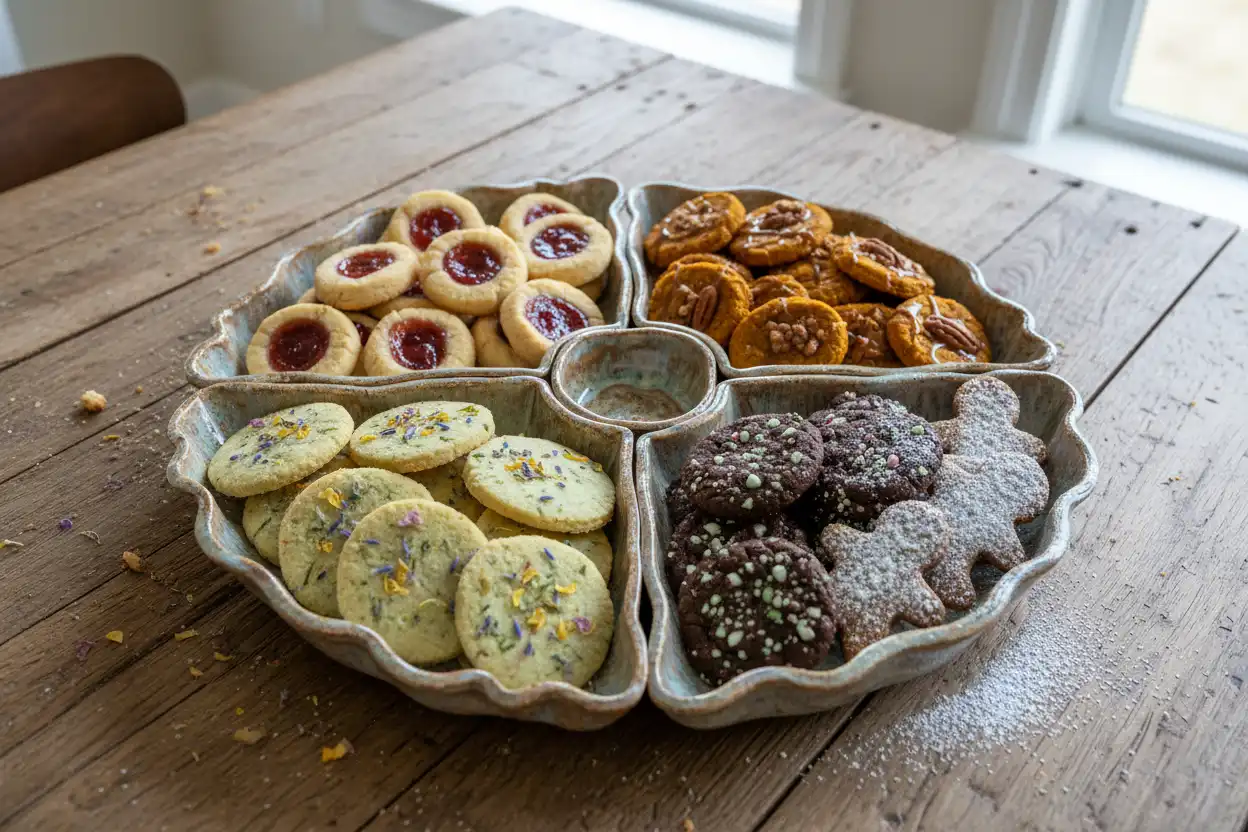
Savory, Herbal, and Unexpected Cookie Flavors
Incorporating savory elements creates complex cookies that appeal to refined palates. Balancing salt, umami, and herbs prevents cookies from tasting like dinner rolls.
Miso White Chocolate Caramel
White miso paste introduces rich umami and saltiness that grounds sweet white chocolate. Cream the miso directly into room-temperature butter to ensure even distribution.
The fermented soy notes create a complex salted caramel profile without added liquid caramel. This combination works well in chewy drop cookies.
Rosemary Dark Chocolate
Resinous fresh rosemary pairs exceptionally well with dark cacao. Mince fresh rosemary finely so it disperses evenly throughout the dough.
The piney, herbal notes cut through dense 70% dark chocolate chunks. Use a brown sugar base to tie the woodsy herb and chocolate together.
Goat Cheese and Fig
Soft goat cheese replaces part of the butter in shortbread dough, adding a pleasant tangy acidity. Fill thumbprint centers with rich dried fig jam or balsamic fig reduction.
The resulting cookie balances savory dairy tang with concentrated fruit sweetness. Cracked black pepper on top adds a subtle kick.
Cheddar Thyme Sablé
Sharp aged cheddar cheese folded into butter shortbread creates a savory bite perfect for wine pairings. Fresh thyme leaves add aromatic herbal notes that complement rich milk fats.
Bake these cookies until crisp and golden brown around the edges. A touch of cayenne pepper highlights the aged cheese profile.
Tahini Black Sesame
Tahini brings a rich sesame profile similar to peanut butter but with a distinct, pleasantly bitter finish. Pair raw tahini with dark chocolate chips and black sesame seeds.
The nutty paste keeps cookies moist and soft for several days. Top with toasted white and black sesame seeds for visual appeal.
Dietary-Conscious Flavor Profiles
Adapting cookie flavors for alternative diets requires understanding how substitute flours and fats interact with added flavorings.
Gluten-Free Flavor Enhancement
Gluten-free flour blends often lack the sweet, toasted wheat flavor of standard pastry flour. Counteract bland rice flour bases by adding nut meals like almond or hazelnut flour.
Using brown butter or toasted oat flour restores warm background notes. Increase vanilla paste and warm spices slightly to mask any bean or grain flour aftertastes.
Vegan Fat Substitutes and Flavor Carriers
Dairy butter carries flavor compounds and creates rich mouthfeel. When using coconut oil or plant-based butter alternatives, flavor adjustments are necessary.
Unrefined coconut oil adds a subtle tropical note that pairs well with lime, dark chocolate, and spice. For neutral bases, use high-quality plant-based butter with added cultured lactic acid to mimic dairy richness.
Keto and Low-Sugar Adjustments
Sugar provides bulk, moisture, and caramelization in traditional cookies. Sugar-free sweeteners like erythritol or allulose can leave a cooling sensation or lack caramel depth.
Mask cooling effects by pairing sweeteners with warm spices like cinnamon, nutmeg, and ginger. Citrus zests, espresso powder, and dark cocoa powder distract the palate from artificial sugar profiles.
The Science of Flavor Infusion in Cookie Dough
Understanding the chemistry of baking ingredients allows you to extract maximum flavor without ruining dough mechanics.
Fat-Soluble vs. Water-Soluble Flavors
Flavor compounds bind to either water or fat molecules. Essential oils in citrus zest, spices, and chocolate are fat-soluble. They dissolve into butter oil, coating the palate evenly.
Extracts, fruit juices, and spirits are water-soluble. Adding too much water-soluble liquid develops gluten and makes cookies tough. Always dissolve spices and citrus zests directly into warm fat or butter for maximum distribution.
The Maillard Reaction and Caramelization
Browning occurs through two distinct chemical processes during baking. Caramelization happens when pure sugars melt and decompose at high heat, creating sweet, buttery notes.
The Maillard reaction occurs when amino acids in flour and dairy react with reducing sugars above 280°F (138°C). This reaction creates complex savory, nutty, and toasted flavors that define delicious cookie crusts.
Extracts vs. Emulsions vs. Essential Oils
Choosing the right flavor format impacts the final baked outcome:
- Extracts: Flavor compounds dissolved in alcohol. Alcohol evaporates quickly at high heat, taking some flavor with it.
- Emulsions: Flavor oils suspended in a water-based carrier. They resist high oven temperatures better than alcohol-based extracts.
- Food-Grade Essential Oils: Extremely concentrated plant oils. Use by the drop to avoid overpowering dough.
Rubbing Citrus Zests into Sugar
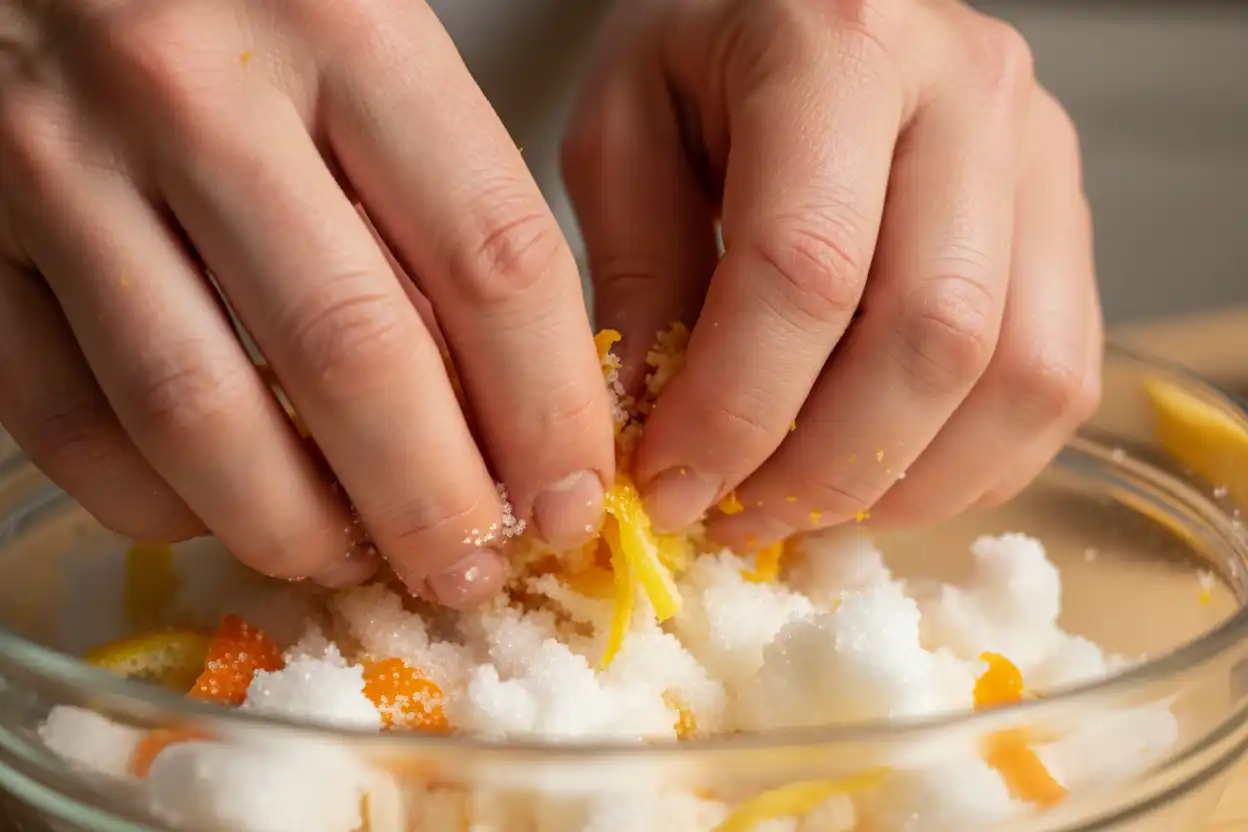
Citrus skin contains essential oil pockets. Rubbing fresh zest directly into granulated sugar using your fingertips creates friction that ruptures these cells.
The sugar crystals absorb the released oils, trapping aromatic volatile compounds. This simple step yields far more flavor than dropping zest straight into liquids.
Dough Chilling and Flavor Maturation
Resting cookie dough in the refrigerator for 24 to 72 hours improves flavor dramatically. During resting, enzymes break down complex carbohydrates into simple sugars.
Flour fully hydrates, absorbing excess liquid from eggs and extracts. This process concentrates flavor compounds, resulting in deeper caramelization and pronounced spice notes upon baking.
Step-by-Step Guide: How to Craft Your Own Custom Cookie Flavor
Building a custom cookie recipe from scratch requires a structured approach to ensure flavor balance and structural integrity.
Step 1: Select Your Base Dough
Choose a foundational dough ratio that supports your intended flavor profile.
- Butter Shortbread: Ideal for delicate botanicals, teas, and subtle spices.
- Brown Sugar Drop: Best for heavy spices, chocolate, nuts, and dried fruits.
- Egg-White Meringue: Excellent for nut meals, cocoa, and intensely sweet extracts.
Step 2: Choose the Primary Flavor Anchor
Identify one dominant taste that will define the cookie. This should account for roughly 60% of the overall flavor impression (e.g., dark chocolate, fresh lemon, or toasted pecan).
Step 3: Add a Secondary Complementary Accent
Select an accent that enhances or contrasts with the primary anchor. Limit this note to 30% of the profile (e.g., pairing fresh rosemary with dark chocolate or cardamom with lemon).
Step 4: Incorporate Textural Mix-ins
Add dry ingredients that provide crunch, chew, or molten pockets. Keep total mix-ins between 1 to 1.5 cups per standard batch of dough to preserve structural integrity.
Options include toasted nuts, chocolate chunks, dried fruits, or cacao nibs.
Step 5: Apply a Finishing Touch
Elevate appearance and immediate palate impact with a garnish applied immediately before or after baking.
Consider flaky sea salt, coarse sanding sugar, spice dustings, or powdered sugar glazes.
Cookie Flavor Profile Comparison Table
Use this reference table to match flavor concepts with suitable base doughs, complementary pairings, and ideal baking applications.
| Flavor Concept | Primary Taste Notes | Best Base Dough | Complementary Accent | Recommended Finishing Touch |
|---|---|---|---|---|
| Brown Butter Sea Salt | Nutty, Toffee, Salty | Brown Sugar Drop | Dark Chocolate Chunks | Flaky Maldon Salt |
| Lemon Lavender | Citrus, Floral, Crisp | Butter Shortbread | Vanilla Paste | Lemon Glaze & Zest |
| Matcha White Chocolate | Earthy, Vegetal, Sweet | White Sugar Sugar Cookie | Toasted Macadamias | Sifted Matcha Powder |
| Miso Caramel | Umami, Salty, Caramel | Chewy Drop Dough | Butterscotch Bits | Toasted Sesame Seeds |
| Espresso Dark Chocolate | Bitter, Roasted, Deep | Double Cocoa Dough | Ground Cinnamon | Chocolate Drizzle |
| Earl Grey Thyme | Bergamot, Herbal, Tannic | Sliced Icebox Shortbread | Lemon Zest | Coarse Sanding Sugar |
Expert Baking Tips for Maximum Flavor Impact
Professional bakers use precise techniques to amplify natural ingredient notes without relying on synthetic additions.
Toast Nuts and Spices Before Mixing
Raw nuts contain high moisture and muted oils. Toast nuts on a sheet tray at 350°F (175°C) for 8 to 10 minutes until fragrant before chopping.
Similarly, warm whole spices in a dry skillet for 60 seconds before grinding. Heating releases aromatic essential oils, multiplying flavor intensity.
Use High-Quality Salt Strategic Layouts
Table salt provides sharp acidity but lacks nuanced mineral depth. Use fine sea salt or kosher salt inside the dough mixture for even seasoning.
Save large flaky sea salt for topical application right after cookies exit the oven. The large flakes provide bursts of salt that contrast sweet dough bases.
Bloom Cocoa Powders and Coffee Compounds
Never mix dry cocoa powder directly into flour blends without blooming first. Mix cocoa powder with hot melted butter, oil, or warm liquids specified in your recipe.
Heat dissolves the outer walls of cocoa particles, freeing trapped flavor compounds for a richer chocolate profile.
Common Flavor Building Mistakes and How to Avoid Them
Minor errors during preparation can ruin delicate taste balances. Watch out for these common baking pitfalls.
Overusing Artificial Extracts
Synthetic extracts leave a chemical, medicinal aftertaste on the back of the tongue. They lack the complex background compounds present in natural ingredients.
Replace cheap imitation extracts with pure vanilla bean paste, food-grade emulsions, or real citrus zests.
Ignoring the Impact of Flour Types
Flour choice impacts flavor as well as structure. Unbleached all-purpose flour offers a subtle wheat note, while bleached flour tastes flat and acidic.
Incorporating small percentages of whole wheat flour, rye flour, or nut meals adds complex nutty background notes to basic doughs.
Baking at Incorrect Temperatures
Ovens running too hot scorch delicate sugar solids before internal flavors develop properly. Scorch marks create harsh bitter notes that override delicate vanilla or herbal profiles.
Use an independent oven thermometer to verify temperature accuracy before baking delicate shortbreads.
Flavor Pairing Best Practices
Follow these established culinary rules when designing new flavor combinations for cookie doughs.
Balance Sweetness with Acid and Bitterness
High sugar concentrations coat the palate and numb taste buds. Introduce acid via citrus zest or freeze-dried fruit powders to keep flavors sharp.
Incorporate bitter notes like dark chocolate, coffee, or matcha to cut through heavy fats and sugars.
Match Intensity Profiles
Pair delicate flavors with light dough bases and strong flavors with robust bases. Delicate lavender or chamomile will be completely lost inside a heavy brown sugar and molasses dough.
Keep light florals in butter shortbread and reserve heavy spices for brown sugar drop cookies.
Essential Tools and Flavor Building Resources
Equipping your kitchen with the right tools ensures precise flavor extraction and consistent results.
- Microplane Zester: Essential for removing citrus zest without shaving off bitter white pith.
- Digital Kitchen Scale: Guarantees precise ratios of flour, sugar, and fat for consistent flavor delivery.
- Spice Grinder: Allows fresh grinding of whole cardamom, cinnamon, and anise seeds immediately before baking.
- Mortar and Pestle: Ideal for bruising fresh herbs and crushing coarse sea salt or flower petals into sugar.
Internal Linking Suggestions
To build topical authority, consider linking this guide to these related articles on your site:
- How to Brown Butter Correctly for Baking Recipes
- The Essential Guide to Cookie Flour Ratios and Textures
- Mastering Meringue: Macarons and Amaretti Troubleshooting
- Top 10 Holiday Cookie Exchange Recipes That Travel Well
- Gluten-Free Baking Substitutions That Don’t Sacrifice Flavor
External Authority References
Consult these trusted culinary resources for further reading on food science and flavor chemistry:
- King Arthur Baking Company: Guides on flour types, dough hydration, and ingredient functions.
- Serious Eats (BraveTart / Stella Parks): Deep dives into sugar chemistry, vanilla extraction, and historic cookie profiles.
- The Flavor Bible (Page & Dornenburg): An indispensable reference for flavor pairing matrices across culinary disciplines.
Key Takeaways
- Fats carry volatile aromatic compounds; incorporate spices and zests directly into warm butter.
- Balance sweet doughs with flaky sea salt, citrus acidity, or dark cocoa bitterness.
- Chilling cookie dough for 24 to 72 hours concentrates sugar, hydrates flour, and deepens flavor.
- Toast whole spices and nuts before adding them to dough to release essential oils.
- Match light botanical flavors with shortbread bases and strong spices with brown sugar bases.
Conclusion
Developing unique cookie flavors requires a balance of baking science and creative experimentation. By understanding how fats carry aromatic compounds and how sweet, salty, and acidic notes interact, you can transform basic recipes into memorable desserts.
Start by upgrading familiar classics with toasted nuts, quality salts, or vanilla bean paste. Once you master fundamental dough bases, experiment with global spices, botanicals, and unexpected savory accents to build your own signature cookie lineup.
Frequently Asked Questions
What are the most popular cookie flavors?
Chocolate chip remains the most popular cookie flavor worldwide, followed closely by peanut butter, sugar cookies, snickerdoodles, and oatmeal raisin. Recently, gourmet options like brown butter sea salt, matcha white chocolate, and red velvet have gained widespread popularity in commercial bakeries and home kitchens alike.
How do I make my cookie flavors taste stronger?
Amplify cookie flavors by blooming cocoa powder in warm liquids, toasting nuts and whole spices before mixing, and rubbing citrus zests into granulated sugar. Crucially, chilling your prepared cookie dough in the refrigerator for 24 to 48 hours allows flour to hydrate and concentrates complex sugar and spice flavors.
What is the difference between flavor extracts and flavor emulsions?
Extracts suspend flavor compounds in an alcohol-based liquid, which can evaporate under high oven temperatures and dull the final taste. Emulsions suspend flavor oils in a water-based carrier that resists oven heat far better, making them superior for high-heat baking applications like cookies and cakes.
Why does chilling cookie dough improve the flavor?
Chilling cookie dough rests the gluten and allows enzymes to break down flour carbohydrates into simple sugars. As the water content in eggs and extracts hydrates the flour fully, volatile flavor compounds concentrate. This results in enhanced Maillard browning, richer caramel notes, and a more cohesive overall taste profile.
How do I pair herbs and spices with chocolate in cookies?
Pair dark chocolate with resinous herbs like rosemary or warm spices like cinnamon, chili powder, and cardamom. Milk chocolate works best with delicate herbal notes like mint or lavender. Always mince fresh herbs finely and disperse them into the butter fat to ensure an even taste experience across every bite.
Can I substitute liquid extracts with whole spices?
Yes, you can substitute liquid extracts with freshly ground whole spices, but adjust liquid ratios accordingly. Whole ground spices provide a potent, authentic aroma without adding extra moisture or alcohol to your dough. Use roughly one-quarter teaspoon of ground spice for every teaspoon of liquid extract called for in the recipe.
What cookie flavors work best for gluten-free baking?
Naturally strong flavors like dark chocolate, espresso, peanut butter, toasted coconut, and heavy spices mask the neutral taste of gluten-free flour blends. Adding nut meals like almond or hazelnut flour enriches the dough with natural fats, boosting flavor while creating a tender texture that mimics traditional wheat pastries.
How do I balance overly sweet cookie recipes?
Balance excess sugar by increasing fine sea salt inside the dough and topping baked cookies with flaky Maldon salt. You can also add acidic elements like citrus zest or sour fruit powders, or introduce bitter contrast using dark Dutch-processed cocoa powder, espresso powder, or extra dark chocolate chips.