The Sweet Success of Cheryl’s Cookies
Cheryl’s Cookies is a cookie and gifting brand known for buttercream-frosted cutouts, gourmet cookies, and occasion-ready sweet treats. Its story began in 1981, and its signature pairing remains a simple cookie base with rich frosting. This guide explores that appeal, explains practical baking techniques, and provides a clearly separate home-baking recipe—not Cheryl’s proprietary formula.
1. Quick Summary & Key Takeaways
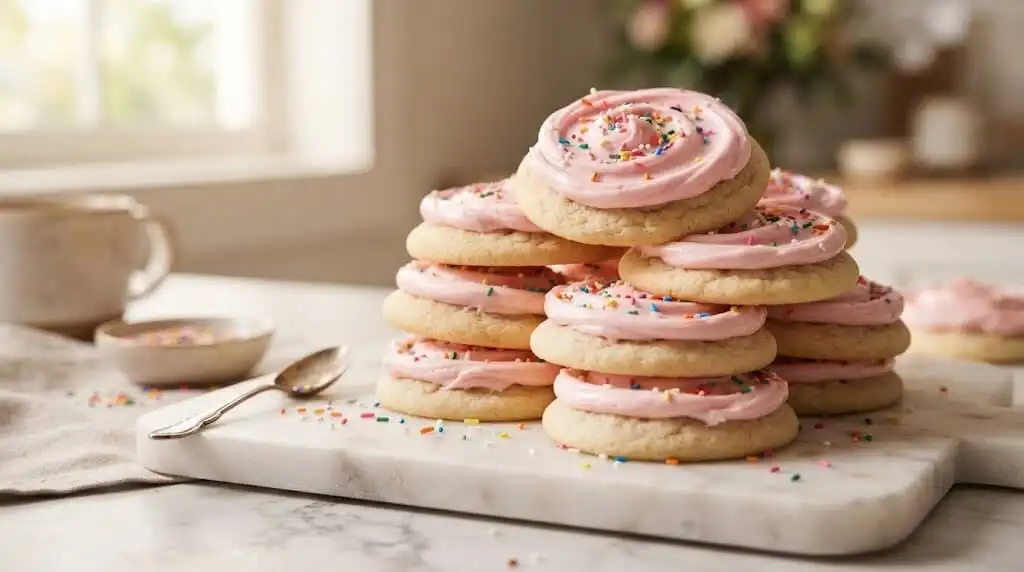
The appeal of Cheryl’s Cookies rests on contrast: a soft, slightly crumbly cookie beneath creamy buttercream, finished with a recognizable hand-applied swirl. That combination gives readers searching for “cheryls cookies” a useful starting point: understand the texture before trying to reproduce the appearance.
- The signature: Cheryl’s identifies butter, vanilla, evaporated milk, and powdered sugar as its classic buttercream ingredients.
- The home-baking distinction: The recipe below combines published King Arthur Baking components; it is not an official Cheryl’s recipe.
- The freshness priority: Cheryl’s recommends enjoying delivered cookies within three to four days or freezing them. Follow the instructions accompanying your particular product.
Table of Contents
- Quick Summary & Key Takeaways
- The Anatomy of the Perfect Bake
- Ingredients That Shape the Experience
- Techniques for Consistent Results
- Frosting and Finishing
- Master Recipe Card
- Troubleshooting Common Baking Flaws
- Storage, Freezing, and Freshness Secrets
- Christmas Cookies and Thoughtful Gifting
- FAQ
2. The Anatomy of the Perfect Bake
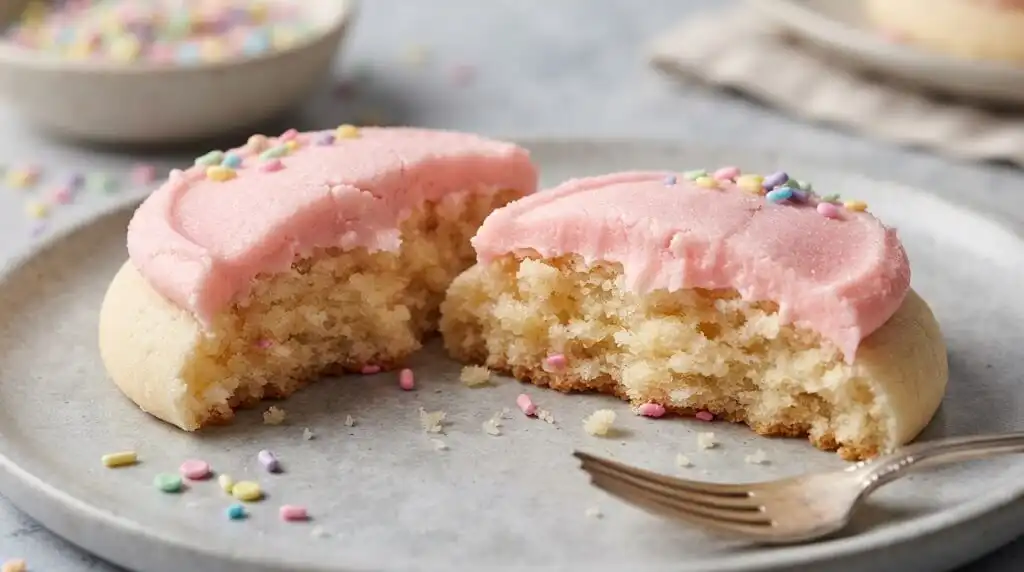
Think of a frosted cookie as three sensory layers rather than one uniform bite. Cheryl’s describes its classic base as intentionally simple, allowing the buttercream to supply the defining richness and creamy contrast. The following framework helps explain what to look for when tasting or baking this style.
- Outer Layer: Assess surface texture, crust, and color. For the home recipe below, lightly golden bottoms—not deeply browned tops—are the target. Strong caramelization and a crisp crust are not the goal.
- Intermediate Structure: Notice dough density, crumb structure, and moisture balance. King Arthur’s reverse-creaming method produces a tender cookie by working butter into dry ingredients before adding liquid.
- Core/Flavor Inclusions: Identify where flavor concentrates: melting chocolate pockets, fillings, spices, or frosting. In Cheryl’s classic cutout, buttercream takes that starring role; inclusions are not essential to the experience.
3. Ingredients That Shape the Experience
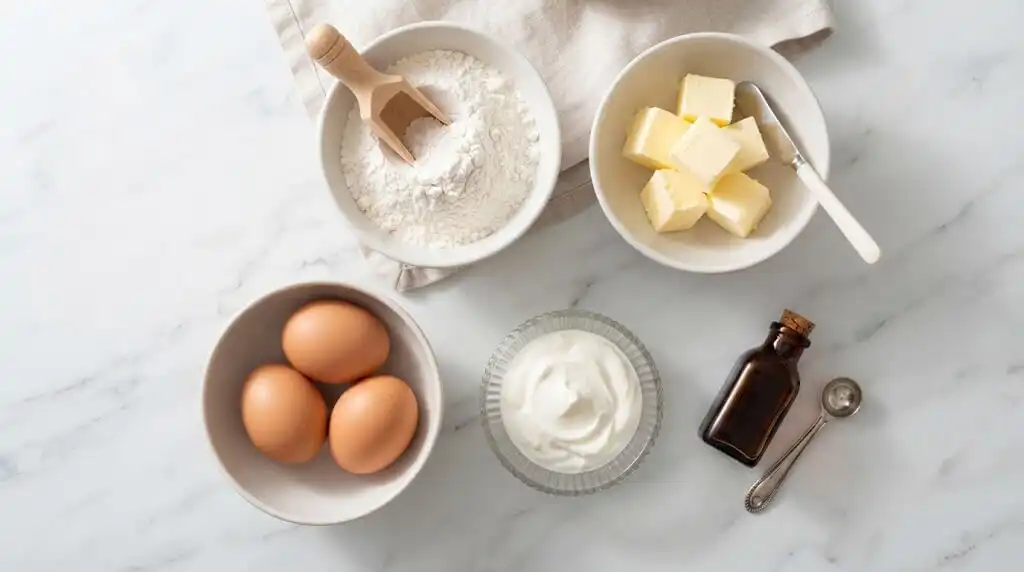
Precision matters more than an elaborate shopping list. Too much flour can turn a tender cookie dry, while incorrect liquid-to-dry ratios can encourage spreading. Weigh ingredients when possible rather than compensating for uncertain measurements later.
Butter temperature also belongs on your ingredient checklist. The recipe below specifically uses cold butter, whereas its separate buttercream requires softened butter. These instructions serve different purposes; swapping temperatures casually can change the result.
For purchased cookies, consult the actual ingredient and allergen information rather than assuming every flavor shares the same formula. Cheryl’s states that its production facility handles peanuts, tree nuts, eggs, milk, soy, chocolate, and wheat.
4. Techniques for Consistent Results
A repeatable process makes troubleshooting easier. Keep your rolling thickness consistent, use the specified pan lining, and resist changing several variables between batches. Pan lining itself can affect spread, so parchment is more than a cleanup convenience.
Before committing an entire tray, bake three or four test cookies and let them cool. King Arthur recommends this approach to establish baking time before proceeding with the batch. Record the thickness, timing, and finished texture so your next tray benefits from the test.
Chilling also deserves its place in the schedule. Cold cutout dough is easier to handle and less likely to lose its shape during baking. Treat that pause as part of production, not wasted time.
Recommended Precision Tools
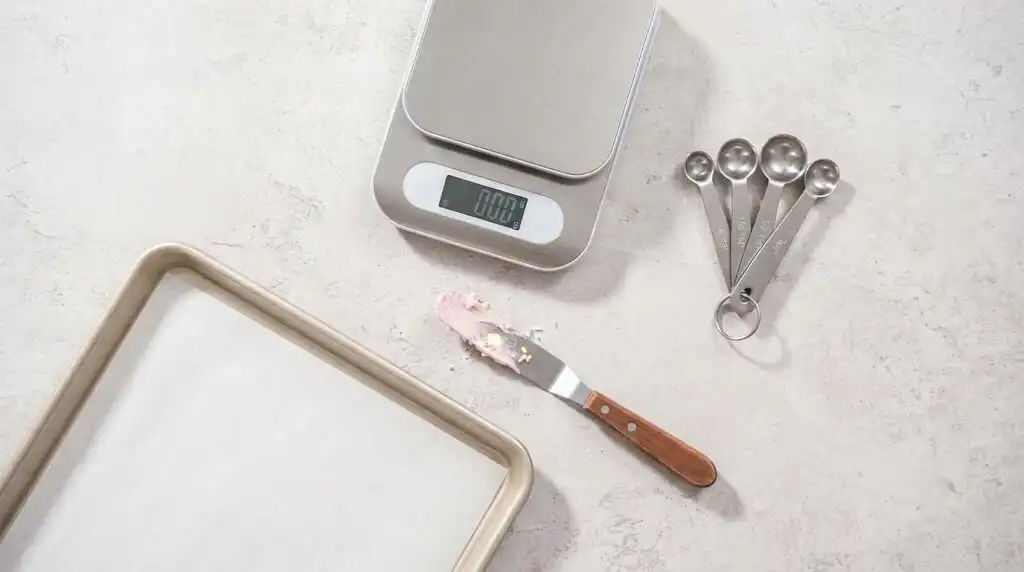
To get the exact dough consistency, even spread, and thickness described above, here are the essential tools to use:
- Digital Kitchen Scale: Guarantees exact flour weight so your cookies stay soft, never dry.
- Heavy-Duty Aluminum Sheet Pans: Distributes heat evenly to keep bottoms pale and perfectly baked.
- Pre-Cut Parchment Paper Sheets: Prevents sticking and controls cookie spread with zero mess.
- Medium Cookie Dough Scoop: Ensures uniform size and thickness across every single batch.
- Small Offset Spatula (4.5-inch): Perfect for lifting delicate chilled dough and swirling thick buttercream.
5. Frosting and Finishing
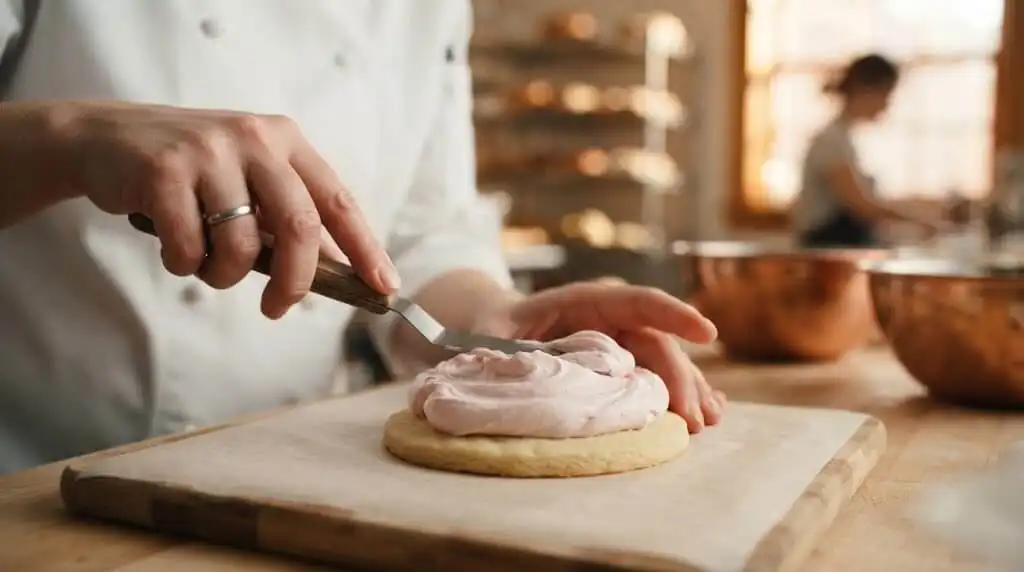
Cheryl’s signature finish is not simply a printed decoration: after frosting is deposited, decorators apply its characteristic swirl by hand. The company’s account emphasizes the contrast between the uncomplicated cookie and rich buttercream. That balance offers a better home-baking reference than chasing elaborate decoration. (cheryls.com)
For your own batch, try a modest central dollop and one broad sweep with a small spatula. Keep the first cookie as your visual reference, then adjust the remaining portions to match. Think consistent coverage rather than perfect symmetry.
6. Master Recipe Card
Home-style frosted cutouts: King Arthur’s cookie base with its separate quick buttercream, not Cheryl’s formula.
Prep: 35 minutes including frosting. Chill: 30 minutes. Bake: 14–18 minutes per tray. Yield: about eighteen 2–3-inch cookies. Allow additional cooling time.
Cookie ingredients — small-volume gram conversions are approximate:
- All-purpose flour: 180 g / 1½ cups
- Powdered sugar: 57 g / ½ cup
- Table salt: 1.5 g / ¼ teaspoon
- Baking powder: 0.5 g / ⅛ teaspoon
- Baking soda: 0.6 g / ⅛ teaspoon
- Cold unsalted butter: 113 g / 8 tablespoons
- Large egg: approximately 50 g without shell / approximately 3 tablespoons, separated
- Milk: 14 g / 1 tablespoon
- Vanilla: approximately 7 g / 1½ teaspoons.
Buttercream ingredients:
- Softened unsalted butter: 113 g / ½ cup
- Powdered sugar: 283–340 g / 2½–3 cups
- Milk: 28–57 g / 2–4 tablespoons
- Vanilla: approximately 4 g / 1 teaspoon
- Table salt: approximately 0.4 g / ¹⁄₁₆ teaspoon.
- Combine dry cookie ingredients; work in cold butter until finely crumbed.
- Mix in yolk. Whisk white with milk; add only 14 g / 1 tablespoon of that mixture, then vanilla. Bring dough together.
- Roll between parchment to ½ inch; chill 30 minutes.
- Preheat to 325°F. Roll to ¼ inch, cut shapes, and arrange on parchment-lined sheets.
- Bake 14–18 minutes until bottoms barely turn golden. Transfer parchment and cookies to a rack; cool completely.
- Beat softened frosting butter until fluffy. Add salt and vanilla, then sugar and the minimum milk. Beat smooth, adjusting with remaining sugar or milk. Spread onto cooled cookies; reserve excess frosting.
7. Troubleshooting Common Baking Flaws
Diagnose the result before changing the formula. These corrections apply to the next tray or batch; they cannot reverse an already overbaked cookie. Accurate weighing and a small test bake help distinguish ingredient problems from oven timing.
Table 2
| Common Problem | Scientific/Practical Cause | Instant Baker’s Fix |
|---|---|---|
| Shapes spread excessively | Dough is too warm; ingredient ratios may be off | Chill remaining cutouts until firm; verify weighed quantities before the next batch. |
| Cookies are dry | Excess flour or excessive baking | Weigh flour; check the next tray at the earliest recipe time. |
| Bases brown too quickly | Baking duration exceeds what that tray needs | Test a smaller batch; remove when bottoms first become lightly golden. |
These fixes follow published guidance on spreading, measurement, and bake endpoints.
8. Storage, Freezing, and Freshness Secrets
For delivered Cheryl’s cookies, follow package directions; the brand’s general guidance allows freezing for up to six months. Keep that separate from homemade-cookie guidance.
- Room temperature: Cool homemade cookies completely, then seal in an airtight container. Keep unfrosted cookies airtight for up to one week; avoid leaving them exposed between servings.
- Unbaked dough: Flatten into discs, wrap tightly, label, and freeze for up to three months. Thaw overnight in the refrigerator before rolling, cutting, and baking.
- Baked cookies: Freeze cooled, unfrosted cookies airtight for up to one month; decorate after thawing.
- Reheating: For an unfrosted cookie, try a 300°F oven for five minutes, then cool briefly before serving. This restores crispness rather than guaranteeing softness; leave buttercream-frosted cookies unheated.
9. Christmas Cookies and Thoughtful Gifting
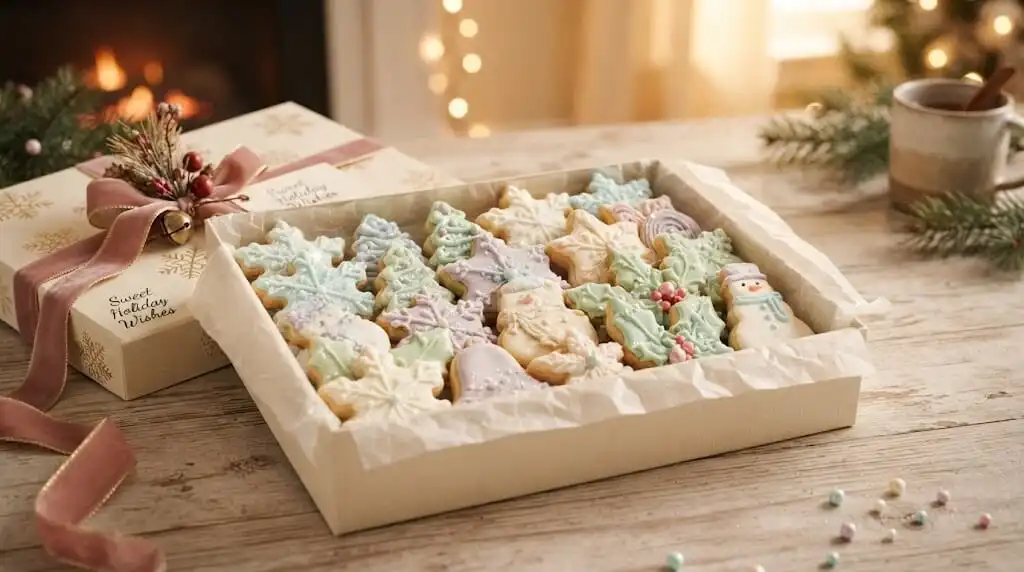
Cheryl’s offers a dedicated holiday-cookie collection, making seasonal gifting part of its broader appeal. If you are comparing “cheryls christmas cookies,” check the actual assortment, portion count, ingredients, and delivery options rather than choosing from packaging alone. Seasonal product details should be verified before ordering.
For a homemade gift, consider a short label identifying the flavor, bake date, and storage instructions. Ask about dietary restrictions before planning the assortment. A smaller, clearly labeled selection can be a more thoughtful choice than a large box whose contents the recipient cannot confidently identify.
10. FAQ
Are Cheryl’s cookies individually wrapped?
Cheryl’s describes its cookies and brownies as individually wrapped for freshness. Check the specific listing when selecting a gift.
Does Cheryl’s sell only frosted cookies?
No. Its assortment also includes unfrosted cookie flavors, brownies, cakes, and other gifts. Buttercream-frosted cutouts are its signature, not its entire range.