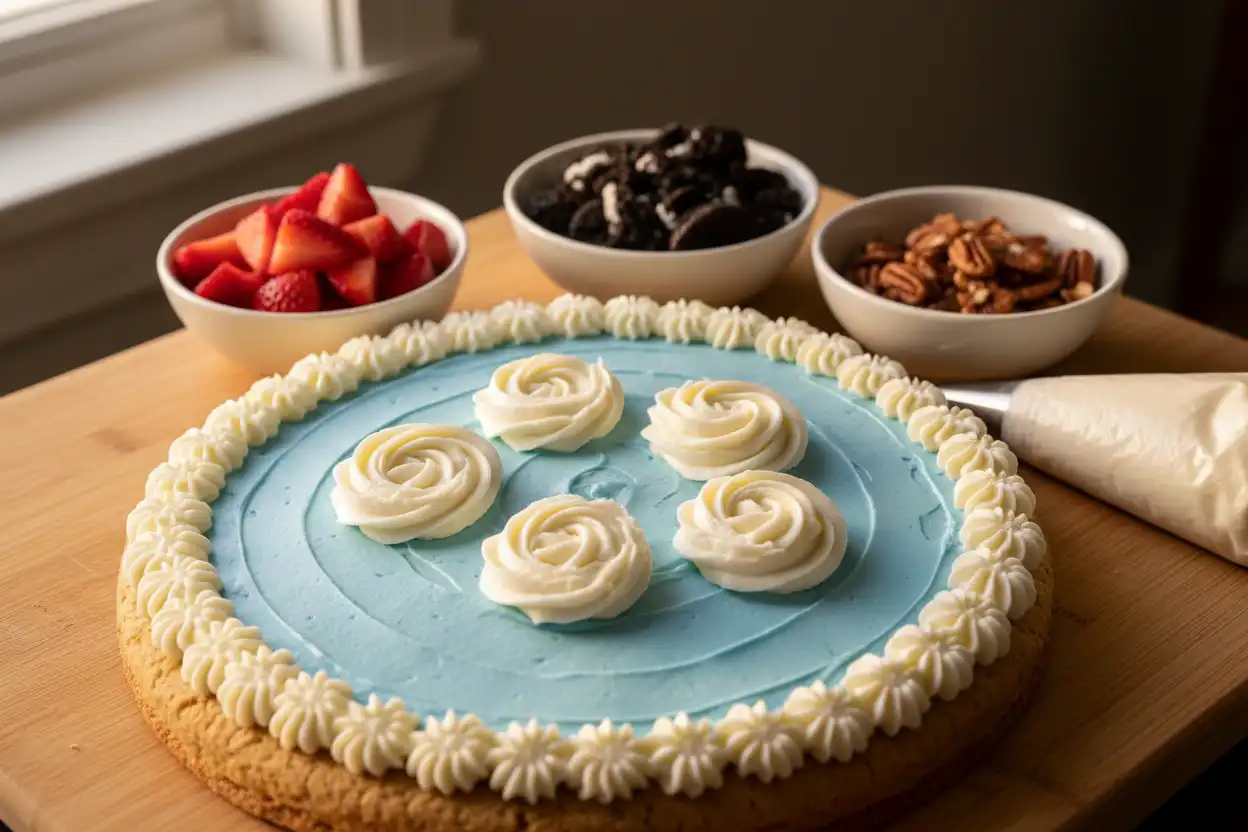
There’s something instantly joyful about giant cookie cake: golden edges, a soft chewy middle, swirls of frosting, and plenty of room for sprinkles, chocolate, or your favorite toppings. For professional tips on achieving the ultimate texture, you can explore guides from trusted baking authorities likeKing Arthur Baking.
This guide walks you through a reliable base cookie cake recipe, then shows you how to turn it into several delicious variations with easy decorating ideas. Whether you’re baking for a birthday, a casual weekend treat, or a celebration dessert that feels homemade and fun, these treats are beginner-friendly, customizable, and surprisingly simple to master.

What Makes a Great Cookie Cake?
A great cookie cake should taste like your favorite chocolate chip cookie, but feel a little more special. The best version has:
- Crispy, buttery edges that hold their shape when sliced
- A chewy, soft center that stays tender after cooling
- Balanced sweetness so frosting and toppings don’t overwhelm it
- A sturdy texture that can be decorated, sliced, and served like cake
The secret is using the right ratio of butter, sugar, flour, and egg, then baking just until the edges are set while the center still looks slightly soft. Keep reading for practical cookie cake tips that help you nail the texture on your first try.
Essential Tools You’ll Need
You don’t need professional equipment, but a few basics make the process easier:
- 23 cm round cake pan, springform pan, or oven-safe skillet
- Baking paper
- Mixing bowls
- Rubber spatula
- Electric hand mixer or stand mixer
- Digital kitchen scale
- Measuring spoons for small ml amounts
- Piping bag and star tip for decorating, optional
- Cooling rack
A kitchen scale is especially helpful because cookie dough can change dramatically if flour is packed too tightly into a cup. For consistent results, weigh your ingredients in grams.
Classic Chocolate Chip Cookie Cake Ingredients
This recipe makes one 23 cm cookie cake, serving about 10 to 12 slices.
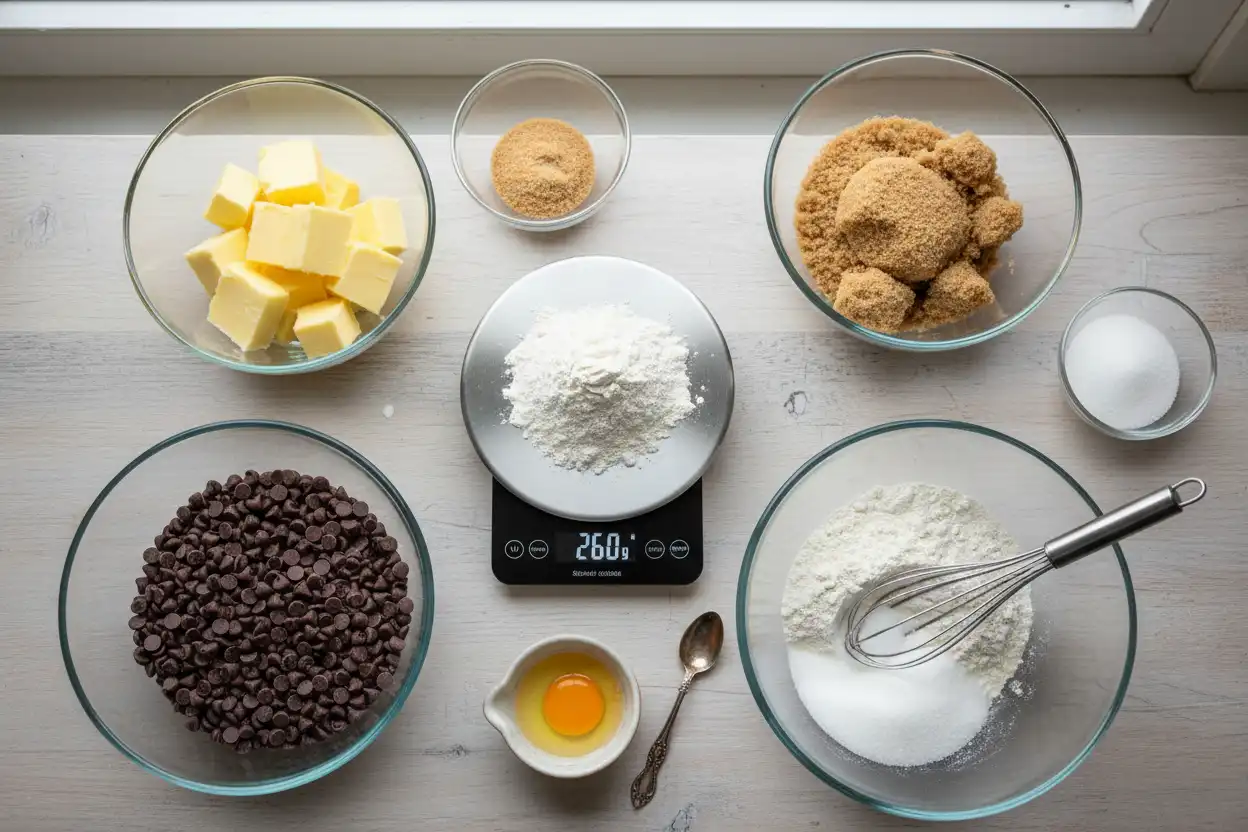
For the cookie cake
- 170 g unsalted butter, softened
- 130 g light brown sugar
- 70 g white granulated sugar
- 1 large egg, about 50 g without shell, at room temperature
- 1 egg yolk, about 18 g
- 10 ml vanilla extract
- 260 g plain all-purpose flour
- 8 g cornflour or cornstarch
- 4 g baking soda
- 3 g fine salt
- 180 g chocolate chips or chopped chocolate
- 30 g extra chocolate chips for topping, optional
For the simple vanilla buttercream
- 115 g unsalted butter, softened
- 180 g icing sugar or powdered sugar, sifted
- 15 ml milk
- 5 ml vanilla extract
- 1 g fine salt
- Gel food coloring, optional
- Sprinkles, chopped chocolate, berries, or mini cookies for topping
Step-by-Step Instructions
1. Prepare the pan
Preheat your oven to 175°C. Grease a 23 cm round cake pan lightly with butter, then line the base with baking paper. If you want easy removal, leave two strips of baking paper hanging over the sides like handles.
This small step makes a big difference. Cookie cakes are softer than regular cakes when warm, so lining the pan helps you lift the cookie out cleanly once cooled.
2. Cream the butter and sugars
Add the softened butter, brown sugar, and white sugar to a large mixing bowl. Beat for about 2 minutes, until the mixture looks lighter, fluffy, and slightly creamy.
Brown sugar gives the cookie cake moisture and chew, while white sugar helps the edges crisp. For the best texture, don’t rush this step. Proper creaming adds tiny air pockets that help the cookie cake bake evenly.

3. Add the egg, yolk, and vanilla
Add the whole egg, extra egg yolk, and vanilla extract. Mix for about 30 to 45 seconds, just until smooth.
The extra yolk is one of the easiest cookie cake tips for a chewy center. It adds richness without making the dough too wet.
4. Mix the dry ingredients separately
In a separate bowl, whisk together the flour, cornflour, baking soda, and salt.
Cornflour helps soften the crumb, making the cookie cake tender rather than dry or crumbly. It’s a small ingredient, but it gives the finished dessert that bakery-style chew.
5. Combine wet and dry ingredients
Add the dry mixture to the butter mixture. Mix on low speed or fold with a spatula until you no longer see streaks of flour. The dough will be thick and soft.
Avoid overmixing once the flour is added. Too much mixing can develop gluten, which may make the cookie cake tough instead of tender.
6. Fold in the chocolate
Add 180 g chocolate chips or chopped chocolate and fold gently until evenly distributed.
For a more impressive look, reserve a handful of chocolate chips and press them into the top before baking. This creates that photo-worthy finish you’ll want to share. If you bake it, snap a picture and share your creation with friends, or leave a comment with your favorite chocolate combination.
7. Press the dough into the pan
Transfer the dough into your prepared pan. Use a spatula or clean hands to press it into an even layer. Try not to compact it too firmly, especially in the center.
For cleaner edges, press the dough slightly higher around the outer edge and a little flatter in the middle. The center often rises during baking, so this helps the finished cake look even.
8. Bake until the edges are golden
Bake for 20 to 24 minutes at 175°C. The edges should look golden and set, while the center should look slightly underbaked and soft.
This is the key to crispy edges and a chewy center. If you wait until the middle looks fully baked in the oven, it may become dry after cooling. The residual heat continues to cook the center as the cookie cake rests.
9. Cool completely
Let the cookie cake cool in the pan for 30 minutes, then carefully lift it out and transfer it to a cooling rack. Cool completely before decorating.
Warm cookie cake plus buttercream equals melted frosting, so be patient. If you’re short on time, place the cooled pan near a fan or in a cool room, but avoid refrigerating it while very hot because sudden temperature changes can affect the texture.
How to Make the Buttercream Frosting
Add softened butter to a bowl and beat for 2 minutes until creamy. Add the sifted icing sugar in two additions, mixing slowly at first so it doesn’t puff out of the bowl. Add milk, vanilla, and salt, then beat for another 1 to 2 minutes until fluffy.
If the frosting is too thick, add milk 5 ml at a time. If it’s too soft, add icing sugar 15 g at a time.
Spoon the frosting into a piping bag fitted with a star tip. Pipe a border around the edge, add small swirls in the center, or write a short message. If you don’t have a piping bag, spread the frosting with a spoon and decorate with sprinkles or chocolate pieces.
Easy Cookie Cake Decorating Ideas
Cookie cake decorating should feel fun, not intimidating. Start simple and build from there.
Try these ideas:
- Pipe buttercream stars around the edge and add rainbow sprinkles.
- Drizzle with 30 ml melted chocolate after cooling.
- Top with sliced strawberries or raspberries just before serving.
- Add crushed sandwich cookies for a cookies-and-cream finish.
- Use caramel sauce and flaky salt for a sweet-salty dessert.
- Press mini peanut butter cups or chocolate candies into the frosting.
For birthdays, pipe the person’s name in the center. For holidays, change the frosting color and sprinkles. For a dinner party, keep it elegant with dark chocolate, sea salt, and a neat buttercream border.
If you try one of these designs, share a photo or tell us your favorite topping combination. Your idea might inspire someone else’s next celebration bake.
Delicious Cookie Cake Variations to Try
Once you master the base dough, you can turn it into several different cookie cakes without learning a whole new method.
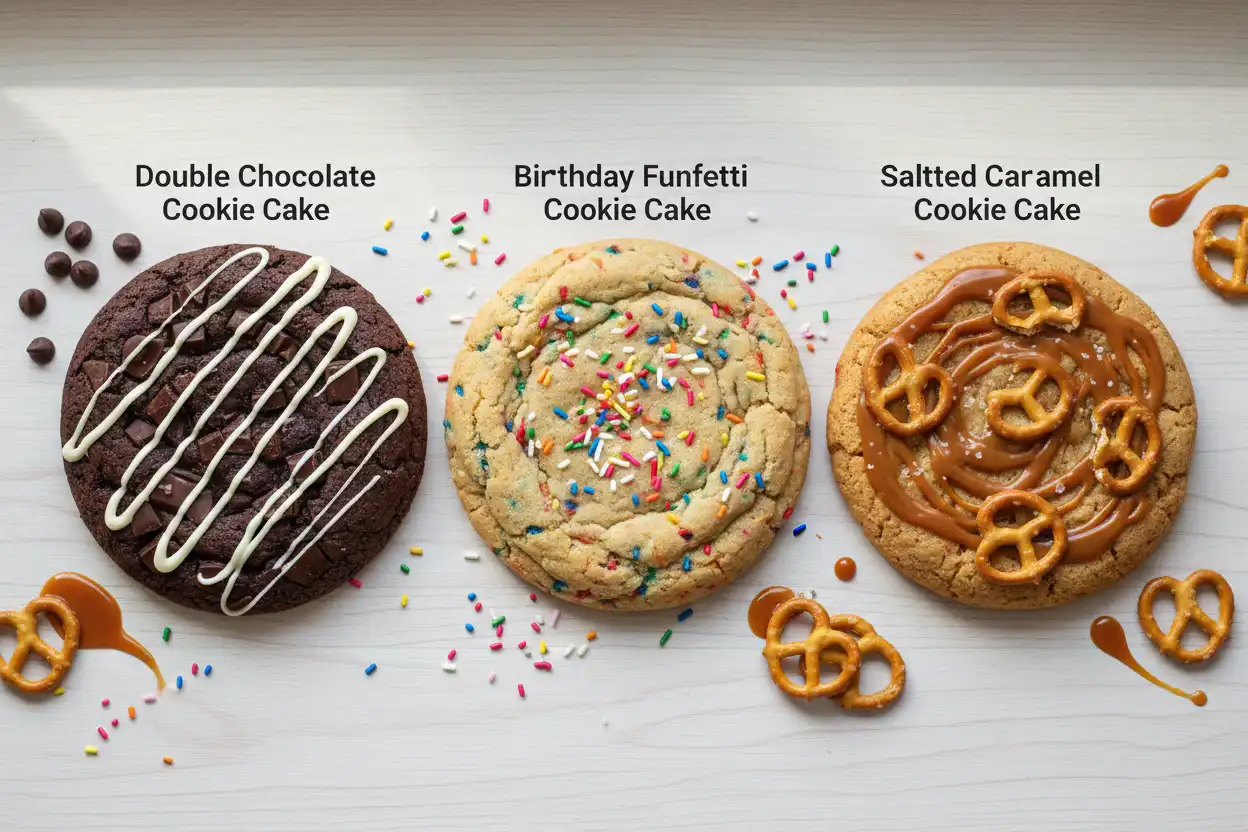
Double Chocolate Cookie Cake
Replace 30 g of the flour with 30 g unsweetened cocoa powder. Use 150 g dark chocolate chips and 80 g white chocolate chips. The result is rich, brownie-like, and perfect with vanilla frosting.
Birthday Funfetti Cookie Cake
Use the classic dough and fold in 70 g rainbow sprinkles with the chocolate chips. For the cleanest color, use jimmies-style sprinkles rather than tiny nonpareils, which can bleed into the dough.
Salted Caramel Cookie Cake
Use the classic dough, but reduce the chocolate chips to 130 g. After baking and cooling, drizzle with 40 ml thick caramel sauce and sprinkle with 1 g flaky sea salt. Add vanilla buttercream around the edge for a bakery-style finish.
White Chocolate Raspberry Cookie Cake
Fold 140 g white chocolate chips into the dough. After baking and cooling, decorate with vanilla frosting and 100 g fresh raspberries. Add the raspberries close to serving time so they stay bright and fresh.
Peanut Butter Chocolate Cookie Cake
Replace 50 g of the butter with 60 g smooth peanut butter. Use 170 g chocolate chips and decorate with chocolate buttercream or chopped peanut butter cups.
Pro Cookie Cake Tips for the Best Texture
If you want that perfect contrast of crisp edges and chewy center, these small details matter.
Use softened butter, not melted butter
Softened butter creams with sugar and creates structure. Melted butter can make the dough greasy and may cause the cookie cake to spread unevenly.
Don’t skip the brown sugar
Brown sugar adds moisture and chew. A cookie cake made with only white sugar can taste crisp but may dry out faster.
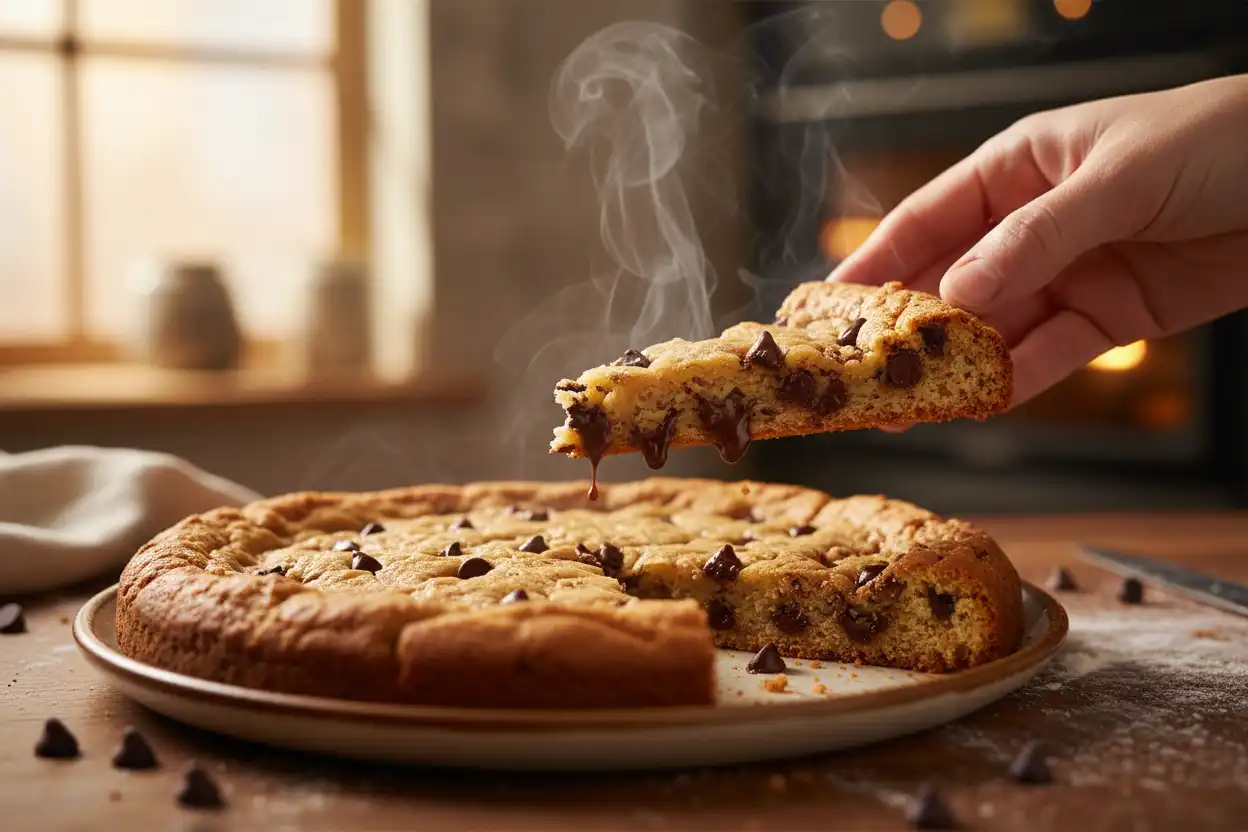
Slightly underbake the center
The center should look set around the surface but still soft. It will firm up as it cools. This is the most important step for a chewy middle.
Cool before slicing
Cutting too early can make slices fall apart. For neat wedges, let the cake cool completely, then use a sharp knife.
Add chocolate on top before baking
Pressing a few extra chocolate chips into the top gives the cookie cake a polished look without extra effort.
Use room-temperature eggs
Room-temperature eggs blend more smoothly into the butter mixture. If you forgot to take them out early, place the eggs in a bowl of lukewarm water for about 5 minutes before using.
Common Mistakes to Avoid
Adding too much flour
Too much flour is one of the most common reasons cookie cakes turn out dry. Use a scale and measure 260 g exactly for the base recipe.
Overbaking
A cookie cake continues to cook after it leaves the oven. Pull it out when the edges are golden and the middle is still slightly soft.
Decorating while warm
Buttercream melts quickly on warm cookie cake. Always cool completely before frosting.
Overmixing the dough
Once flour is added, mix only until combined. Overmixing can make the texture dense and tough.
Using a pan that is too small
If the dough is too thick in a small pan, the edges may overbake before the center is done. A 23 cm pan gives a good balance of thickness and texture.
Skipping the salt
Salt balances sweetness and makes chocolate flavor pop. Even a small amount improves the final taste.
How to Store and Serve Cookie Cake
Store the undecorated cookie cake in an airtight container at room temperature for up to 3 days. If decorated with buttercream, keep it covered in a cool room for 1 to 2 days, or refrigerate if your kitchen is warm.
For the best texture after refrigeration, let slices sit at room temperature for 20 to 30 minutes before serving. You can also warm undecorated slices briefly in the microwave for 8 to 10 seconds to bring back that soft, fresh-baked feel.
To freeze, wrap the fully cooled, unfrosted cookie cake tightly in food wrap, then place it in a freezer-safe bag or container. Freeze for up to 2 months. Thaw at room temperature before decorating.
Make It Your Own
The beauty of a cookie cake is how easy it is to personalize. Keep the base dough the same, then change the mix-ins, frosting, colors, and toppings to match the occasion. Try dark chocolate and orange zest, white chocolate and pistachio, cinnamon sugar, crushed pretzels, or your favorite candy pieces.
If this guide helped you bake your first cookie cake, leave a comment with your favorite topping, share a photo of your decorated dessert, and subscribe for more weekly dessert recipes. Your next celebration-worthy bake might be just one bowl of cookie dough away.