Professional Cookies: The Definitive Guide to Commercial Formulation, Scaling, and Production
Table of Contents
- What Defines Professional Cookies?
- Introduction: The Commercial Reality of Cookie Production
- The Food Science of Professional Cookie Formulation
- Commercial Ingredient Sourcing and Functional Roles
- Commercial Bakery Equipment and Workspace Architecture
- Production Scaling, Retardation, and Cold Chain Management
- Packaging, Shelf-Life Stabilization, and Water Activity
- Café and Retail Operations: Maximizing Sell-Through and Margins
- Step-by-Step Production Protocol for Professional Bakeries
- Comparison Table: Production Methodologies Compared
- Expert Tips for Commercial Scale
- Critical Commercial Mistakes and Fixes
- Standard Operating Procedures and Quality Assurance
- Professional Tools and Operational Resources
- Recommended Internal Topics
- External Industry Standards
- Executive Key Takeaways
- Building a Sustainable Cookie Operation
- Frequently Asked Questions
What Are Professional Cookies?
Professional cookies are commercially formulated, scaled baked goods engineered for structural consistency, extended shelf-life, precise moisture control, and high-margin retail distribution. Unlike domestic recipes, professional formulas rely on baker’s percentages, tightly controlled water activity levels ($a_w \le 0.65$), and industrial fat-sugar emulsions.
They are designed to withstand mechanized portioning, long cold retardation, and commercial convective thermal transfer without losing integrity. These baked goods maintain consistent texture, flavor, and appearance across high-volume production batches in bakeries, commissary kitchens, and specialty cafés.
Key Commercial Pillars:
- Formulation driven by exact metric weight and baker’s percentages.
- Moisture migration control through balancing monosaccharides and disaccharides.
- Cold chain integration using blast chilling and refrigerated resting cycles.
- Strict unit cost, portion variance, and food cost margin compliance.
Introduction: The Commercial Reality of Cookie Production
Transitioning from residential baking to commercial cookie manufacturing requires abandoning volume-based thinking. Standard domestic recipes fail under industrial conditions because they ignore shear stress, thermal recovery times, and moisture equilibria. Professional baking requires precise ingredient interactions, commercial machinery behaviors, and strict distribution requirements.
This guide serves professional pastry chefs, commercial bakery managers, and specialty coffee shop operators. Whether you operate a single retail café producing fresh-baked goods daily or a wholesale commissary distributing frozen dough across regions, process stability dictates your bottom line. Every variable directly influences your final product’s cost of goods sold (COGS) and eating quality.
Throughout this technical guide, you will examine the thermodynamic, chemical, and operational aspects of professional cookies. You will master moisture stabilization, equipment deployment, blast-freezing protocols, and margin engineering. The result is a fully optimized production program that balances culinary excellence with commercial scalability.
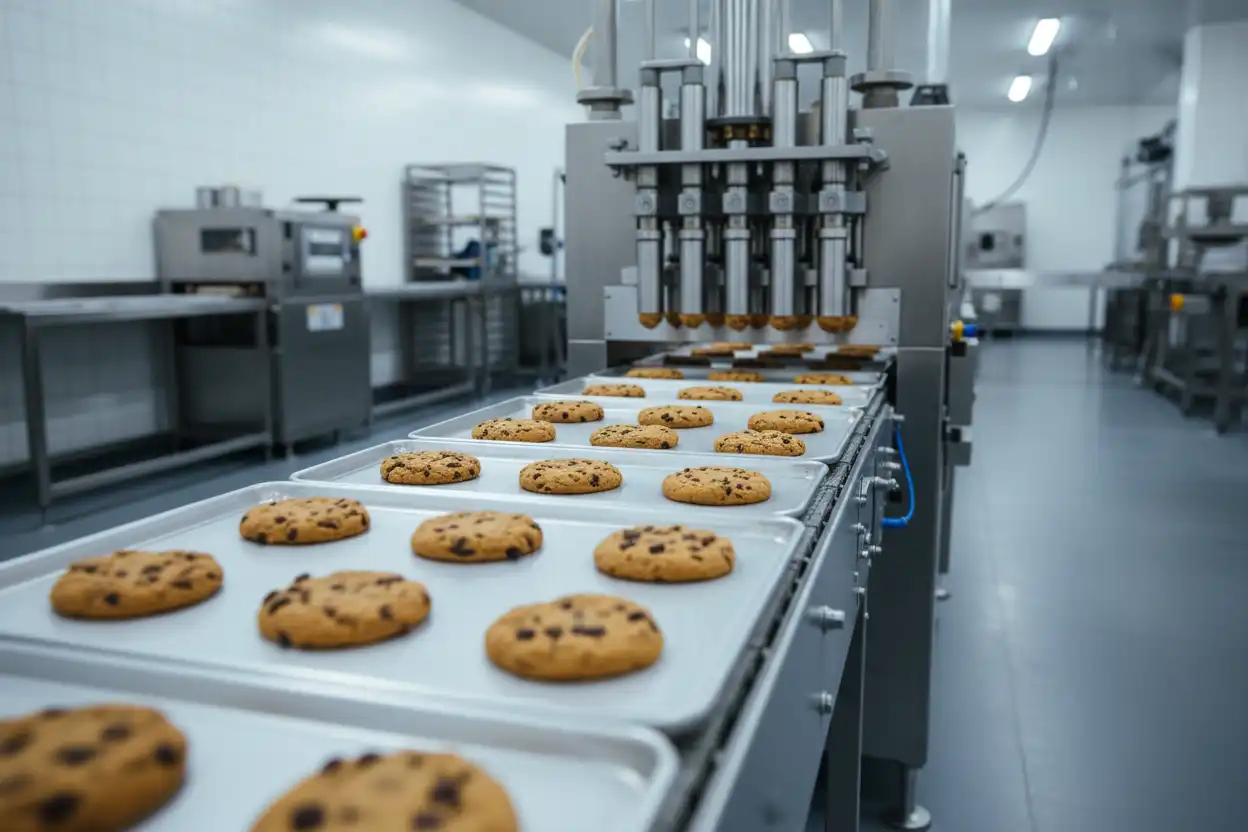
The Food Science of Professional Cookie Formulation
Commercial cookie formulation requires balancing structure builders, tenderizers, moisteners, and driers. Understanding the molecular physics behind these ingredients allows chefs to modify spread, lift, chew, and stability systematically.
Baker’s Percentages and Base Ratios
Every commercial formula must be established using baker’s percentages, where total flour weight always represents 100%. This methodology allows instant scalability, batch-size adjustments, and ingredient troubleshooting without recalculating entire recipes. In standard drop cookies, fat generally ranges between 45% and 65%, total sugars between 60% and 85%, and total hydration via eggs or liquids between 12% and 22%.
Formulas that rely on volumetric cups and spoons introduce weight variances of up to 18% per batch. That variance ruins consistency across multi-pan rack ovens. Industrial consistency demands high-resolution platform scales measuring in exact metric grams.
Fat Plasticity and Emulsification Mechanics
Fat selection dictates spread rate, mouthfeel, and structural tenderness during baking. Butter brings unmatched sensory flavor but possesses a narrow plasticity range of 18°C to 21°C (64°F to 70°F). Its 16% to 18% water content vaporizes during baking, generating steam that leavens cookies while dissolving local sugars.
Commercial shortenings and modified vegetable fats provide 100% lipid content and wider plasticity windows. Blending European-style cultured butter (82% to 84% butterfat) with specialized pastry fats stabilizes dough discs against warm ambient shop temperatures. Controlling the temperature of the fat during the creaming phase dictates whether mechanical aeration creates a cake-like crumb or a dense, chewy core.
Sugar Crystallization and Hygroscopy
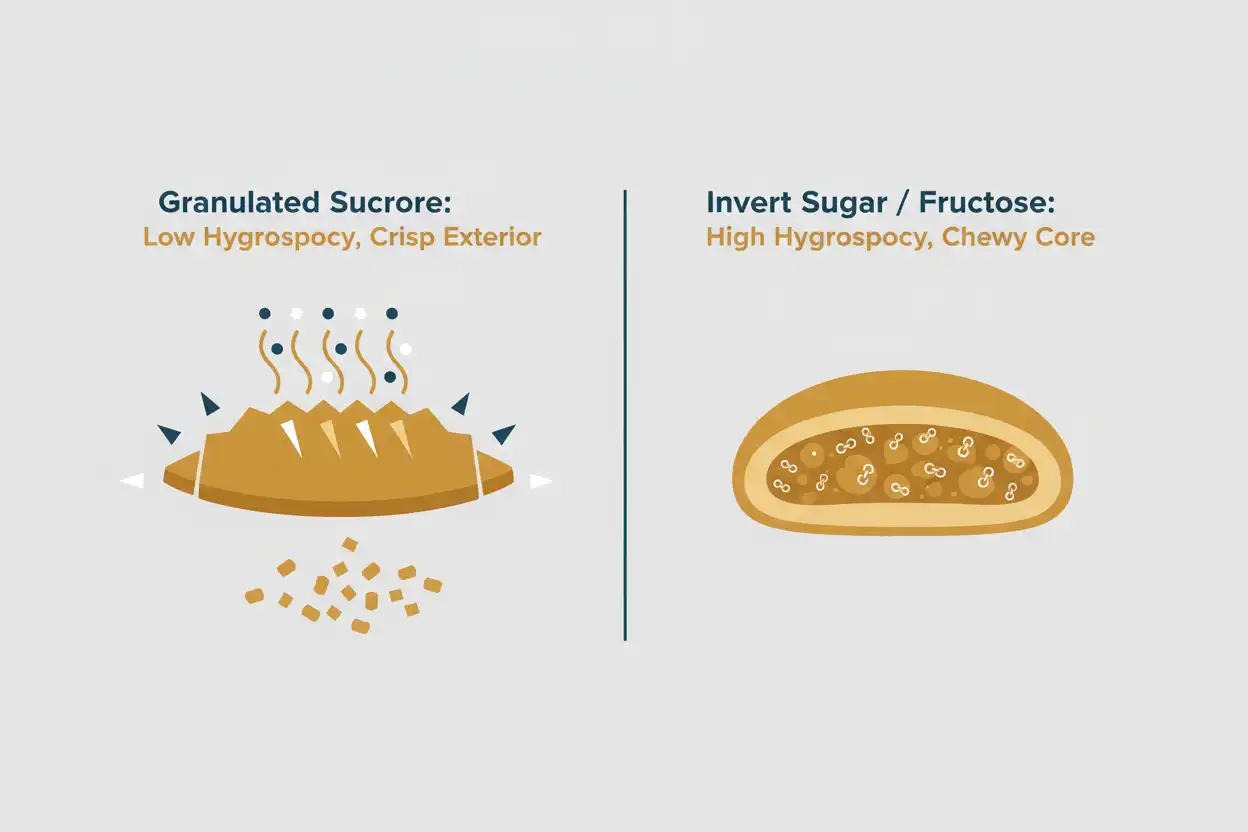
Granulated sucrose contributes to dough spread and surface cracking through moisture release and recrystallization during cooling. Because sucrose is less hygroscopic than reducing sugars, it permits crisp perimeter development. When the cookie surface cools, dissolved sucrose crystallizes, creating a distinct snap.
Brown sugars, invert syrups (trimoline), and glucose add fructose and dextrose into the dough matrix. These reducing sugars are highly hygroscopic, absorbing ambient moisture to keep cookies soft and pliable over extended retail holding times. Integrating 5% to 10% invert syrup suppresses retrogradation and prolongs chewy textures without artificial humectants.
Flour Protein Profiles and Starch Gelatinization
Flour choice determines the structural skeleton of the cookie. Pastry flour (8% to 9% protein) yields tender, low-spread products, while hard red spring wheat flour (12% to 14% protein) establishes an elastic gluten network that produces chewy, robust cookies. Many commercial bakeries create custom blends using equal parts unbleached pastry flour and high-extraction bread flour.
Starch gelatinization begins between 58°C and 65°C (136°F to 149°F), absorbing free water and setting the final shape. If starch gelatinization occurs before sufficient fat melt and sugar dissolution, the cookie will stall, resulting in thick, under-spread mounds with raw centers. Balancing flour protein with free liquid hydration ensures the cookie spreads to standard rim diameters before the protein coagulates.
Water Activity and Mold Inhibition
Water activity measures the energy status of water in a system and dictates microbial growth, staling, and chemical degradation. In professional baking, fresh drop cookies must be formulated to achieve a finished water activity between 0.55 and 0.65 . At this level, pathogenic bacteria and common molds cannot reproduce without chemical preservatives.
Lowering water activity is achieved by binding free water using hygroscopic sugars, polyols, and soluble fibers. Managing this metric allows operators to maintain a soft, chewy texture while achieving a 21-day ambient shelf life in sealed packaging. Testing finished products using a calibrated chilled-mirror dewpoint water activity meter prevents shelf failure and food safety issues.
Commercial Ingredient Sourcing and Functional Roles
Wholesale ingredients behave differently than consumer-grade supplies. Procuring stable, commercial-spec raw materials is mandatory to prevent batch failures during continuous production runs.
Commercial Dairy and Fat Specifications
Bulk commodity butter varies significantly in moisture and fatty acid profiles depending on the season and cattle feed. Commercial pastry kitchens eliminate this risk by ordering standardized European-style butter with certified 82% to 84% butterfat levels. Consistent fat solid percentages ensure predictable melting points, heat absorption rates, and spread diameters.
For applications requiring extended shelf lives beyond four weeks, bakeries rely on fractionated fats or high-oleic vegetable oils. These fats offer superior oxidative stability, preventing the cardboard-like off-flavors caused by rancid milk solids. Incorporating standardized nonfat dry milk (NFDM) solids boosts Maillard browning via lactose without adding excess liquid water.
Professional Chocolate: Couverture vs. Bake-Stable Drops
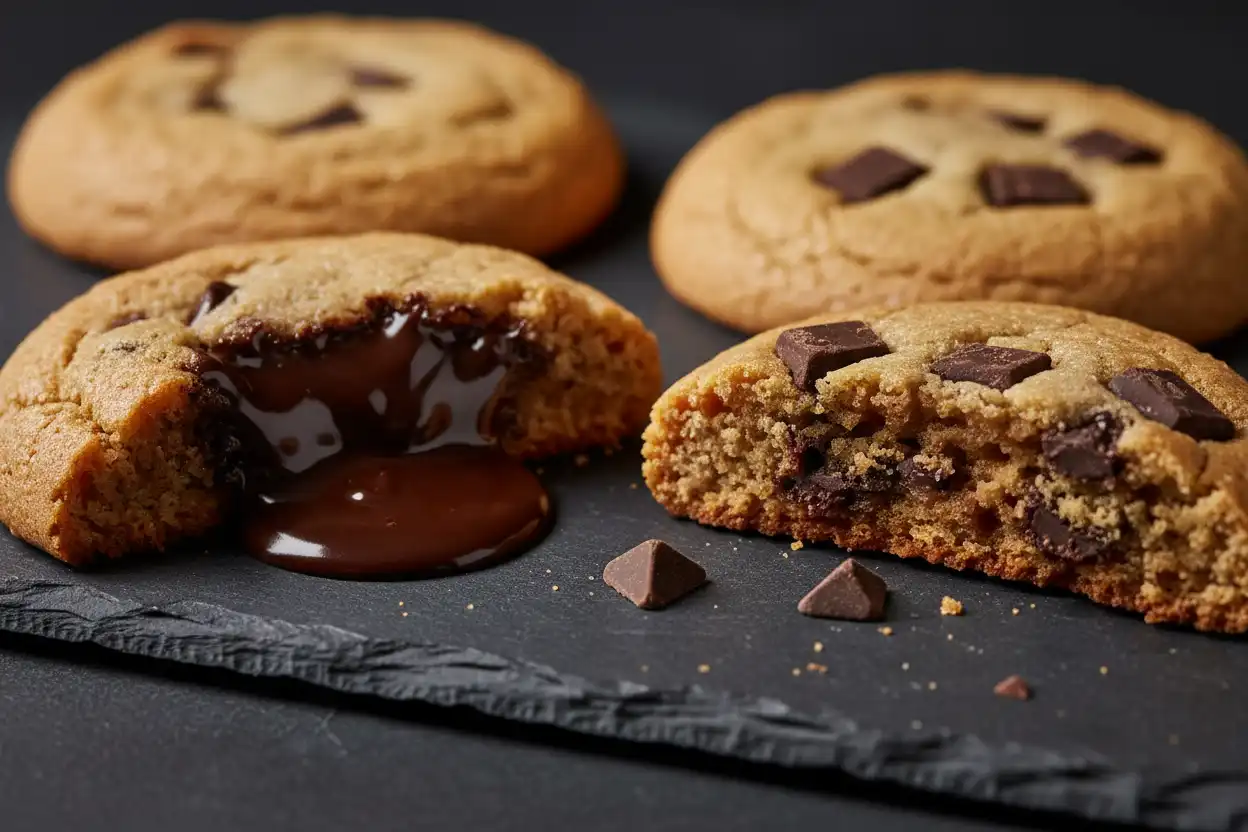
Real couverture chocolate contains high percentages of cocoa butter, which melts at body temperature (34°C to 36°F / 93°F to 97°F). In cookies, pure couverture pools into fluid pockets when heated, leaving hollow structural voids once cooled. This characteristic works well for specialty, warm-served café cookies, but complicates automated packaging.
Bake-stable chocolate drops and chunks are formulated with lower total fat and specific lecithin ratios. They maintain their physical shape during intense baking cycles, reinforcing the cookie’s structure. High-volume operations use custom combinations: 60% bake-stable dark chunks for visual appeal and structural integrity, paired with 40% hand-chopped single-origin couverture for a rich mouthfeel.
Chemical Leavening Dynamics
Sodium bicarbonate (baking soda) requires an acidic component, such as buttermilk powder, molasses, or natural cocoa powder, to release carbon dioxide. It raises dough pH, weakening gluten bonds and accelerating the Maillard reaction to deepen surface browning. Excess sodium bicarbonate produces an acrid, chemical aftertaste and an unappealing green-gray hue.
Double-acting baking powders utilize two acid stages: monocalcium phosphate activates at room temperature during mixing, while sodium acid pyrophosphate (SAPP) or sodium aluminum sulfate (SAS) activates under oven heat. For thin, crispy professional wafers or European butter biscuits, ammonium bicarbonate (baker’s ammonia) is preferred. It decomposes into ammonia and carbon dioxide under heat, leaving no moisture or alkaline residue in products baked to under 3% total hydration.
Commercial Bakery Equipment and Workspace Architecture
Properly equipping a commercial bakery requires balancing throughput capacity with dough handling mechanics. The wrong machinery introduces friction, warms the dough prematurely, and ruins fat suspension.
Industrial Mixers: Planetary vs. Spiral vs. Horizontal
Planetary mixers (such as 60-quart to 140-quart Hobart units) are standard for artisan bakeries using the creaming method. Their rotating agitator and fixed bowl mimic hand-creaming, incorporating air into the butter-sugar matrix without damaging inclusions. Operators must monitor mechanical shear heating, as planetary bowls transfer motor friction into the butter.
High-volume commercial commissaries rely on horizontal single-sigma arm mixers or reversible spiral mixers. Spiral mixers excel at high-density, low-moisture doughs, minimizing mechanical friction and dough warm-up. Horizontal mixers with integrated cooling jackets allow continuous ice-water or glycol circulation around the bowl, keeping batch temperatures strictly between 18°C and 20°C (64°F and 68°F).
Portioning Systems: Volumetric Depositors vs. Wire-Cut Machines
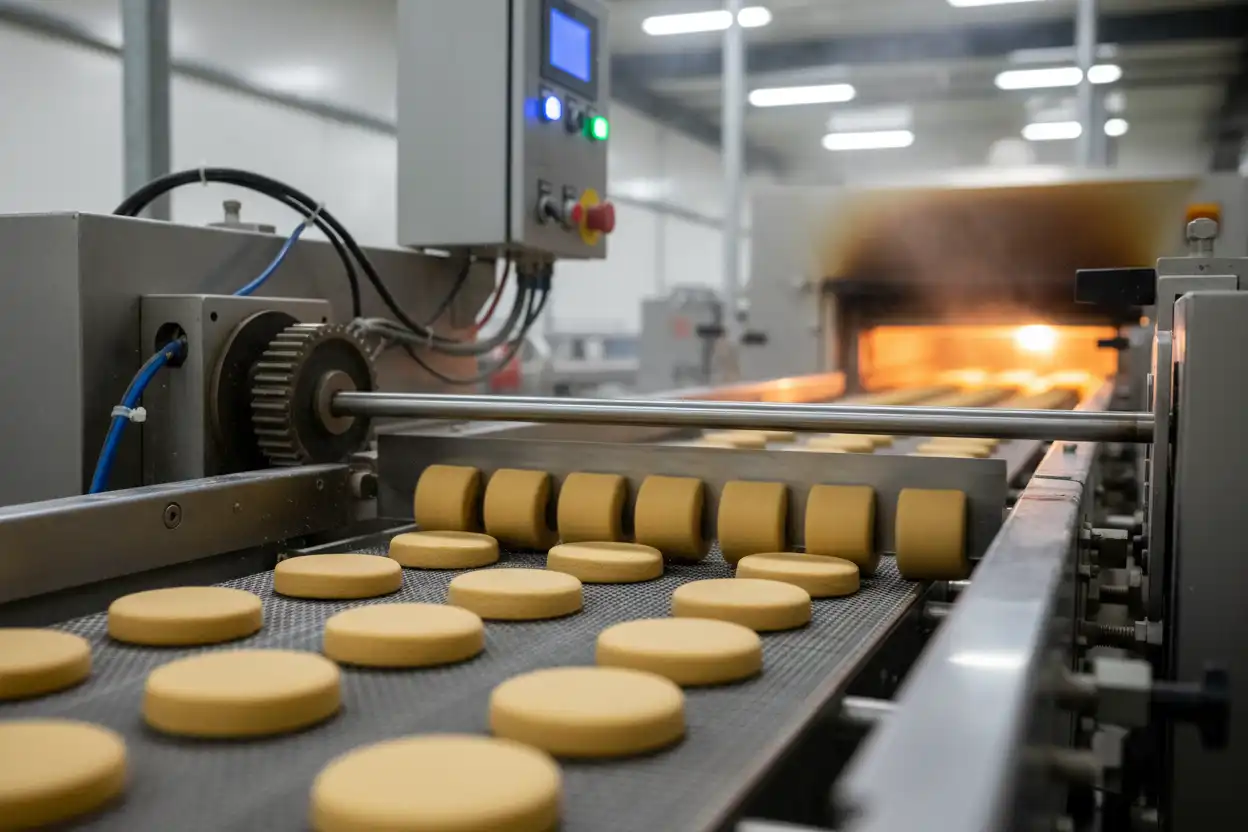
Manual scooping using spring-loaded dishers creates ergonomic strain and allows unacceptable portion variances of 5% to 12% across shifts. Commercial commissaries use automated wire-cut machines or pneumatic piston depositors. A wire-cut machine pushes extruded dough logs through a die, severing them with a reciprocating wire directly onto conveyor belts at speeds exceeding 100 strokes per minute.
Small-to-mid-scale operations use mechanical continuous-feed dough dividers or semi-automatic piston depositors (like Unifiller systems). These machines maintain piece-weight accuracies within +/- 1 gram. Eliminating weight fluctuations stabilizes baking times, ensuring that zero units end up underbaked or burnt on the same tray.
Commercial Ovens: Rotating Rack vs. Deck vs. Convection
Standard commercial convection ovens feature directional fans that blow hot air directly across sheet pans. This airflow often creates uneven ripples on molten dough and blows lighter inclusions across the pan surface. Installing variable-speed fan drives and air baffles moderates this turbulence, ensuring an even, controlled bake.
Rotating rack ovens are the gold standard for commercial cookie production. An entire rack holding 15 to 30 full-size sheet pans (18×26 inches) enters the baking chamber and rotates within a balanced vertical airflow. This rotation delivers unmatched thermal consistency across every pan. Radiant deck ovens lack internal convection airflows, making them ideal for heavy, dense cookies requiring bottom heat conduction to lift and brown the base while keeping centers soft.
Bakeware Selection and Silicone Substrates
Standard aluminum sheet pans warp under heavy cycling, resulting in pooled fat and uneven cookie spread. High-volume operations use heavy-gauge (14-gauge or 16-gauge) 3003 aluminum alloy pans reinforced with wire-beaded rims. Corrugated pans improve underside airflow, reducing the risk of scorched bases during longer bakes.
Parchment paper liners work well for low-volume production, but professional facilities standardize on fiberglass-reinforced silicone baking mats (Silpat or equivalent). Perforated silicone mats allow trapped air and moisture to escape cleanly, creating flat bases and preventing steam blisters. These reusable mats withstand thousands of thermal cycles, reducing disposable paper costs.
Production Scaling, Retardation, and Cold Chain Management
Direct-to-oven baking is an amateur technique that creates flat, structurally weak cookies. Scalable commercial production relies on cold holding cycles and frozen dough distribution systems.
Cold Dough Retardation Protocols
Resting mixed cookie dough at 2°C to 4°C (36°F to 40°F) for 24 to 72 hours improves both product flavor and baking performance. During this rest, flour enzymes (amylases and proteases) break starches and proteins into simple sugars and amino acids. This enzymatic activity deepens flavor complexity, adding butterscotch and toffee notes through advanced Maillard reactions.
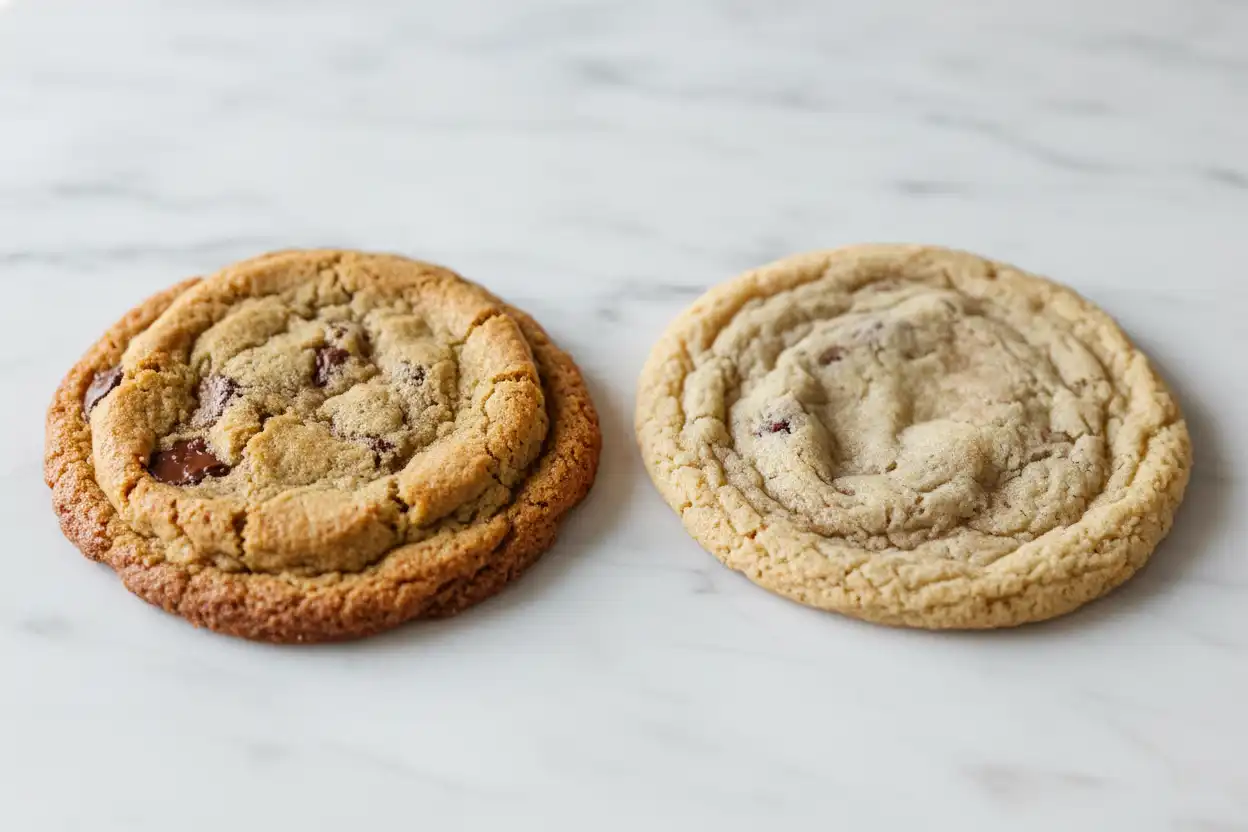
Chilling fully solidifies the fat fractions within the dough. When cold dough enters a hot oven, the fat takes longer to melt, slowing horizontal spread. This delay gives the starches and proteins enough time to set, creating a thick cookie with a crisp edge and a chewy, fudgy center.
Blast Chilling and Frozen Puck Storage Programs
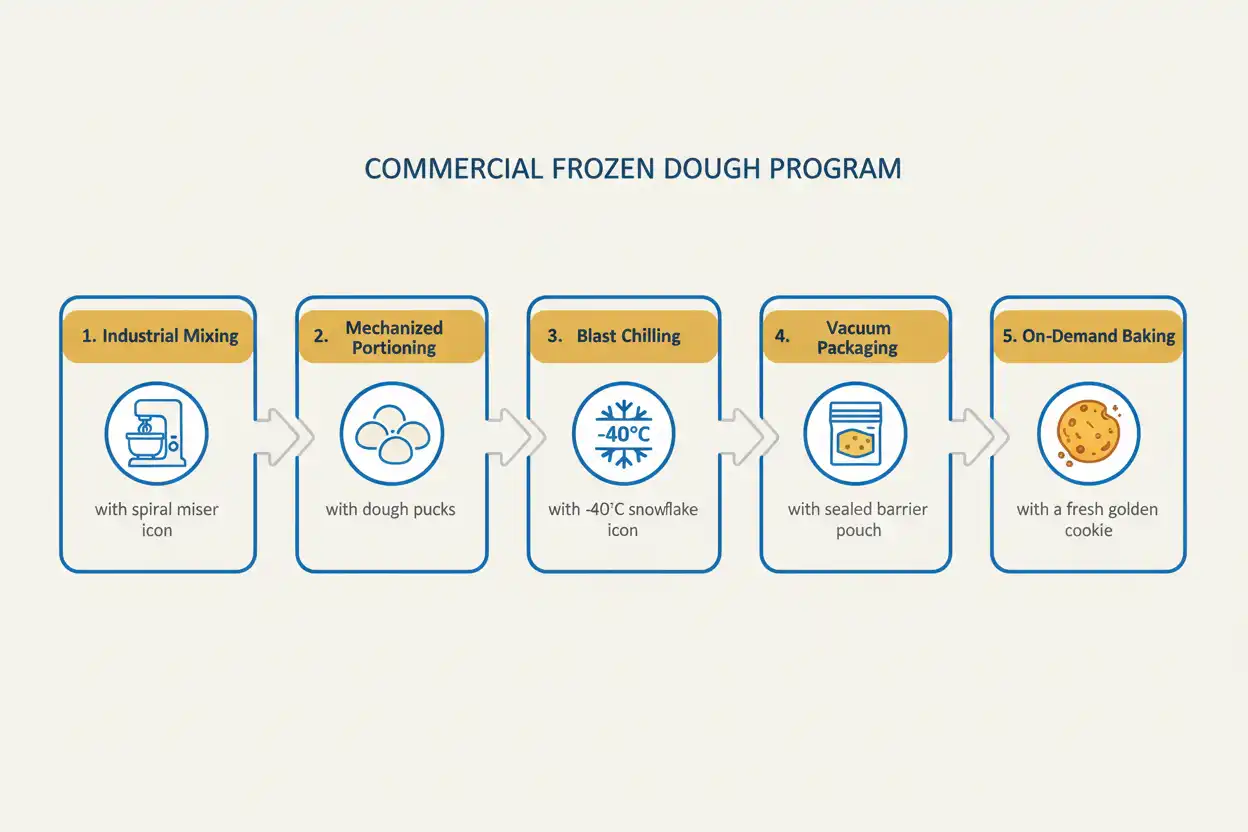
Specialty coffee shops and bakery chains maximize efficiency using frozen dough puck programs. Rather than mixing dough daily on-site, a centralized commissary mixes, portions, and freezers dough pucks. These frozen pucks are then shipped out for daily on-demand baking at individual retail locations.
Freezing dough pucks in standard walk-in freezers causes slow ice crystal formation, which damages the dough’s emulsion matrix and breaks down moisture boundaries. Professional facilities freeze portioned pucks using blast freezers running at -40°C (-40°F) with high-velocity air circulation. Rapid freezing forms micro-crystalline structures, preserving the emulsion and allowing pucks to store cleanly for up to 90 days without textural breakdown or freezer burn.
Batch Yield Calculations and Scrap Control
Commercial bakeries calculate yield efficiency by comparing the theoretical batch weight with the final, packaged product weight. Dough loss occurs across several production points, including bowl scrapings, depositor hopper holdover, and floor waste during portioning. Well-designed production facilities target a maximum scrap threshold of less than 1.5% total dough mass.
Moisture evaporation during baking accounts for an additional 8% to 14% mass reduction, depending on the product’s surface-area-to-volume ratio. Recipes must be formulated around these finished weights to hit retail nutritional packaging claims accurately. A cookie portioned at 100 grams will consistently bake out to an 88- to 92-gram finished product.
Packaging, Shelf-Life Stabilization, and Water Activity
A cookie’s operational life does not end at the cooling rack. Without appropriate packaging and moisture barriers, premium baked goods stale, oxidize, or mold within days.
Barrier Films and Modified Atmosphere Packaging (MAP)
Standard clear polypropylene bags allow oxygen and ambient humidity to permeate the package over time. High-barrier films, such as oriented polypropylene (OPP) coated with polyvinylidene chloride (PVDC) or metalized foils, prevent moisture migration and gas exchange. Selecting the right barrier film maintains crisp perimeters and chewy centers for weeks.
Wholesale distribution centers preserve freshness using Modified Atmosphere Packaging (MAP). This equipment flushes the bag interior with an inert gas mixture—typically 70% nitrogen and 30% carbon dioxide—reducing residual oxygen to less than 1%. Eliminating oxygen stops lipid oxidation in high-butter cookies and halts aerobic mold growth without requiring chemical food additives.
Fat Oxidation and Staling Kinetics
Staling is caused by starch retrogradation, where amylose and amylopectin molecules recrystallize and squeeze out water molecules. Lipid oxidation occurs when unsaturated fats react with oxygen, creating unpleasant hexanal aldehydes and rancid off-flavors. Storing finished products away from ultraviolet retail lighting slows this chemical oxidation process.
Integrating natural antioxidants, such as oil-soluble rosemary extract or mixed tocopherols (Vitamin E), protects fats from oxidation without compromising clean-label ingredient lists. These antioxidants preserve sweet cream butter notes, extending sell-by windows in third-party wholesale accounts by 14 to 21 days.
Café and Retail Operations: Maximizing Sell-Through and Margins
For specialty cafés and retail pastry shops, cookies deliver exceptional profit margins when managed systematically. Unlike complex pastries, cookies require minimal equipment to bake on-demand throughout the day.
Bake-on-Demand Programs
Baking cookies fresh on-site fills retail spaces with aromatic buttery aromas, driving impulse sales at the cash register. Cafés receive frozen, portioned dough pucks from their central production kitchen or wholesale supplier. Baristas bake these pucks directly from frozen in countertop commercial convection ovens (such as Turbochef, Unox, or Cadco units) without thawing.
This on-demand workflow prevents excess food waste. Staff bake small batches of 6 to 12 cookies based on real-time foot traffic and customer demand, rather than baking large runs each morning that risk being discarded at closing. Unbaked dough pucks remain protected in the freezer, eliminating waste and keeping food costs tightly controlled between 18% and 24%.
Display Engineering and Merchandising
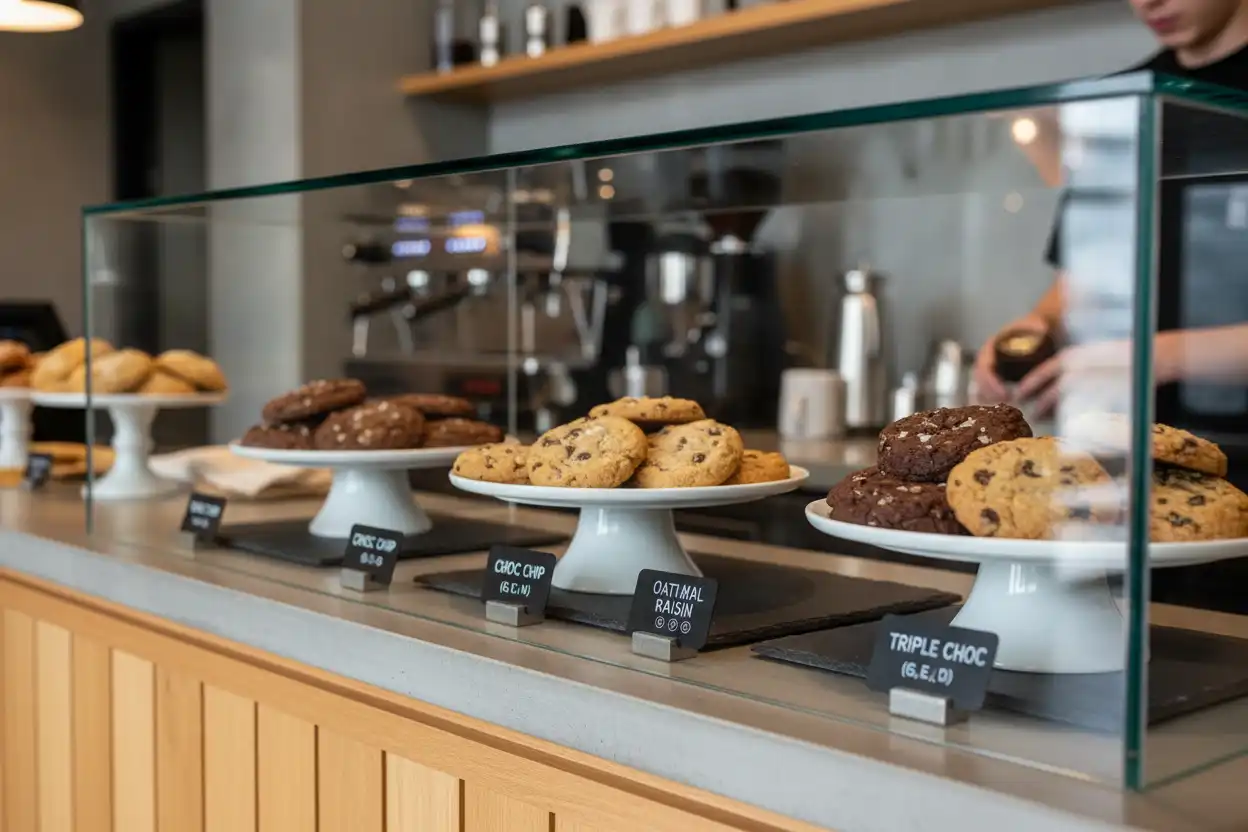
Exposing fresh cookies to dry display case air rapidly ruins their texture. Open-air displays draw moisture out of cookies within four to six hours, leaving them dry and crumbly. Retailers must use sealed, magnetic-gasket display cases or individual protective enclosures to retain moisture.
Clear, elevated acrylic risers create dynamic visual levels that highlight the cookies’ chunky textures and premium inclusions. Pairing cookies with signature espresso drinks or cold brews on menu boards raises the average transaction value. Grouping complementary flavor profiles—such as sea-salt chocolate chunk cookies with dark roasts—boosts companion sales across daytime shifts.
Step-by-Step Production Protocol for Professional Bakeries
This operational sequence outlines standard commercial production for large batches of high-protein drop cookies.
Phase 1: Ingredient Tempering and Mise en Place
What: Conditioning all raw materials to exact production temperatures before beginning.
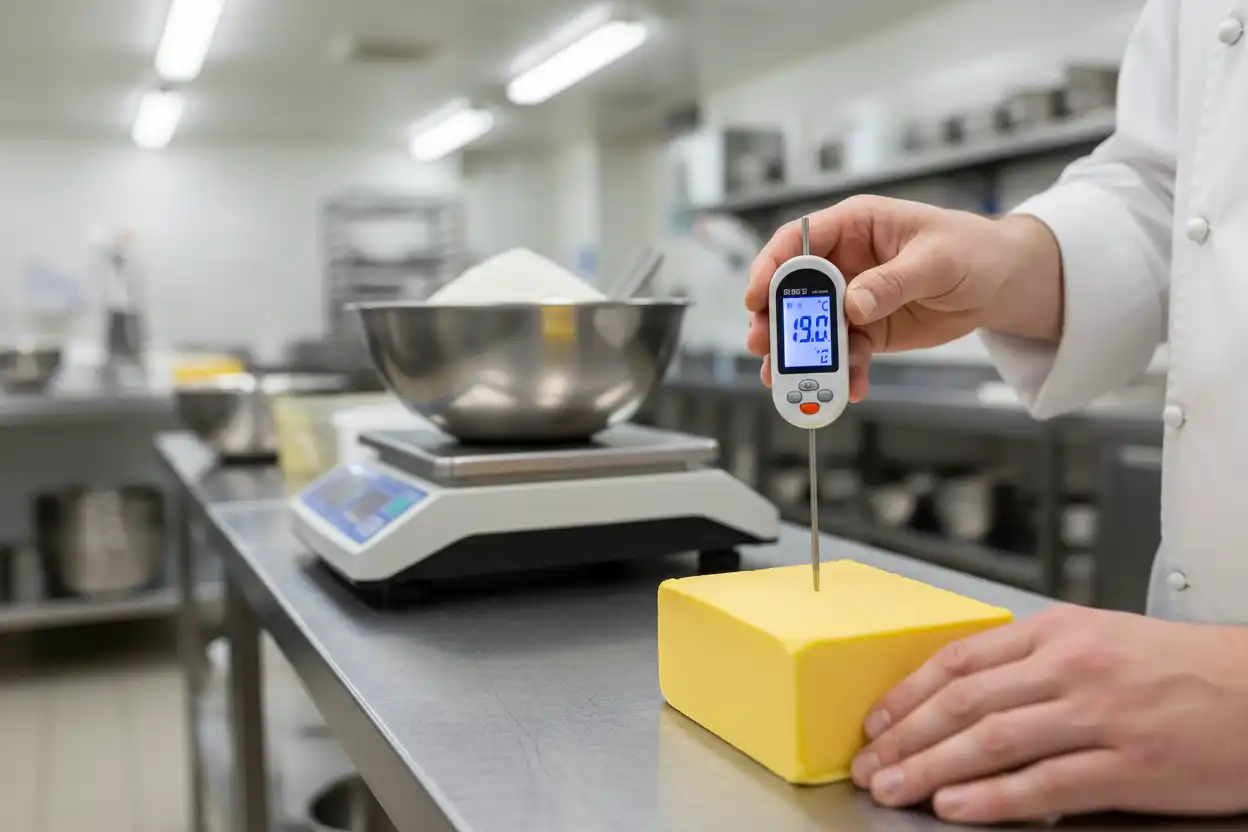
Why: Butter outside the 18°C to 20°C (64°F to 68°F) range breaks emulsions and creates inconsistent air pocket distributions.
How: Temper butter blocks in temperature-controlled rooms. Sift flours, leaveners, and salts through 20-mesh commercial sieves to break up agglomerations. Measure inclusion weights separately on secondary scales.
Common Mistakes: Using microwaved, partially melted butter. This liquid fat prevents air entrapment and causes the dough to spread uncontrollably in the oven.
Pro Tip: Keep liquid whole eggs at 15°C (59°F). Cold eggs shock creamed butter, causing the emulsion to curdle and separate.
Phase 2: Emulsion and Sugar Creaming
What: Blending tempered fats with sugars using a planetary or horizontal mixer.
Why: Sugar crystals shear through fat solids, creating micro-voids that trap air to establish the cookie’s final crumb density.
How: Cream fat, sucrose, and invert sugars on speed 1 for 60 seconds to combine. Increase to speed 2 for 2.5 to 3.5 minutes, scraping the bowl down halfway through. Stream in tempered eggs in three balanced stages, mixing until fully emulsified.
Common Mistakes: Over-creaming the mixture into a pale, fluffy batter. This incorporates excess air, causing cookies to rise rapidly, collapse, and wrinkle in the oven.
Pro Tip: Monitor the bowl temperature using an infrared thermometer. The emulsion must remain between 19°C and 21°C (66°F to 70°F) for optimal stability.
Phase 3: Dry Blend Incorporation
What: Folding flours, starches, and leaveners into the creamed emulsion.
Why: Over-mixing develops tough gluten networks, creating rubbery, dense cookies instead of tender, crumbly textures.
How: Add the sifted dry blend all at once. Mix on speed 1 for 20 to 30 seconds until the flour is about 85% hydrated. Add chocolate chunks, nuts, or inclusions, mixing for an additional 15 seconds until evenly distributed.
Common Mistakes: Running mixers on medium or high speeds during flour addition. This activates gluten and pulverizes delicate inclusions.
Pro Tip: Stop the mixer while small flour streaks remain visible. Finish folding the dough by hand using a food-grade paddle to prevent gluten over-development.
Phase 4: Mechanized Portioning and Shaping
What: Dividing the bulk dough into uniform, weight-calibrated portions.
Why: Weight variations cause uneven baking, leading to under-baked and over-baked cookies on the same sheet pan.
How: Load dough into the hopper of an automated depositor, or use calibrated spring-loaded dishers for smaller runs. Deposit portions onto silicone-lined sheet pans, maintaining consistent spacing for airflow.
Common Mistakes: Compacting the dough into dense, tight balls. Excessive pressure creates rubbery centers and prevents clean surface cracking.
Pro Tip: Break portioned pucks in half and press them back together with the rough torn edges facing up. This technique yields an artisanal, craggy surface texture.
Phase 5: Retardation and Blast Chilling
What: Solidifying fat fractions and hydrating flour proteins under refrigeration.
Why: Chilling stabilizes dough pucks, deepens overall flavor profiles, and prevents excessive spreading during baking.
How: Roll pan racks into walk-in retarders maintained at 2°C to 4°C (36°F to 40°F) for 24 to 48 hours. If freezing for inventory, move racks directly into blast freezers set at -40°C (-40°F) until core temperatures hit -18°C (0°F).
Common Mistakes: Leaving dough racks uncovered in the walk-in cooler. Dry circulating fan air dehydrates the dough exterior, forming an undesirable, leathery skin.
Pro Tip: Enclose pan racks in thick, zippered plastic rack covers to retain moisture while the dough rests in refrigeration.
Phase 6: Calibrated Convection Baking
What: Applying controlled thermal heat to bake cookies to an exact moisture and structural finish.
Why: Precise temperatures caramelize sugars and gelatinize starches without burning delicate perimeters.
How: Preheat rack ovens to 175°C (350°F) or convection ovens to 160°C (320°F) with low fan settings. Bake chilled pucks for 11 to 14 minutes, cycling dampers open during the final two minutes to vent steam.
Common Mistakes: Loading frozen dough onto hot sheet pans left over from previous bakes. This pre-melts the bottom fat, causing greasy, burnt bases.
Pro Tip: Use an infrared camera or probe thermometer to check internal temperatures at pull time. Look for core readings between 88°C and 91°C (190°F to 196°F) for optimal chew.
Phase 7: Controlled Cooling, QA Inspection, and Packaging
What: Cooling cookies down to ambient temperatures before sealing them in barrier packaging.
Why: Packaging warm cookies traps residual steam inside the bag, destroying crisp exteriors and inviting mold growth.
How: Rest cookies on sheet pans for 5 minutes to let the bottom crust firm up. Transfer them to wire cooling racks using wide spatulas, cooling to an internal temperature of 22°C (72°F). Heat-seal the cooled cookies in high-barrier films.
Common Mistakes: Moving hot cookies too quickly. Freshly baked cookies lack firm internal structure, making them prone to tearing and deformation.
Pro Tip: Spot-check random units from every production batch with a calibrated water activity meter to ensure values remain between 0.58 and 0.64 $a_w$.
Comparison Table: Production Methodologies Compared
Select the optimal production model based on your operation’s scale, available capital, and distribution reach.
| Production Metric | Artisan Small-Batch | Frozen Puck Commissary | High-Volume Industrial |
|---|---|---|---|
| Hourly Output (Units) | 100 – 300 units | 1,000 – 4,000 units | 10,000 – 50,000+ units |
| Primary Equipment | 20–60qt Planetary, Manual Scoops | Spiral Mixer, Piston Depositor, Blast Chiller | Continuous Horizontal Mixer, Wire-Cut Line, Tunnel Oven |
| Labor Input per 1,000 Units | High (6.0 – 8.0 Labor Hours) | Moderate (1.5 – 2.5 Labor Hours) | Low (0.1 – 0.3 Labor Hours) |
| Product Consistency | Variable (+/- 6% weight delta) | High (+/- 1.5% weight delta) | Absolute (+/- 0.5% weight delta) |
| Initial Capital Investment | Low ($10,000 – $35,000) | Moderate ($75,000 – $250,000) | High ($750,000 – $3,000,000+) |
| Best Operational Fit | Independent Bakeries & Cafés | Multi-Unit Chains, Regional Wholesale | CPG Brands, Supermarket Contracts |
Expert Tips for Commercial Scale
Refining an operational cookie program requires practical solutions for environmental challenges and formulation edge cases.
- High-Altitude Pressure Adjustments: At elevations above 3,000 feet, low atmospheric pressure causes cookies to spread faster and dry out early. Counteract this by reducing chemical leaveners by 15% to 25%, decreasing sucrose by 5%, and increasing flour hydration by 3% to 5% to support structural setting.
- Seasonal Butterfat Adjustments: Summer butter contains higher levels of unsaturated oleic fatty acids from fresh pasture grazing, lowering its melting point. If doughs feel greasy or spread excessively during warm months, substitute 10% to 15% of the dairy butter with structured vegetable fats to maintain stability.
- Clean-Label Emulsification: Operators replacing synthetic mono- and diglycerides can substitute them with non-GMO sunflower lecithin (0.3% to 0.5% of total flour weight). Sunflower lecithin binds liquid fats and water without requiring artificial additive declarations on clean-label retail packaging.
- Preventing Inversion in Acidic Inclusions: Adding freeze-dried fruit powders or acidic purees drops dough pH below 5.0, accelerating sucrose breakdown into invert sugars. This can turn firm cookies soft and sticky within days. Buffer acidic doughs with 0.2% calcium carbonate or potassium bicarbonate to protect crumb structure.
Critical Commercial Mistakes and Fixes
Prevent these common production errors to avoid ingredient waste, lost labor, and batch write-offs.
1. Hot-Pan Reloading Cycles
The Mistake: Deposition teams drop chilled dough pucks directly onto hot sheet pans fresh out of the wash or an oven run.
Why It Happens: Rushed production schedules and limited pan inventories tempt bakers to reuse warm trays immediately.
The Solution: Establish a continuous pan rotation workflow. Aluminum trays must drop below 27°C (80°F) before reloading. Adding dough to hot pans melts outer fats prematurely, resulting in thin, greasy margins and scorched bases.
2. Uncontrolled Creaming Aeration
The Mistake: Running mixers at high speeds during the butter and sugar creaming stage, whipping excessive air into the base.
Why It Happens: Bakers mistakenly treat cookie dough like cake batter, assuming more mixing air creates lighter textures.
The Solution: Restrict creaming cycles to low and medium speeds. The goal is to distribute sugar crystals through the fat matrix, not build volume. Excess aeration causes cookies to balloon in the oven, collapse as they cool, and create hollow, brittle crusts.
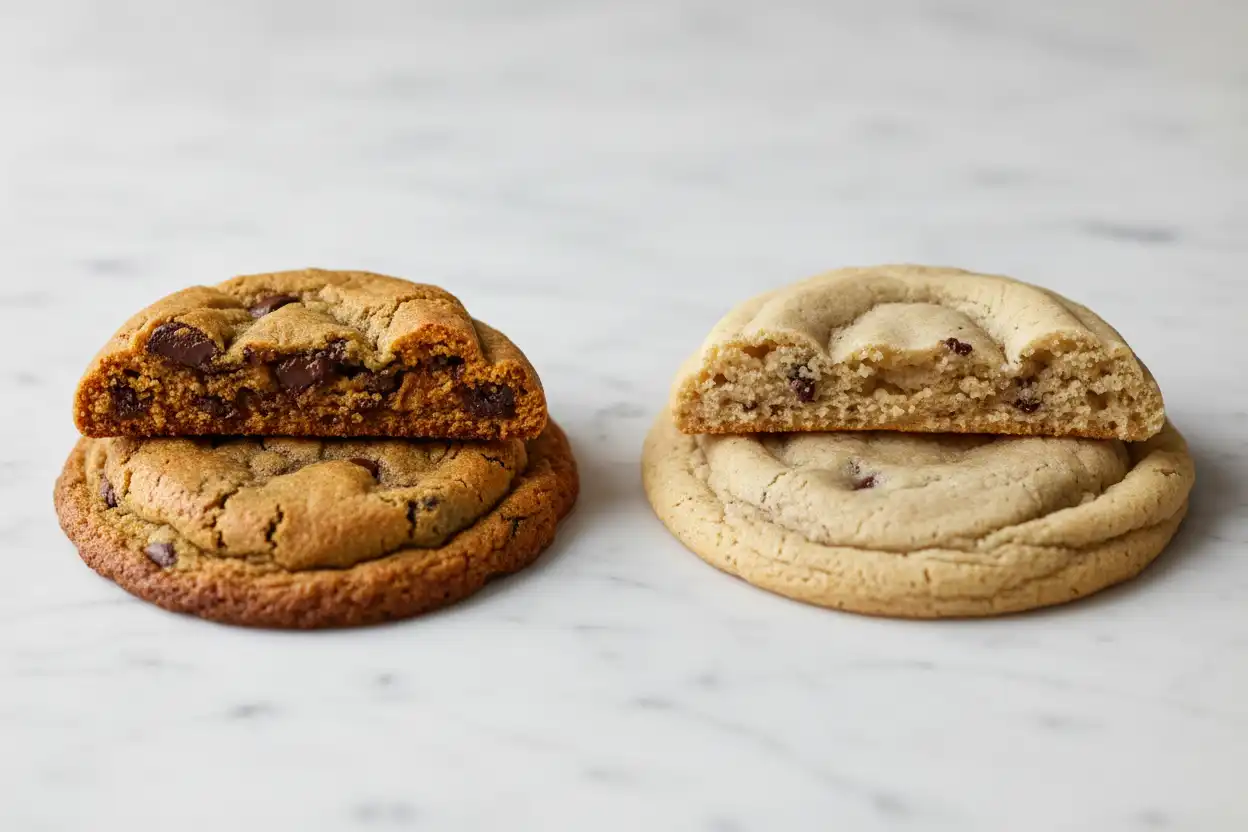
3. Packaging Warm Baked Goods
The Mistake: Heat-sealing cookies in plastic packaging before they cool down to ambient room temperature.
Why It Happens: Packing teams rush to complete orders before their shifts end, clearing cooling racks prematurely.
The Solution: Use an infrared thermometer to verify that all cookies reach room temperature (20°C to 22°C / 68°F to 72°F) before packaging. Sealing warm cookies traps escaping moisture, softening crispy crusts and creating condensation that sparks mold blooms within 72 hours.
Standard Operating Procedures and Quality Assurance
Maintaining high consistency across thousands of production cycles requires strict operational guardrails and quality checks.
- Ingredient Core Temperature Verification: Measure and record the temperatures of all fats, eggs, and dry blends on mixing log sheets prior to production.
- Mixer Amp-Draw Monitoring: Track the electrical amp draw on commercial mixers to identify dough resistance changes and prevent motor strain across large batches.
- Oven Profiling and Data Logging: Audit rack and deck oven temperatures monthly using multi-channel thermocouple dataloggers to find and fix internal cold zones.
- Finished Water Activity Auditing: Test water activity levels on every production run, logging results to ensure all products remain within the target 0.58 to 0.64 $a_w$ stability window.
- Allergen Segregation Protocols: Store ingredients with major allergens (tree nuts, peanuts, soy, dairy, wheat) in dedicated, color-coded bins, scheduling allergen-free runs at the start of each shift.
Professional Tools and Operational Resources
Equip your bakery team with reliable commercial-grade tools to ensure precise, repeatable results.
- Aqualab 4TE Water Activity Meter: The commercial baking standard for precise, temperature-controlled dewpoint water activity measurement.
- Testo 830-T1 Infrared Thermometer: Fast, non-contact surface temperature reading tool for dough pucks, mixer bowls, and cooling sheet pans.
- ThermoWorks ThermaPen ONE: Essential high-speed probe thermometer for checking internal crumb temperatures at the oven pull station.
- ReciPal Formulation & Nutritional Software: Industry-standard platform for calculating baker’s percentages, scaling batches, managing COGS, and generating FDA-compliant nutrition labels.
- Acroprint Time Recorders & Batch Traceability Systems: Software tools to log batch mixing sequences, lot numbers, and employee QA sign-offs under FSMA standards.
External Industry Standards
Consult these established regulatory bodies and educational institutions for official technical guidelines:
- AIB International (American Institute of Baking): Consolidated Standards for Inspection and Food Safety Programs.
- U.S. Food and Drug Administration (FDA): 21 CFR Part 117 — Current Good Manufacturing Practice (CGMP), Hazard Analysis, and Risk-Based Preventive Controls for Human Food.
- American Bakers Association (ABA): Technical training resources, energy optimization guides, and commercial formulation research.
- Institute of Food Technologists (IFT): Peer-reviewed research on lipid crystallization, sugar hygroscopy, and water activity metrics.
Executive Key Takeaways
- Formulation Precision: Ditch volumetric measurements. Formulate all commercial recipes using precise baker’s percentages with metric gram accuracy.
- Control Water Activity: Target a finished product range of 0.58 to 0.64 $a_w$. This level preserves a chewy crumb while preventing microbial mold growth without heavy preservatives.
- Cold Chain Integration: Rest mixed doughs for 24 to 72 hours under refrigeration, or blast-freeze pucks at -40°C to lock in stable fat emulsions and build deep flavor profiles.
- Thermal Management: Avoid over-creaming butter. Protect airflow balance using rotating rack ovens, and never reload dough onto warm sheet pans.
- Scale Safely: Use high-barrier OPP/PVDC films, balance fat oxidation using natural antioxidants, and optimize retail revenues through on-demand café baking programs.
Building a Sustainable Cookie Operation
Scaling a commercial cookie operation requires balancing culinary craftsmanship with sound food science and manufacturing discipline. Producing high-margin, shelf-stable professional cookies depends on managing ingredient interactions, dough temperatures, and baking thermodynamics. Process control transforms a simple recipe into a reliable, scalable commercial asset.
Invest in reliable high-precision tools, train mixing teams to follow strict SOPs, and establish clear quality control checkpoints across your production floor. Whether expanding wholesale accounts or improving retail café margins, disciplined formulation and controlled manufacturing are the keys to long-term commercial success.
Frequently Asked Questions
How do professional bakeries keep cookies soft for weeks?
Professional bakeries maintain soft textures by balancing water activity between 0.58 and 0.64 $a_w$. They replace some granulated sucrose with hygroscopic sugars like invert syrup, glucose, or brown sugar, which bind free water. Storing products in high-barrier packaging flushes out oxygen, preventing moisture loss and staling without artificial softeners.
Why do commercial cookies require cold dough retardation?
Retarding dough at 2°C to 4°C (36°F to 40°F) for 24 to 72 hours hydrates flour starches and allows native enzymes to break down proteins into flavorful simple sugars. This resting phase fully chills the butter, slowing the cookie’s spread in the oven to produce a thick center, crisp edge, and deeper caramelized flavor.
Can professional cookie dough pucks be baked directly from frozen?
Yes, baking frozen dough pucks directly is standard operating procedure for many retail cafés and bakeries. Ovens should run 10°C to 15°C (15°F to 25°F) lower than normal, extending the baking time by two to four minutes. This modification allows the center to bake through properly without burning the outer edges.
What is the ideal oven type for high-volume cookie production?
Rotating rack ovens are the premier choice for commercial cookie production. They rotate an entire rack of 15 to 30 sheet pans inside a balanced vertical airflow chamber, eliminating hot spots. This rotation delivers unmatched batch consistency across all pans compared to standard stationary commercial convection ovens.
How do commercial bakers prevent cookies from spreading too thin?
Bakers control spread by lowering sugar ratios, using higher-protein flours, avoiding over-creaming, and chilling dough completely before baking. Adding a small amount of cornstarch or using pastry flour blends reinforces the dough structure. These adjustments help the dough set quickly once it meets the oven’s heat.
What is the target food cost percentage for a commercial cookie program?
A profitable commercial cookie program targets food costs (COGS) between 18% and 24% of the retail selling price. High-volume wholesale accounts generally operate at higher food cost ratios (28% to 32%) due to lower bulk pricing, making labor efficiency and automated portioning essential for healthy margins.
How does butterfat content affect professional cookie formulas?
Standard American commodity butter contains roughly 80% butterfat and up to 18% water, which can cause erratic dough spreading and excess steam release. Professional bakeries favor European-style butter with 82% to 84% butterfat. Its lower moisture content yields tender crumbs, consistent spread diameters, and richer flavor.
What packaging material best protects commercial cookies?
The best solution is high-barrier film made from oriented polypropylene (OPP) coated with acrylic or PVDC. These films block moisture and oxygen exchange far better than cheap polyethylene bags. For long wholesale supply chains, flushing packages with nitrogen gas stops fat oxidation and extends shelf stability.